
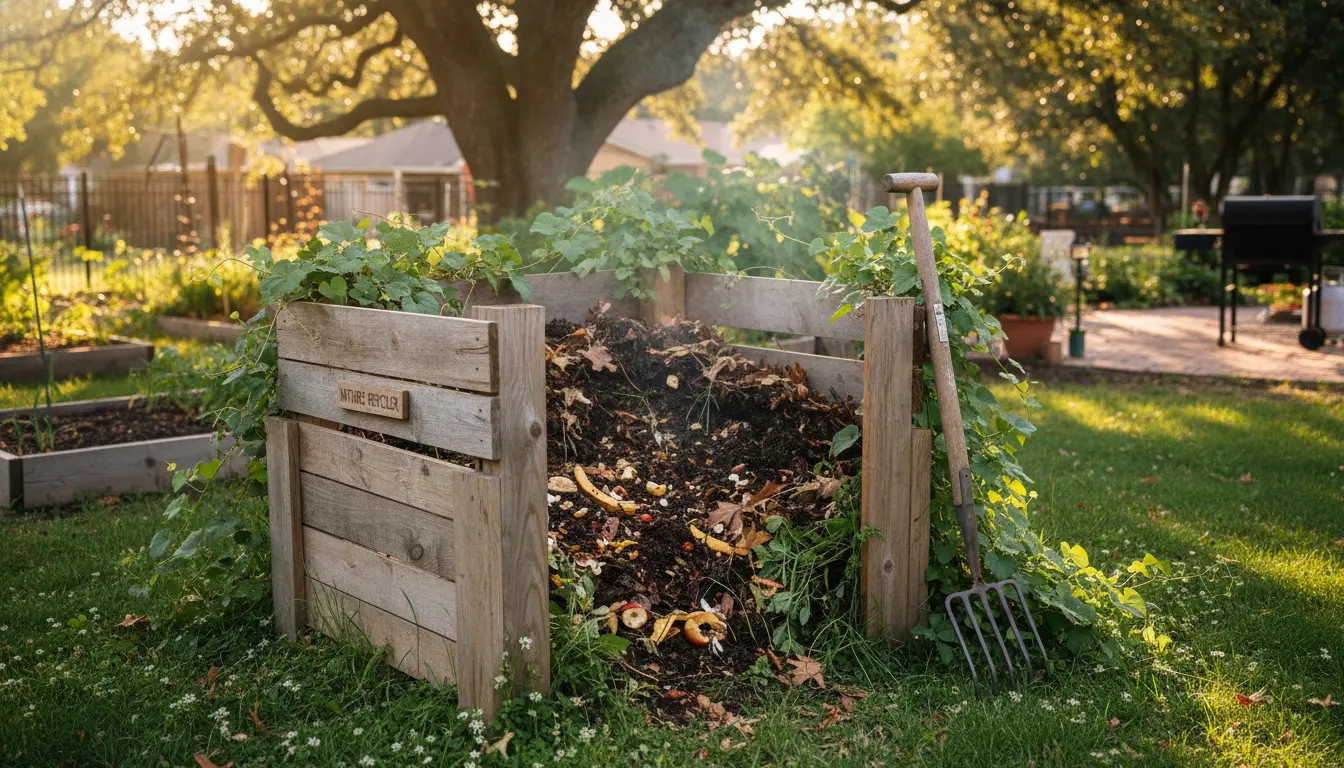
What Is Home Composting?
Home composting is the process of turning organic kitchen and yard waste into nutrient-rich soil amendment. It reduces landfill waste and improves garden soil without chemicals.
This guide covers practical steps, materials, bin choices, and solutions to common problems. Follow the instructions to get a working compost system at home.
Why Choose Home Composting

Composting lowers household waste volume and returns valuable nutrients to the soil. It also reduces methane emissions from landfills and saves money on soil amendments.
Home composting is suitable for apartments, houses with yards, and community gardens when adapted to space and local rules.
How to Start Home Composting
Begin by choosing a method that fits your space and time. The simplest options are a backyard bin, a tumbler, or a small indoor worm bin for limited space.
Follow these step-by-step actions to build a balanced compost pile.
Materials You Need for Home Composting
- Green materials: vegetable scraps, fruit peels, coffee grounds, fresh grass clippings.
- Brown materials: dry leaves, shredded paper, cardboard, straw.
- Water source: to keep the pile moist but not soggy.
- Basic tools: a pitchfork or garden fork, a bin or tumbler, and gloves.
Step-by-Step Home Composting Process
Start with a layer of coarse brown material to aid airflow. Add alternating layers of greens and browns as you collect waste.
Aim for a ratio near 1 part greens to 2 or 3 parts browns by volume. Turn the pile every 1–2 weeks to add oxygen and speed decomposition.
- Layer base with twigs or coarse brown material for drainage.
- Add kitchen greens and cover with browns to reduce odors and flies.
- Moisten when dry; the pile should feel like a wrung-out sponge.
- Turn regularly to mix materials and reintroduce air.
Choosing a Bin for Home Composting
Bin choice affects ease of use and speed. Common options include open piles, stationary bins, tumblers, and worm bins.
Choosing the Right Bin for Your Home Composting Setup
Open piles are cheap and simple but need space and more turning effort. Stationary bins are tidy and affordable for small yards.
Tumblers make turning easy and are cleaner. Worm bins are best for indoor composting or small quantities of kitchen scraps.
Maintaining Your Home Composting System
Routine checks keep the process active. Monitor moisture, temperature, and smell to know when to adjust conditions.
A healthy compost pile is warm in the middle, damp but not wet, and smells earthy. If it smells bad, add more brown material and turn the pile.
Troubleshooting Home Composting Problems
Common problems include foul odors, slow decomposition, and pests. Each has simple fixes.
- Bad smell: add dry browns, turn more often, check moisture.
- Slow breakdown: chop materials smaller, increase greens for nitrogen, and turn to add oxygen.
- Pests: avoid adding meat, dairy, or oily foods and bury scraps under browns.
Using Finished Compost
Compost is ready when materials look and smell like rich soil and no large recognizable items remain. This typically takes 3–12 months depending on method and care.
Use finished compost as mulch, soil amendment, or potting mix ingredient. Apply a thin layer to garden beds or mix into planting soil for best results.
Simple Case Study: One-Season Success
Maria, a small-plot gardener, started home composting with a 55-gallon tumbler. She added kitchen scraps and shredded leaves in a 1:2 green-to-brown ratio.
After six months of turning twice weekly, her tumbler produced dark, crumbly compost. Maria used it to top her raised beds and saw healthier vegetable growth and fewer watering needs.
Her household reduced trash by roughly 35 percent and saved the cost of store-bought amendments over one season.
Tips for Long-Term Home Composting Success
- Keep materials varied and chopped small to speed decomposition.
- Balance greens and browns and maintain airflow by turning.
- Store brown material nearby so you always have cover for greens.
- Start small and scale the system as your confidence grows.
Home composting is practical and adaptable. With simple steps and regular care you can reduce waste, improve soil, and support a healthier garden.