
What Is Home Composting?
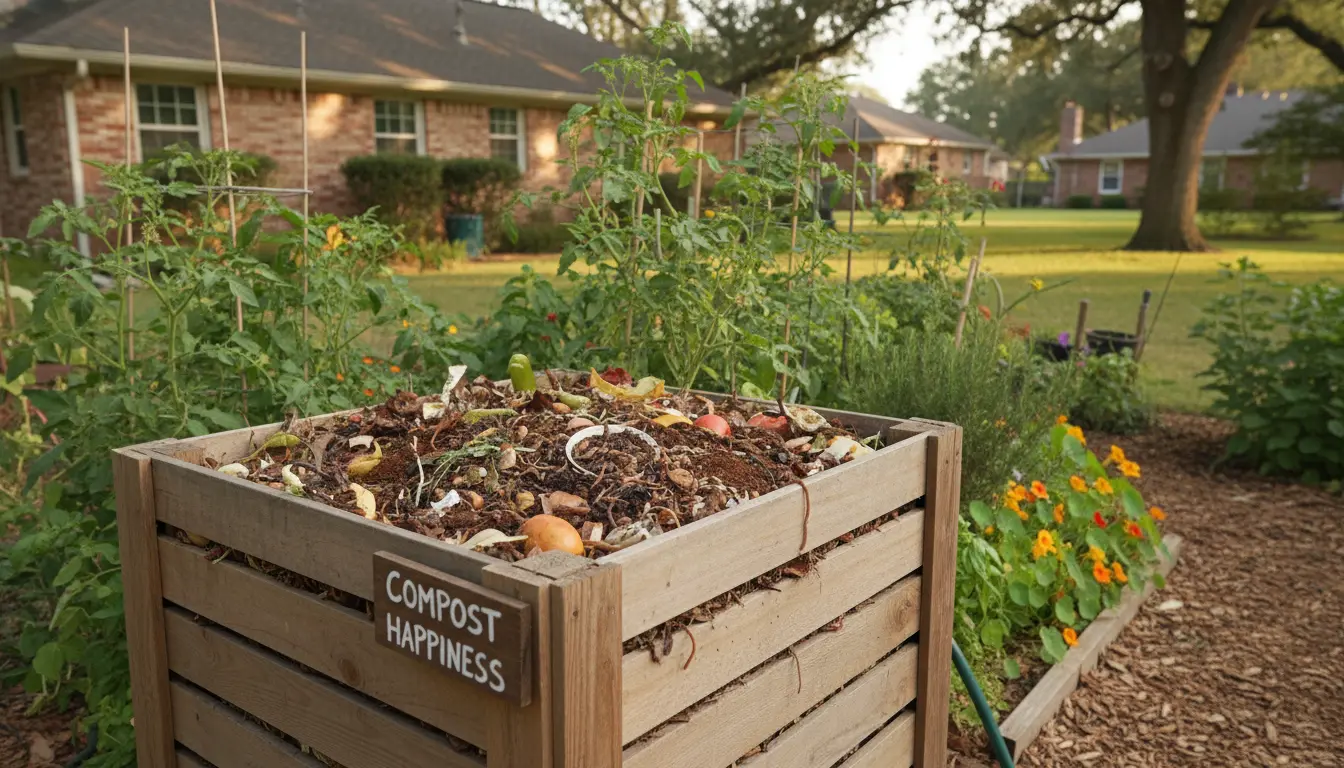
Home composting is the managed breakdown of organic kitchen and yard waste into a rich soil amendment. The process uses microbes, oxygen, moisture, and a balance of materials to convert scraps into compost.
Why Start Home Composting?
Composting reduces landfill waste and returns nutrients to soil. It also lowers household waste costs and improves garden health.
Benefits of Home Composting
- Reduces food waste and trash volume.
- Improves soil structure and water retention.
- Provides free, natural fertilizer for plants.
Choose the Right Composting Method
Select a method that fits your space and time. Common options include a backyard bin, a tumbler, or a worm composting bin (vermicompost).
Backyard Bin
A simple stationary bin is low-cost and holds large volumes. It works well for households with yard waste and space for turning the pile.
Compost Tumbler
Tumblers are sealed containers that you rotate to aerate the pile. They are cleaner and faster but have limited capacity.
Worm Bin (Vermicompost)
Worm bins are ideal for small spaces and apartments. Red worms break down food scraps quickly and produce nutrient-rich castings.
Basic Materials: Browns and Greens
Successful home composting uses a mix of carbon-rich ‘browns’ and nitrogen-rich ‘greens’. Balance and particle size matter.
- Greens: vegetable peels, fruit scraps, coffee grounds, fresh grass clippings.
- Browns: dry leaves, shredded paper, cardboard, wood chips.
Aiming for roughly a 3:1 ratio of browns to greens by volume helps control moisture and odor.
How to Start a Compost Bin: Step-by-Step
- Pick a dry, shaded spot with good drainage. Place the bin directly on soil if possible to allow organisms to enter.
- Start with a 4–6 inch base of coarse browns like small branches or straw to aid airflow.
- Add alternating layers of greens and browns. Chop large pieces to speed decomposition.
- Maintain moisture like a wrung-out sponge. Add water only if the pile is dry.
- Turn the pile every 1–2 weeks to introduce oxygen. Use a pitchfork or tumbler rotation.
Common Troubleshooting
- If the pile smells bad, add more browns and turn it to aerate.
- If the pile is dry and slow, add water and more greens.
- Slow decomposition can be helped by chopping materials smaller and increasing temperature via turning.
Compost temperatures between 130°F and 160°F (54°C–71°C) speed up decomposition and kill many weed seeds and pathogens. Even cooler, slower piles still produce good compost over time.
How to Use Finished Compost
Finished compost is dark, crumbly, and smells earthy. Use it to enrich garden beds, mix into potting soil, or spread as mulch around plants.
- Top-dress lawns with a thin layer of compost to improve soil health.
- Mix compost into vegetable garden soil at planting time (about 1–2 inches worked into the top 6–8 inches).
- Use compost tea (steep compost in water) as a mild liquid feed for plants.
Small Real-World Example
Case Study: A two-person household in an apartment used a 10-gallon worm bin for one year. They diverted about 150 pounds of kitchen scraps from the trash and produced roughly 10 pounds of worm castings. The family used the castings to grow herbs on a balcony, reducing grocery purchases and odor from stored food waste.
Quick Maintenance Checklist for Home Composting
- Weekly: Add scraps and cover with browns to reduce flies.
- Every 1–2 weeks: Turn or rotate the pile if using a bin or mound.
- Monthly: Check moisture and add water or dry material as needed.
- Seasonally: Harvest finished compost and refresh the bin base with coarse material.
Practical Tips for Success
- Chop or shred large items to speed breakdown.
- Avoid meat, dairy, and oily foods in open piles to prevent pests.
- Label a small kitchen container for scraps to make collection easy.
- If you have limited space, try bokashi pre-composting before adding to a worm bin.
Final Notes on Home Composting for Beginners
Start small and adjust based on results. Composting is forgiving—most mistakes can be corrected by balancing browns and greens and improving airflow.
With a modest setup and simple routines, home composting turns waste into a valuable resource for plants and the planet.