
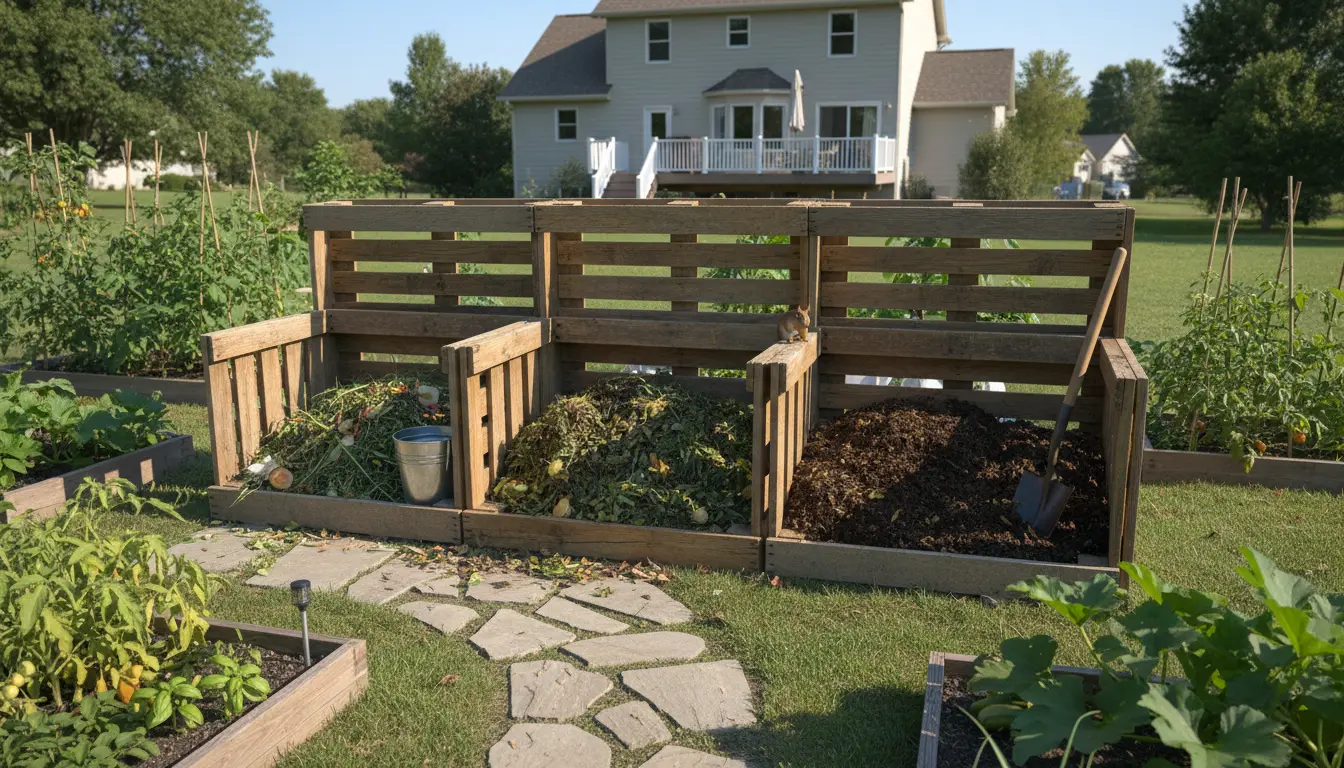
Home composting turns kitchen scraps and yard waste into nutrient-rich soil amendment. This guide gives clear steps, practical tips, and common fixes so you can start composting at home with confidence.
Why Home Composting Matters
Home composting reduces household waste and lowers methane from landfills. It also creates free compost you can use in gardens or containers.
Even small households can make a measurable difference by composting fruit peels, coffee grounds, and yard trimmings.
Benefits of home composting
- Reduces trash volume and disposal costs
- Improves soil structure and water retention
- Supplies slow-release nutrients to plants
- Encourages mindful consumption and waste reduction
How to Start Home Composting
Choose a simple method and gather basic supplies. You can start with a bin, tumbler, or a pile in a corner of the yard.
Locate your compost where it has good drainage and is convenient to access from the kitchen and garden.
Choose a composting method
- Cold pile: Add materials and let them decompose slowly; low maintenance.
- Tumbler: Easier to turn and faster results; good for small yards.
- Bokashi or worm bin (vermicomposting): Best for small kitchens or apartments.
What to compost
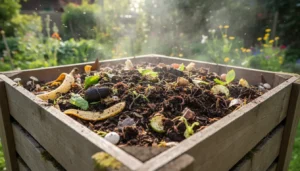
Balance carbon-rich “browns” and nitrogen-rich “greens”. Aim for roughly 3 parts browns to 1 part greens by volume.
- Greens: Vegetable peels, fruit scraps, coffee grounds, fresh grass clippings.
- Browns: Dry leaves, straw, shredded paper, cardboard, wood chips.
- Avoid: Meat, dairy, oils, diseased plants, and pet waste from carnivores.
Setting Up a Home Compost Bin
Use a container with good airflow and a lid to retain moisture and heat. Drill holes if needed for air circulation.
Layer materials as you add them. Start with a layer of coarse browns for drainage, then add alternating layers of greens and browns.
Basic setup steps
- Select a bin or spot and prepare a base layer of twigs or straw.
- Add kitchen greens and cover with a handful of browns each time.
- Maintain moisture like a wrung-out sponge; add water or dry material as needed.
- Turn the pile every 1–2 weeks to speed decomposition (if using an active method).
Maintaining Your Home Compost

Regular maintenance keeps the process healthy and efficient. Monitor moisture, temperature, and balance of materials.
Use a pitchfork or compost thermometer to check heat. Active piles often reach 120–140°F (50–60°C) for pathogen control.
Simple maintenance checklist
- Turn the pile periodically to add oxygen.
- Keep the mix moist but not waterlogged.
- Add browns when the pile smells strong or looks too wet.
- Shred or chop large items to speed breakdown.
Troubleshooting Home Composting Problems
Smells, pests, or slow decomposition are common issues. Most problems come from imbalance or poor airflow.
Common issues and fixes
- Bad odor: Add more browns and turn the pile to introduce air.
- Pests like rodents: Avoid meat and fatty foods; use a closed bin or secure tumbler.
- Slow breakdown: Chop material finer and keep the pile warm and moist.
- Dry pile: Add water and more greens to revive microbial activity.
Real-World Example: A Small Urban Household
Case study: A two-person household in a city used a 20-gallon tumbler for one year. They composted most vegetable scraps, coffee grounds, and paper towels.
Results: They reduced weekly trash by one bag, produced about 25 liters of compost in 12 months, and used it on container tomatoes to improve yield and reduce fertilizer use.
Using Finished Home Compost
Finished compost is dark, crumbly, and smells earthy. Use it as a soil amendment, potting mix component, or mulch for garden beds.
- Top-dress lawns or mix into potting soil at 10–25% by volume.
- Work compost into garden beds before planting to improve structure.
- Use as a seed-starting mix additive for stronger seedlings.
Quick Checklist to Start Home Composting Today
- Choose method: bin, tumbler, pile, or worm bin.
- Gather browns and greens and a container or space.
- Layer materials and maintain moisture and airflow.
- Turn regularly and monitor for pests or odors.
- Harvest finished compost when dark and crumbly.
Home composting is a low-cost way to reduce waste and improve garden health. Start small, learn from each batch, and adjust the mix until the process fits your lifestyle.