
Why Home Composting for Beginners Matters
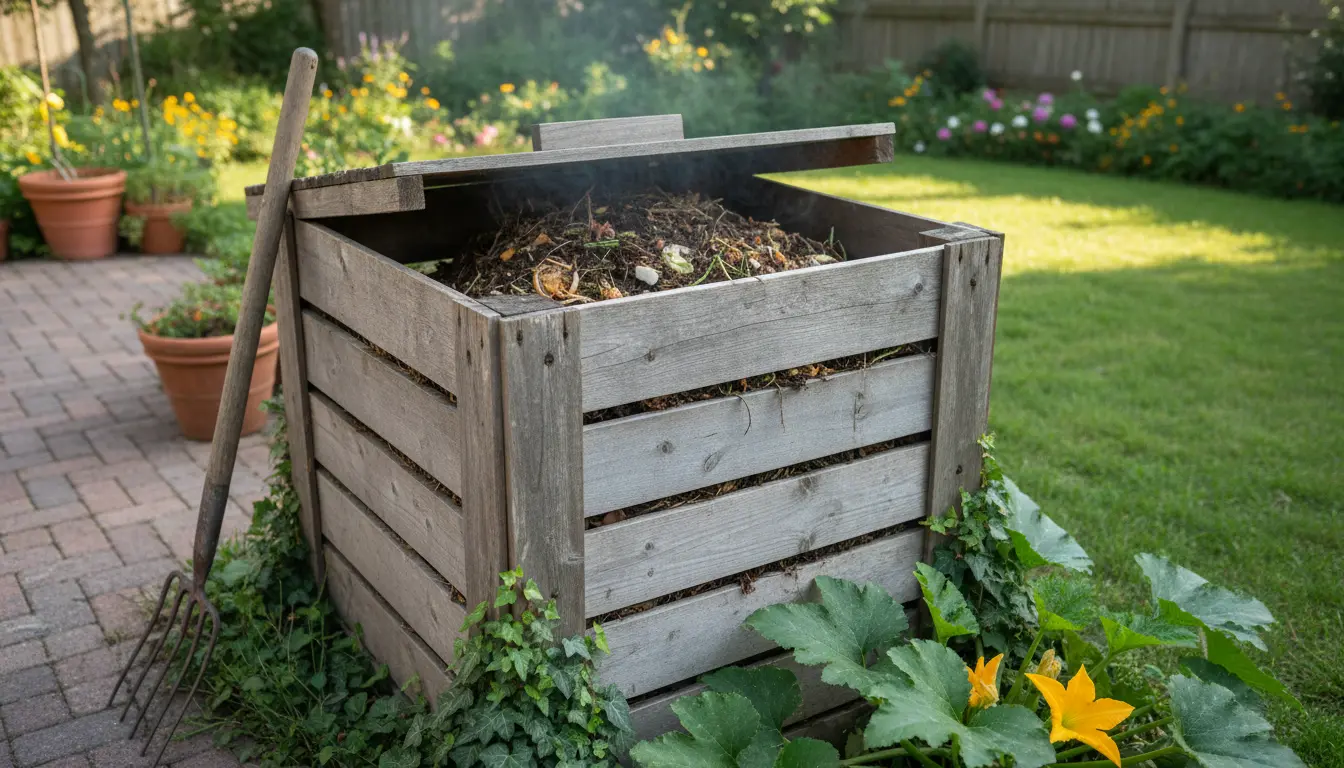
Home composting for beginners is an accessible way to turn food scraps and yard waste into useful soil. It reduces landfill waste and improves garden health without complex tools.
This guide gives clear, actionable steps you can use today, whether you have a backyard, balcony, or small kitchen.
Getting Started with Home Composting for Beginners
Start by deciding where to compost: a backyard pile, a bin, or a small countertop setup for bokashi or vermicomposting. Location affects odor control, accessibility, and the type of system you choose.
Choose a method that matches your space and effort level. A simple, contained bin works well for most beginners.
Choosing a Bin
Select a compost bin sized for your household. Options include tumblers, stationary bins, and DIY wooden boxes. For apartments, consider a worm bin or bokashi bucket to handle kitchen scraps indoors.
Key features to look for are ventilation, drainage, and ease of turning the material.
Basic Inputs: Greens and Browns
Compost needs a balance of nitrogen-rich greens and carbon-rich browns. Aim for a mix close to 1 part greens to 2–3 parts browns by volume.
- Greens: fruit and vegetable scraps, coffee grounds, fresh grass clippings.
- Browns: dried leaves, shredded paper, cardboard, small wood chips.
Step-by-Step Composting Process
Follow these simple steps to keep your compost active and odor-free. Consistent attention for a few minutes a week is enough.
1. Layer and Build
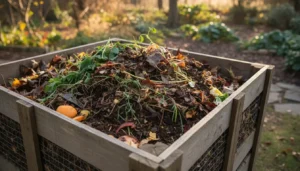
Start with a layer of coarse browns to improve airflow. Alternate greens and browns to keep the pile balanced. Keep materials chopped or shredded to speed decomposition.
2. Maintain Moisture and Air
Keep the pile as moist as a wrung-out sponge. If it’s too dry, add water and greens. If it’s too wet or smells, add more browns and turn it to add air.
3. Turn or Rotate
Turning the pile every 1–2 weeks speeds decomposition and prevents odors. Use a pitchfork or rotate a tumbler-style bin for easy mixing.
4. Know When It’s Ready
Finished compost is dark, crumbly, and earthy-smelling. Depending on the method and materials, that can take 2 months to a year. Screen out large pieces for another cycle.
Troubleshooting Common Problems
Beginners often face a few predictable issues. Troubleshooting is usually straightforward and requires small adjustments.
- Bad smell: Add dry browns and increase turning to introduce more air.
- Slow breakdown: Chop materials smaller, add water if dry, or add some finished compost or soil to introduce microbes.
- Fruit flies: Bury food scraps under a layer of browns or use a closed bin.
Household food waste makes up about 20–30% of residential trash. Composting can cut that portion significantly and return nutrients to soil.
Small Real-World Example: Case Study
Case Study: The Martinez Family lives in a small house with a tiny yard. They started a 220-liter tumbling bin and used it for kitchen scraps and yard trimmings.
After six months of regular turning and balancing greens and browns, they produced enough compost to top-dress their vegetable beds and cut their garbage output by about 35%.
Their key changes were chopping materials smaller, keeping a cover of leaves to deter pests, and using a compost thermometer to watch temperature spikes during active decomposition.
Tips and Examples for Different Living Situations
Adapt composting to your home. Here are quick options depending on space and lifestyle.
- Backyard: Stationary pile or tumbling bin; add yard waste and kitchen scraps.
- Small yard: Enclosed bin or raised box to keep things tidy and warm.
- Apartment: Worm bin or bokashi system for indoor-friendly composting.
Using Finished Compost
Apply finished compost to garden beds, potting mixes, or as a top dressing for lawns. It improves soil structure, water retention, and nutrient content.
Start with a thin layer in established beds and mix compost into new planting soil for best results.
Final Checklist for Home Composting for Beginners
- Choose the right system for your space.
- Balance greens and browns and keep materials small.
- Maintain moisture and allow airflow by turning regularly.
- Troubleshoot odors and pests quickly with simple fixes.
- Use finished compost to improve soil and reduce waste.
Home composting for beginners is low-cost and scalable. With a basic bin, a few simple habits, and a little patience, you can cut waste and create a valuable soil amendment for your plants.