
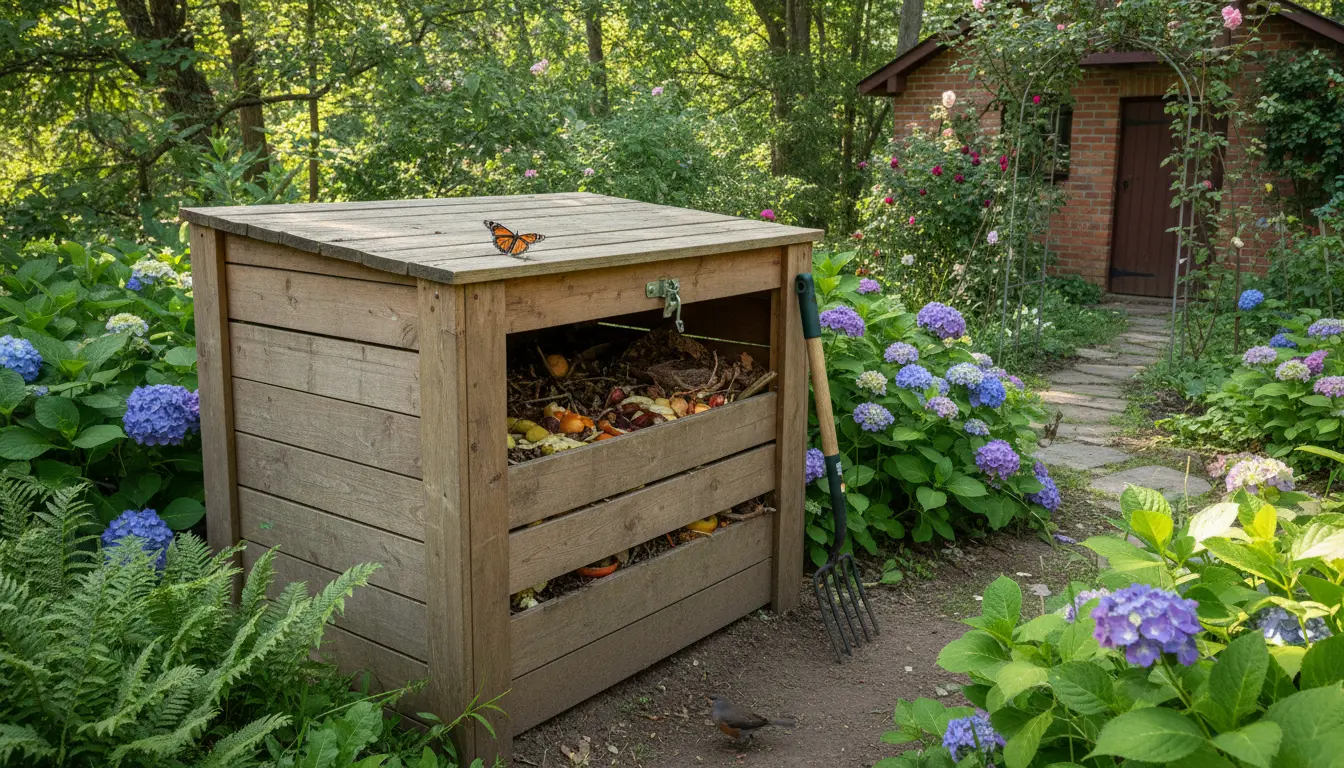
Home Composting Basics
Home composting turns kitchen and yard waste into nutrient-rich soil that improves gardens and reduces trash. Anyone with a small yard, balcony, or even a few pots can compost effectively with the right method.
This guide explains simple steps to start home composting, what materials to use, how to maintain your pile, and how to fix common problems.
Why choose home composting
Composting reduces landfill waste and lowers methane emissions from garbage. It also returns nutrients to the soil, improving plant health and water retention.
Costs are low: a basic bin or a DIY system and a little time are enough to get started.
How to Start Home Composting
Begin by deciding the compost system that fits your space and lifestyle. Basic options include a simple pile, a compost bin, or a worm composting (vermicompost) setup for small spaces.
Choose the right compost system
- Open pile — Best for yards with space; low cost but takes more time to heat and break down materials.
- Closed bin — Faster breakdown, tidier, and better for neighborhoods with pests.
- Worm bin (vermicompost) — Ideal for apartments or balconies; uses red worms to break down food scraps quickly.
Where to place your compost
Place bins on soil or grass to allow worms and microbes to enter. Choose a location with partial shade to prevent drying out in summer.
Good airflow and easy access make maintenance simpler and encourage regular turning or mixing.
What to Compost and What to Avoid
Balance is key: mix carbon-rich “browns” with nitrogen-rich “greens” to create an environment where microbes can work efficiently.
Common greens (nitrogen)
- Vegetable and fruit scraps
- Coffee grounds and tea leaves
- Fresh grass clippings
Common browns (carbon)
- Dry leaves and straw
- Shredded paper and cardboard (no glossy prints)
- Wood chips and sawdust from untreated wood
What to avoid
- Meat, fish, dairy, and oily foods — attract pests and slow the process
- Diseased plants or invasive weeds — risk spreading
- Pet waste from carnivores — can carry pathogens
Maintaining Your Home Compost
Routine care keeps compost active and odor-free. Focus on aeration, moisture, and particle size to speed decomposition.
Turning and aeration
Turn your compost every 1–2 weeks for a compost bin and every 3–4 weeks for a larger pile. Turning adds oxygen and helps control odor.
If you can’t turn often, add bulky browns like twigs to keep airflow pathways open.
Moisture and temperature
Compost should feel like a wrung-out sponge: moist but not soggy. Add water during dry spells and cover the pile in heavy rain to avoid saturation.
Temperature rises as microbes work. A hot pile (131–160°F or 55–70°C) breaks down material faster but is not required for backyard composting.
Troubleshooting common problems
- Bad smell: add more browns and turn the pile to introduce air.
- Slow breakdown: chop materials finer or add nitrogen-rich greens.
- Pests: switch to a closed bin, bury food scraps, or balance greens with more browns.
Case Study: Small Yard, Big Results
Emma, a homeowner with a 30-foot garden, started a 3-bin system to compost kitchen scraps and yard waste. She layered greens and browns and turned each bin weekly.
Within six months she had rich compost to mix into vegetable beds. Her tomato harvest increased, and her weekly trash volume dropped by almost half.
About 30% of household waste is compostable food and yard material. Composting these items can reduce landfill waste and produce free garden soil.
Quick Start Checklist for Home Composting
- Pick a system: open pile, closed bin, or worm bin.
- Gather browns and greens in a roughly 3:1 carbon to nitrogen ratio.
- Place the bin on soil in partial shade and keep it moist.
- Turn the pile regularly and adjust materials if odors or pests appear.
- Harvest finished compost when it is dark, crumbly, and earthy-smelling.
Conclusion
Home composting is a low-cost, practical way to reduce waste and support healthier soil. Start small, observe how materials break down, and adjust the mix and frequency of turning as needed.
With basic attention to balance, moisture, and aeration, most households can produce usable compost within a few months and enjoy brighter, healthier gardens.