
Home composting turns kitchen and yard waste into nutrient-rich soil amendment while cutting landfill waste. This guide gives clear, practical steps to start and maintain a working compost system at home.
Why Home Composting Matters
Home composting reduces organic waste sent to landfills and lowers methane emissions. It also returns nutrients to soil, improving plant health and water retention.
For beginners, composting is accessible whether you have a backyard, balcony, or community garden plot. The key is matching the method to your space and routine.
Types of Home Composting
Choose a system that fits your lifestyle and space. Each has trade-offs for maintenance, speed, and odor control.
Tumbler Composting
Tumblers are enclosed bins on an axle that you rotate to aerate the pile. They speed up decomposition and reduce pests, but capacity is limited.
Bins and Piles
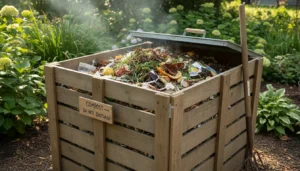
Open bins or simple piles work well in gardens. They are low-cost and scalable but need more turning and attention to balance.
Vermicomposting (Worm Bins)
Worm composting uses red worms to break down food scraps. It’s ideal for small spaces and produces fast, high-quality compost, though it requires temperature control and attention to moisture.
How to Start Home Composting
Begin with a simple setup and a plan for what you will compost. Focus on balance, aeration, and moisture to avoid problems.
Materials: Browns and Greens
Successful compost mixes “browns” (carbon) and “greens” (nitrogen). Balance is roughly 3:1 by volume of browns to greens.
- Greens: kitchen vegetable scraps, coffee grounds, fresh grass clippings.
- Browns: dry leaves, shredded paper, straw, cardboard.
Composting Steps
- Choose a container or location with good drainage and partial shade.
- Layer a base of coarse browns for airflow, then add a mix of greens and browns.
- Keep the pile moist like a wrung-out sponge; water if dry.
- Turn or aerate the pile every 1–2 weeks, or rotate a tumbler regularly.
- Monitor temperature: active piles heat to 130–160°F (55–70°C) when working well.
What to Compost and What to Avoid
Most plant-based kitchen waste is compostable. Avoid items that attract pests or slow decomposition.
- Good: fruit and vegetable scraps, coffee grounds, tea bags (remove staples), eggshells.
- Avoid: meat, dairy, oils, diseased plants, pet waste, and large amounts of citrus or onion peel in small systems.
Maintaining Your Home Composting System
Consistent maintenance prevents odor and pest problems. Use simple checks and adjustments.
- Smell: a healthy pile smells earthy. Bad odors mean too much moisture or greens—add browns and turn.
- Moisture: if it’s dry, add water and greens. If soggy, add dry browns and increase airflow.
- Temperature: a warm core indicates active decomposition; cool piles still produce compost but slower.
Troubleshooting Common Problems
Problem-solving keeps beginners on track. Small fixes often solve common issues quickly.
- Flies: cover fresh food with browns and bury scraps inside the pile.
- Slow breakdown: chop materials finer, add greens, and ensure adequate moisture and aeration.
- Smell: turn pile, add dry browns, and avoid adding meat or dairy.
When Is Compost Ready and How to Use It
Finished compost is dark, crumbly, and smells like earth. Typical timelines vary from 2 months in ideal hot systems to 12 months in passive piles.
Use finished compost as a soil top-dressing, mix into planting beds, or make a compost tea for strong seedlings.
Small Case Study: Balcony Worm Bin Success
Sarah, a city renter, started a 10-gallon worm bin on her balcony using red wrigglers and shredded cardboard. She added vegetable scraps and coffee grounds three times a week.
Within three months she harvested rich worm castings that she mixed into potted herbs. The herbs showed faster growth and fewer watering needs because the soil retained moisture better.
Quick Checklist for Home Composting Beginners
- Choose a system: tumbler, bin, pile, or worm box.
- Collect greens and browns separately to maintain balance.
- Chop or shred large items to speed decomposition.
- Maintain moisture and aeration—turn regularly.
- Use finished compost in gardens and potted plants.
Start small, keep it simple, and learn by doing. With a basic system and routine checks, home composting becomes a reliable and rewarding way to reduce waste and improve soil health.