
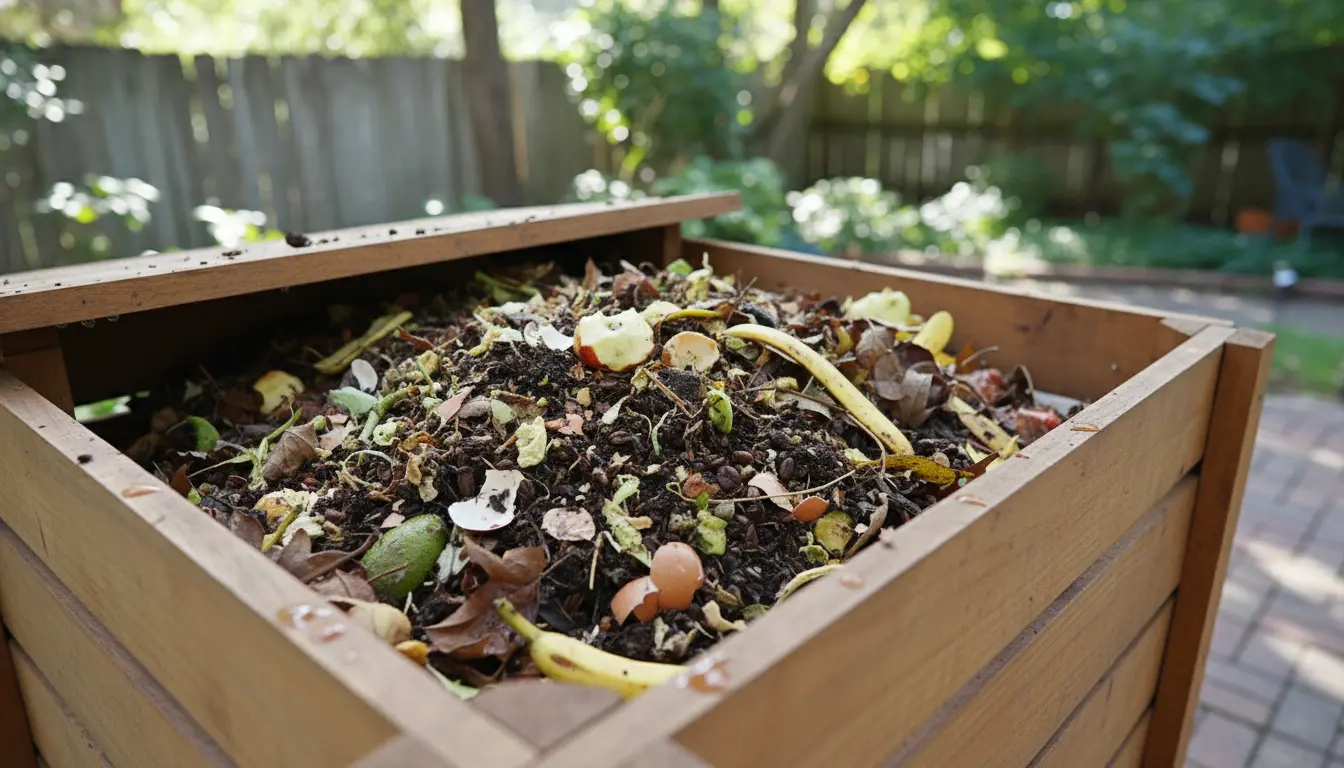
Why Home Composting Matters
Home composting reduces household waste and creates a free source of nutrient-rich soil. It closes the loop between your kitchen and garden by turning food scraps into a resource.
Composting also lowers methane emissions from landfills and improves soil structure when added to garden beds or potted plants.
How to Start Home Composting
Starting home composting is simple and requires planning more than work. Begin by choosing a method and a location for your compost bin.
Choose a Composting Method
Select a method that fits your space and lifestyle. Popular options include backyard compost piles, tumblers, and worm composting for apartments.
- Backyard pile or bin: Good for yards and gardens, low cost.
- Compost tumbler: Faster turning, contained and tidy.
- Vermicompost (worms): Ideal for small spaces and kitchens.
Pick a Location
Place your compost bin on bare soil to allow drainage and access to soil organisms. A partly shaded spot keeps the pile from drying out in hot weather.

Ensure it’s easy to reach from your kitchen and garden to encourage regular use.
Home Composting Materials: What to Add
Successful compost balances ‘greens’ and ‘browns’. Greens supply nitrogen, browns provide carbon.
- Greens: Fruit and vegetable scraps, coffee grounds, fresh grass clippings.
- Browns: Dry leaves, shredded paper, cardboard, straw, wood chips.
Aim for roughly a 2:1 or 3:1 ratio of browns to greens by volume. Too many greens make a soggy, smelly pile; too many browns slow decomposition.
What Not to Compost
Some items can cause pests or slow composting. Avoid meat, dairy, oily foods, diseased plants, and pet waste from carnivores.
Large branches and heavy wood take a long time to break down; chip or shred them first.
Maintaining Your Home Composting System
Maintenance is mostly about moisture, aeration, and periodic turning. Check the pile weekly.
Moisture
The pile should feel like a damp sponge. Add water during dry spells and add browns if it becomes waterlogged.
Aeration and Turning
Aerobic bacteria need oxygen. Turn the pile every 1–2 weeks for faster results, or use a tumbler that rotates easily.
Temperature
Active compost heats up to 130–160°F (55–70°C). High temperatures speed decomposition and kill weed seeds. If your pile never warms, add more greens and turn it.
Troubleshooting Common Problems in Home Composting
- Bad smells: Usually from too much green waste and poor aeration. Turn the pile and add more browns.
- Slow breakdown: Add water, chop materials smaller, and increase turns.
- Pests like rodents: Avoid meat and dairy and use a closed bin or finer mesh around the base.
Composting can reduce household waste by up to 30 percent. A well-managed compost pile can also reach temperatures that destroy most common weed seeds.
Using Finished Compost
Finished compost looks dark and crumbly and smells earthy. Use it as a soil amendment, top dressing, or mix into potting soil.
Apply a 1–3 inch layer around garden plants, or mix one part compost to three parts soil for container plants.
Small Case Study: Apartment Home Composting Success
Maria lives in a two-bedroom apartment and started vermicomposting with a small bin under her sink. She added kitchen scraps and shredded paper, keeping the bin shaded and slightly moist.
Within three months she had usable compost for her balcony herbs. Her bin remained odor-free because she balanced greens and browns and fed the worms small portions regularly.
Tips for Long-Term Home Composting Success
- Keep a small counter bucket for scraps to make composting easier.
- Chop or shred larger items to speed decomposition.
- Rotate materials: add a layer of browns after every two green additions.
- Record temperature and changes to learn what works in your climate.
Final Thoughts on Home Composting
Home composting is accessible to most households and provides clear environmental and gardening benefits. Start small, observe your pile, and adjust as needed.
With a little care, you can convert everyday kitchen waste into a valuable soil resource and reduce your household footprint.