
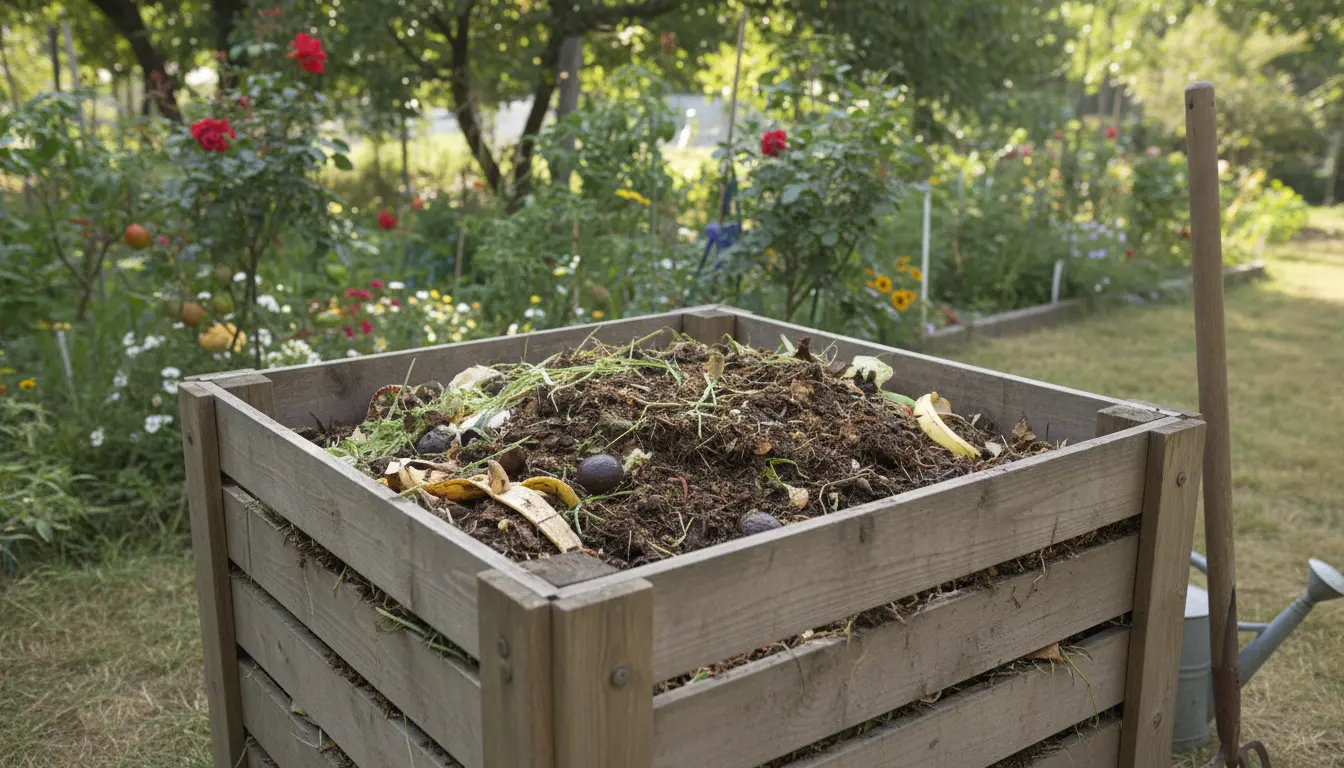
What Is Home Composting?
Home composting is the natural breakdown of organic kitchen and yard waste into nutrient-rich material you can use in gardens and pots. It reduces landfill waste and supplies free soil amendment for plants.
This guide focuses on practical steps to start and maintain a home compost bin, using simple materials and common-sense routines.
Why Start Home Composting?
Composting cuts household waste, lowers methane emissions from landfills, and improves soil health. It also saves money on store-bought fertilizers and improves water retention in soil.
Even small households can make a measurable environmental impact by composting food scraps and yard clippings.
How to Start a Home Compost Bin
Choose the Right Bin for Home Composting
Select a bin that fits your space and compost volume. Options include tumblers, plastic or wooden bins, and simple open piles for larger yards.
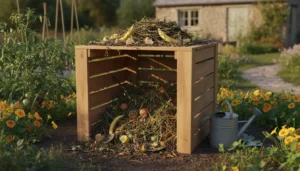
A 3×3-foot enclosed bin is a good starting size for many gardens and breaks down material efficiently without requiring too much space.
Gather Materials for Your Home Compost Bin
Compost needs a balance of green (nitrogen) and brown (carbon) materials. Aim for a roughly 1:2 ratio of greens to browns by volume.
- Greens: fruit and vegetable scraps, coffee grounds, fresh grass clippings.
- Browns: dry leaves, shredded paper, cardboard, straw.
- Avoid: meat, dairy, oils, diseased plants, or pet waste in typical backyard bins.
Step-by-Step Setup for a Home Compost Bin
Follow these simple steps to get started quickly and with minimal cost.
- Location: place the bin on soil in a partly shaded spot to keep moisture balanced and allow beneficial microbes to access the pile.
- Base layer: add coarse browns like small branches or straw to help airflow at the bottom.
- Add materials in layers: alternate greens and browns, chopping large items to speed decomposition.
- Moisture: keep the pile like a wrung-out sponge; add water or dry material to correct dampness.
- Turn regularly: every 1–2 weeks for faster compost, or less often for low-maintenance systems.
Maintaining Your Home Compost Bin
Home Composting Routine
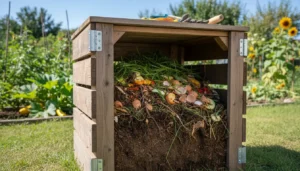
Consistent small actions keep compost working. Add kitchen scraps daily or use a counter caddy to collect them when you cook.
Turn the pile to introduce oxygen and check moisture. If the pile smells strongly, it likely lacks air or has too many greens.
Seasonal Care for a Home Compost Bin
In summer, monitor moisture and add water during dry spells. In winter, decomposition slows; add more greens or insulate the bin with straw to retain heat.
Covering the bin with a lid or tarp helps keep excess rain out and prevents nutrient washout.
Troubleshooting Home Composting Problems
Problems are usually easy to fix once you identify the cause. Use these quick checks:
- Bad odor: add more browns and turn the pile to increase airflow.
- Pile too dry: add water and some greens, then mix well.
- Pile too wet and compacted: add dry browns and turn to fluff it up.
- Pests: avoid meat and oily foods, secure the bin, or use a closed tumbler.
Compost can raise soil organic matter, improve water retention, and reduce the need for watering by up to 30% in some garden soils.
Case Study: Small Backyard Home Composting
One-Season Example
Maria, a homeowner with a small backyard, started a 60-gallon plastic compost bin in spring. She collected kitchen scraps in a counter caddy and added dry leaves from fall.
By turning the bin every two weeks and maintaining a balance of greens and browns, she produced usable compost in six months. Her vegetable beds showed improved growth and reduced need for store fertilizer.
Practical Tips and Examples for Faster Results
- Shred or chop yard waste to speed decomposition — smaller pieces break down faster.
- Use a garden fork or compost aerator to turn the pile; tumblers are good if you prefer less physical effort.
- Save and dry autumn leaves to use as browns through the year.
- If you want faster, hotter compost, aim for a larger pile (at least 3x3x3 feet) and turn it frequently.
Final Steps: Using Finished Compost
Finished compost is dark, crumbly, and smells earthy. Sift out large undecomposed pieces and return them to the bin for further breakdown.
Use compost as a top dressing, mix it into potting mixes, or blend into garden beds at a rate of 1–3 inches for steady soil improvement.
Starting a home compost bin is low-cost and scalable. With basic materials and a small weekly routine, you can convert kitchen and yard waste into valuable soil amendment and reduce your environmental footprint.