
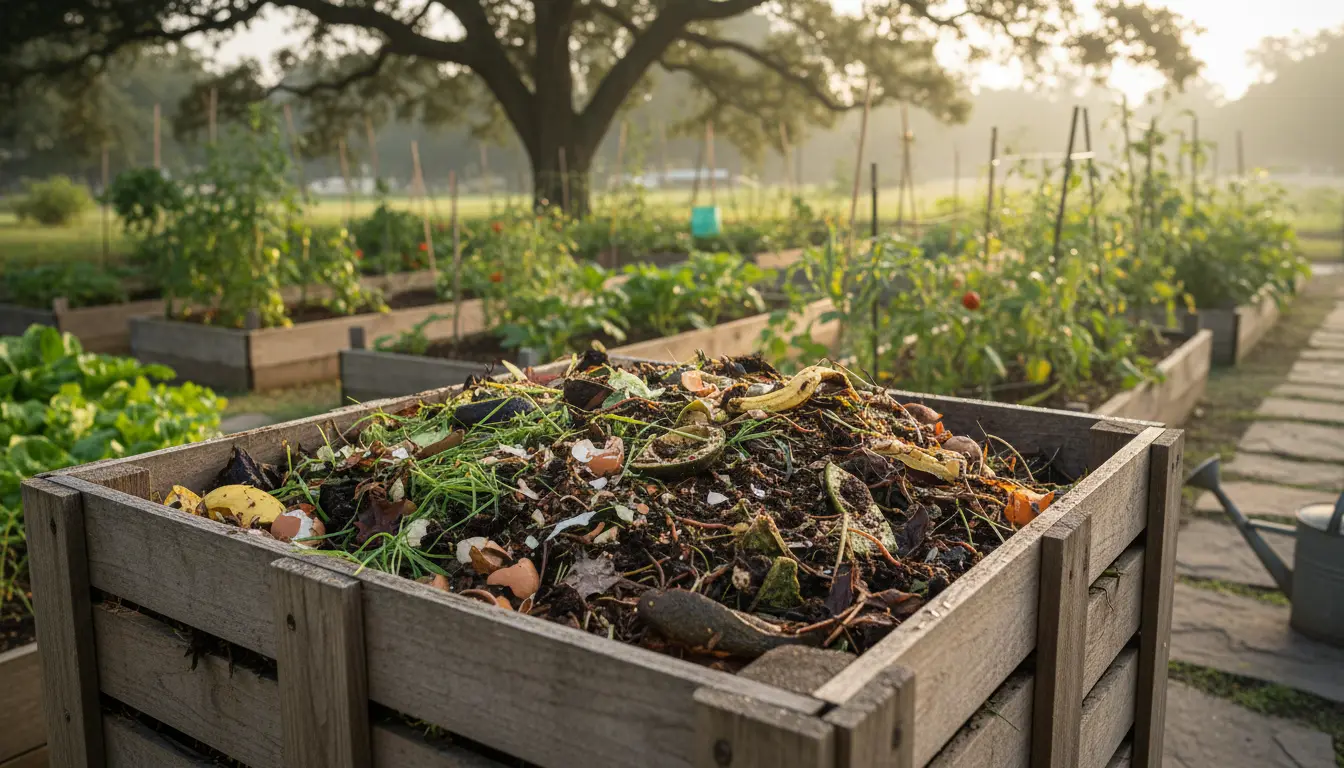
Why Start Home Composting
Home composting is an easy way to reduce household waste and create nutrient-rich soil for plants. It lowers trash output and supports healthier gardens without chemical fertilizers.
This guide gives practical, step-by-step instructions for starting home composting, choosing a bin, maintaining balance, and solving common problems.
Choosing a Compost Bin for Home Composting
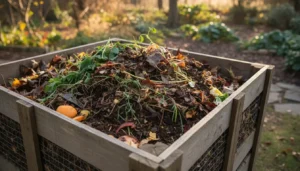
Selecting the right compost bin makes home composting simple and tidy. Options include open piles, tumblers, and stationary bins; choose one that fits your space and schedule.
- Open pile — Inexpensive and good for large yards but can be slower and messier.
- Tumbler — Easy turning speeds up composting; ideal for small spaces and faster results.
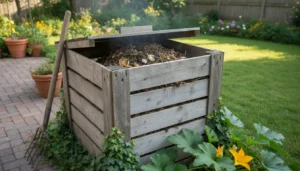
- Stationary bin — Affordable and simple; needs manual turning with a pitchfork.
Where to Place Your Compost Bin
Place the bin on bare soil to allow worms and microbes to migrate in. Pick a level, partially shaded spot to keep moisture steady and avoid drying out.
Basic Ingredients for Successful Home Composting
Compost needs a balance of carbon-rich (brown) and nitrogen-rich (green) materials. Getting the ratio right is the key to efficient decomposition.
- Brown materials: dry leaves, straw, shredded paper, cardboard.
- Green materials: vegetable scraps, coffee grounds, fresh grass clippings.
- Water: keeps microbes active; aim for a damp sponge consistency.
A useful rule of thumb is roughly 3 parts browns to 1 part greens by volume. Adjust as needed if the pile is too wet or too dry.
Step by Step Home Composting Process
Follow these steps to build and maintain a healthy compost pile at home. Each step is short and actionable for beginners.
- Layering: Start with a 4–6 inch layer of coarse browns like twigs for aeration. Add alternating layers of greens and browns.
- Moisture: Moisten new layers as you build, keeping the pile like a wrung-out sponge.
- Turning: Turn or tumble the pile every 1–2 weeks to add oxygen and speed decomposition.
- Monitoring: Check temperature and smell; a warm, earthy scent is good. If it smells sour, add more browns and turn more often.
- Harvesting: Finished compost is dark, crumbly, and earthy. Use it after 2–6 months depending on conditions.
Troubleshooting Common Home Composting Issues
Problems are usually solvable with small adjustments in balance, aeration, or moisture. Here are common issues and fixes.
- Bad smell — Too wet or too many greens. Add dry browns and turn frequently.
- Pile won’t heat up — Too small or too dry. Add more material and water, or insulate the bin.
- Pests — Avoid meat, dairy, and oily foods. Use a closed bin or bury kitchen scraps in the center of the pile.
- Slow decomposition — Chop materials finer, increase surface area, and turn more often.
Composting diverts up to 30% of household waste from landfills. Backyard compost reduces methane emissions and returns nutrients to the soil.
Using Finished Compost from Home Composting
Finished compost enriches garden beds, improves soil structure, and increases water retention. Use it as a top dressing or mix it into potting soil.
- Vegetable gardens: Mix 1–2 inches of compost into topsoil before planting.
- Potted plants: Replace 20–30% of potting mix with compost for improved nutrients.
- Lawn care: Spread a thin layer in spring or fall to boost microbial life.
Small Case Study: Neighborhood Kitchen to Garden Cycle
Maria, a homeowner in Portland, started home composting with a 60-liter tumbler. She added kitchen scraps and yard trimmings, turning weekly.
Within four months she had rich compost that she mixed into raised beds. Her vegetable yield increased, and she reports reducing weekly trash by half.
Quick Tips and Examples for Better Home Composting
- Shred or chop large items to speed breakdown.
- Keep a small counter bucket with a lid for food scraps and empty into the bin every few days.
- Use a thermometer to check temperature; active piles reach 120–160°F (49–71°C).
- Compost eggshells and coffee grounds but avoid citrus in large amounts as it can slow microbes.
Getting Started Today with Home Composting
Begin by choosing a bin, collecting materials, and setting a simple schedule for turning and monitoring. Start small and scale up as you learn what works for your climate and household.
Home composting is low-cost, practical, and rewarding. With minimal effort you can turn waste into a valuable resource for your garden and reduce your environmental footprint.