
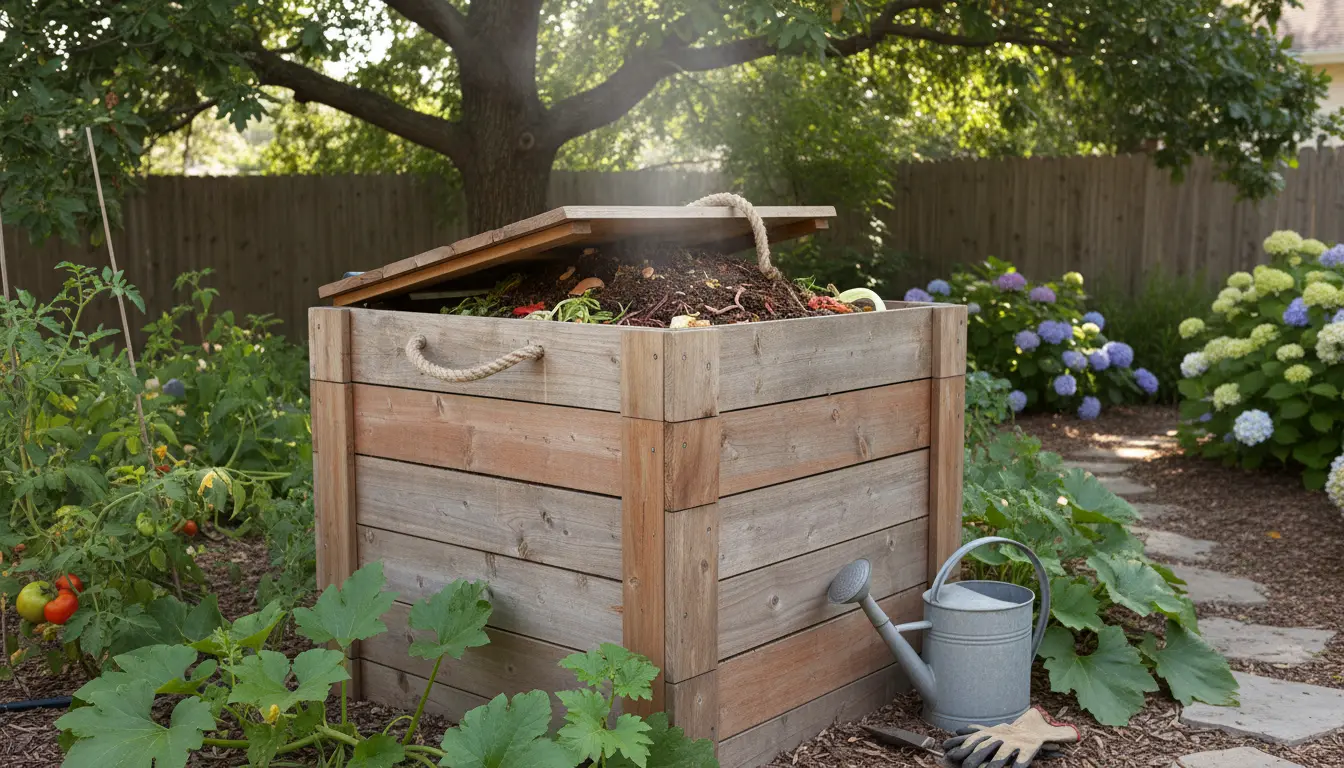
Why Home Composting for Beginners Matters
Home composting turns kitchen scraps and yard waste into nutrient-rich soil. It reduces landfill waste and improves garden health.
For beginners, the process can seem technical, but simple systems work well. This guide focuses on easy, low-cost steps you can start this weekend.
Basic Principles of Home Composting for Beginners
Composting relies on three things: carbon, nitrogen, and oxygen. Balancing these elements keeps decomposition active and odor-free.
Think of carbon-rich materials as browns and nitrogen-rich materials as greens. You also need regular airflow and moisture.
Key Components
- Greens (nitrogen): fruit and vegetable scraps, coffee grounds, grass clippings.
- Browns (carbon): dry leaves, shredded paper, cardboard, straw.
- Air: turn the pile or use a tumbling bin to add oxygen.
- Moisture: the pile should feel like a wrung-out sponge.
How to Start Home Composting for Beginners
Choose a simple container: a plastic bin, wood box, or a purchased compost tumbler works well. Location matters—pick a shaded spot with good drainage.
Follow these starter steps to avoid common mistakes.
Step-by-Step Starter Method
- Prepare the bin: drill holes for airflow if needed and place it on soil or grass.
- Add a base layer of coarse browns such as twigs or straw for drainage.
- Alternate layers: add a 2–4 inch layer of greens, then a thicker layer of browns.
- Keep the pile moist and turn every 1–2 weeks to add air.
- Wait 2–6 months for finished compost; smaller particles and frequent turning speed this up.
Materials to Use in Home Composting for Beginners
Knowing what to include and avoid helps produce clean compost fast. Use the right mix and skip problem materials.
Safe Items
- Vegetable and fruit scraps
- Eggshells (crushed)
- Coffee grounds and tea bags (remove staples)
- Yard trimmings, leaves, grass clippings
- Shredded paper and cardboard
Items to Avoid
- Meat, dairy, oily foods (attract pests)
- Diseased plants or invasive weeds
- Pet waste from carnivores
- Coal or charcoal ash and glossy paper
Troubleshooting Home Composting for Beginners
Problems are common but usually easy to fix. Use small checks to diagnose and correct issues.
Common Problems and Fixes
- Smelly pile: add more browns and increase turning for airflow.
- Pile too dry: add water and more greens, then mix.
- Pile not heating: add fresh greens, chop materials smaller, and insulate if cold.
- Flies or pests: bury food scraps deeper or use a closed bin.
How to Use Finished Compost
Finished compost is dark, crumbly, and earthy-smelling. Use it to enrich garden beds, potting mixes, or lawn topdressing.
Apply a 1–2 inch layer to garden soil or mix 1 part compost to 3 parts potting soil for containers.
A typical home can divert about 20% of its weekly trash to composting, cutting landfill volume and methane emissions.
Small Case Study: Apartment Balcony Composter
Sarah, a city renter, started a small worm bin on her balcony using a plastic tote. She collected fruit scraps and shredded paper as bedding.
Within three months she harvested rich worm castings and used them to potted herbs. Her food waste dropped by nearly half and her plants grew more vigorously.
Practical Tips for Success with Home Composting for Beginners
- Chop or shred materials to speed decomposition.
- Keep a 2:1 brown to green ratio by volume for balance.
- Use a kitchen caddy for scraps to make collection easier.
- Label bins and keep a simple turning schedule in a phone reminder app.
Final Checklist to Start Home Composting for Beginners
- Choose a bin and location
- Gather browns and greens
- Build initial layers and keep moist
- Turn regularly and monitor
- Use finished compost in your garden
Home composting is a low-cost, high-impact practice anyone can adopt. Start small, learn from experience, and scale up as you gain confidence.