
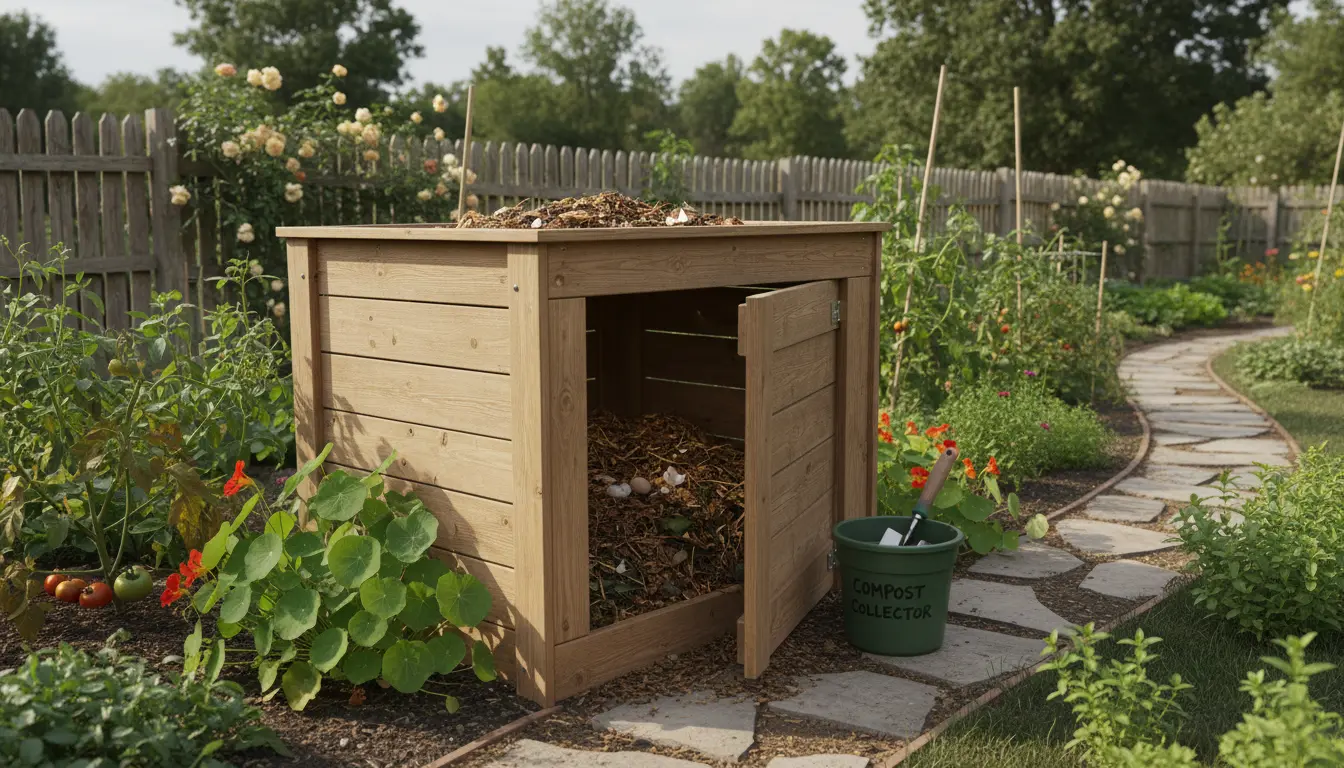
Home composting turns kitchen scraps and yard waste into rich soil that improves garden health and reduces trash. This guide gives practical steps so beginners can start a small, effective compost system at home.
Home Composting Basics
Home composting is the controlled decomposition of organic material by microbes, worms, and other organisms. The result is humus, a nutrient-rich product that helps soil retain water and supports plant growth.
Composting reduces landfill waste, lowers methane emissions, and saves money on soil amendments. You can compost whether you have a backyard, balcony, or small indoor space.
Getting Started with Home Composting
Choose a Bin for Home Composting
Select a bin that fits your space and needs. Options include simple tumblers, stationary wooden bins, plastic bins, and worm (vermiculture) setups. Each has pros and cons related to speed, odor control, and maintenance.
- Tumbler: Faster mixing, good for small yards.
- Stationary bin: Low cost, needs occasional turning.
- Worm bin: Great for indoor use and food scraps, produces castings quickly.
What to Compost
Balance ‘greens’ (nitrogen-rich) and ‘browns’ (carbon-rich) for effective decomposition. A simple target is roughly two to three parts browns to one part greens by volume.
- Greens: fruit and vegetable scraps, coffee grounds, fresh grass clippings.
- Browns: dry leaves, shredded paper, cardboard, small wood chips.
- Do not compost: meat, dairy, oily foods, diseased plants, or pet waste.
Location and Setup for Home Composting
Place your bin on soil or a breathable surface to allow drainage and access for organisms. Aim for a partly shaded spot to keep moisture balanced and prevent overheating.
Start with a layer of coarse browns to help aeration, then add greens and cover with more browns. Keep pieces small to speed decomposition.
Maintaining Your Home Composting System
Regular maintenance keeps compost active. Key factors are moisture, aeration, and particle size.
- Moisture: Compost should feel like a wrung-out sponge. Add water if dry and more browns if too wet.
- Aeration: Turn or mix the pile every 1–2 weeks to supply oxygen and speed breakdown.
- Particle size: Shred or chop large items so microbes can work faster.
Troubleshooting Common Issues
If your compost smells bad, it may be too wet or lack oxygen. Mix in dry browns and turn the pile. To deter pests, bury food scraps under a brown layer and avoid meat or oily foods.
If compost breaks down slowly, check moisture, turn more often, and add nitrogen-rich greens. For cold climates, insulate the bin or build a larger pile to maintain heat.
Using Finished Compost
Finished compost looks dark, crumbly, and earthy-smelling. It typically takes 2–12 months depending on the method and conditions. Use it to topdress lawns, mix into potting soil, or enrich garden beds.
Apply a thin layer around plants, or mix 10–30% compost into planting soil for new beds. Compost improves soil structure, nutrient retention, and microbial activity.
Real-World Example: A Small Home Case Study
Sarah, a renter with a small backyard, started a 60-liter tumbler and a separate worm bin for kitchen scraps. She followed a simple routine: add scraps daily, cover with shredded paper, and turn the tumbler weekly.
In six months, Sarah reduced her household waste by about 25%. She used the finished compost to improve potted herbs and a raised vegetable bed. Her soil held water better through the summer, and plant yields increased modestly.
Key lessons from her experience: start small, keep a balance of greens and browns, and choose a bin that fits your lifestyle.
Quick Checklist for Home Composting Success
- Choose the right bin for your space and commitment level.
- Maintain roughly 2–3 parts browns to 1 part greens.
- Keep compost moist but not waterlogged.
- Turn or aerate regularly to prevent odors.
- Avoid meat, dairy, and pet waste to reduce pests.
- Use finished compost to enrich soil and save on fertilizer.
Home composting is a practical, low-cost step that reduces waste and benefits plants. Start with simple habits, adjust as you learn, and scale the system that fits your home and goals.