
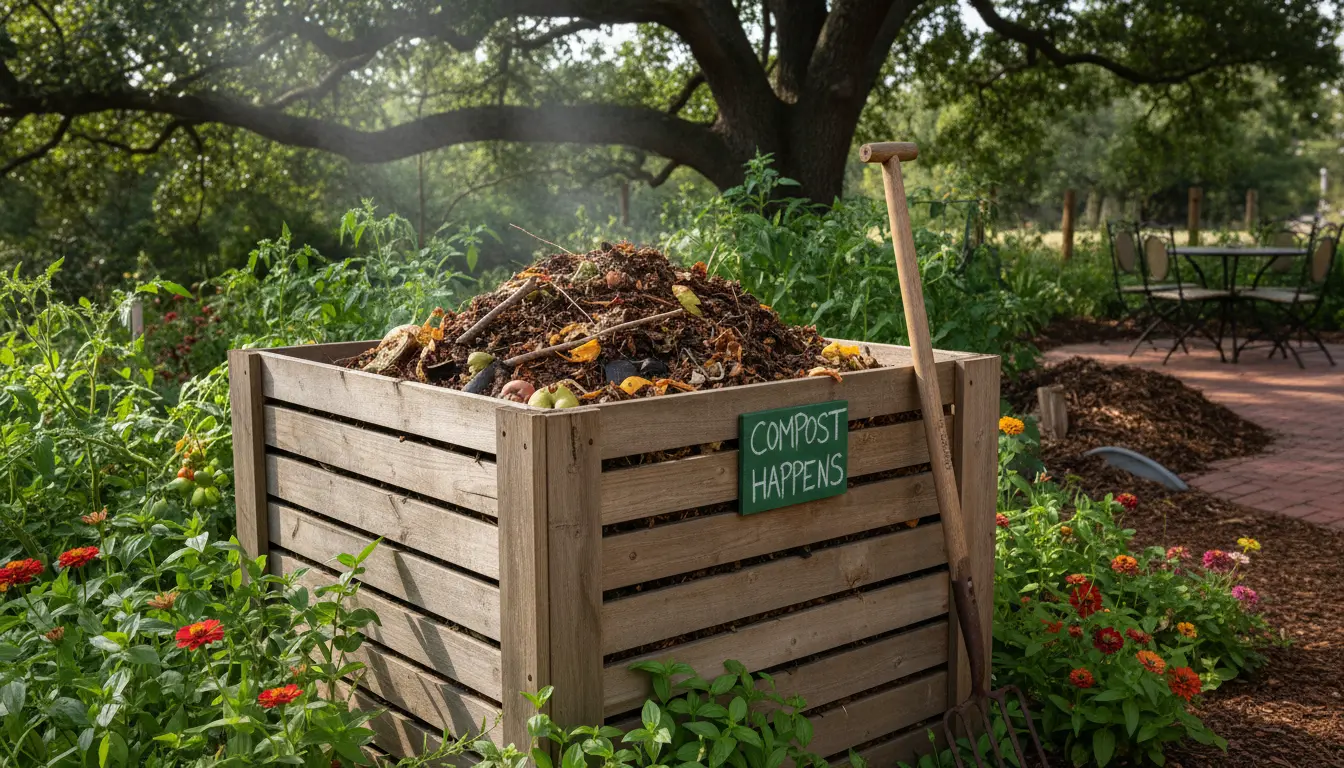
Composting at home turns kitchen scraps and yard waste into useful soil while reducing trash. This guide gives clear, practical steps for beginners to start a home compost system and keep it working well.
Why Home Composting Matters
Home composting reduces organic waste sent to landfills and lowers greenhouse gas emissions. It produces nutrient-rich compost that improves soil structure and plant health.

For many households, composting is an affordable way to recycle and cut waste pickup costs over time.
What You Need to Start Home Composting
Starting a compost bin does not require special skills. Basic materials and a small routine are enough for consistent results.
- Container: A simple bin, tumbler, or a DIY wooden crate works.
- Location: A shaded, level spot with good drainage.
- Materials: A mix of greens and browns (see list below).
- Tools: A garden fork or aerator and a small rake.
Greens and Browns for Home Composting
Balanced inputs are crucial. Greens provide nitrogen; browns add carbon.
- Greens: Vegetable scraps, fruit peels, coffee grounds, fresh grass clippings.
- Browns: Dry leaves, shredded paper, cardboard, straw, wood chips.
- Aim for roughly a 2:1 ratio of browns to greens by volume to avoid odors.
How to Start Home Composting: Step-by-Step
Follow these steps to set up a compost system that works year-round.
- Choose a bin type: stationary bin for low maintenance or tumbler for faster results.
- Pick a location with partial shade and good drainage to avoid waterlogging.
- Layer the bottom with coarse browns to help airflow.
- Add greens and browns in layers, keeping size manageable—chop large items.
- Moisten the pile so it feels like a wrung-out sponge; not soaking wet.
- Turn or aerate every 1–2 weeks to speed decomposition and reduce smells.
Managing Moisture and Airflow
Too wet or too dry compost slows breakdown. Check moisture regularly, especially in hot or rainy months.
- If soggy: Mix in more browns and add coarse material for drainage.
- If dry: Add water and more greens, then turn to distribute moisture.
- Ensure some airflow by not compacting materials and using vents if your bin has them.
Troubleshooting Home Composting Problems
Common issues are odors, pests, slow decomposition, and flies. Most have simple fixes.
- Bad smell: Add more browns and turn the pile to introduce oxygen.
- Pests: Avoid adding meat, dairy, or oily foods; use a closed bin.
- Slow breakdown: Shred materials and increase turning frequency.
- Fruit flies: Bury food scraps under browns and keep the surface covered.
When Is Compost Ready?
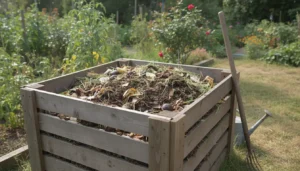
Compost is finished when it is dark, crumbly, and has an earthy smell. Time varies from 2 months to a year depending on method and care.
Use finished compost as a soil amendment, mulch, or potting mix component to improve plant growth.
Food scraps and yard waste make up about 30 percent of household trash by weight. Composting can divert much of this from landfills and turn it into valuable soil.
Small Real-World Example: Apartment Balcony Composting
Maria, a city dweller, started composting in a 30-liter tumbler on her balcony. She saved coffee grounds, vegetable peels, and shredded paper.
Within six months she produced enough compost to enrich five potted herbs and reduce her weekly garbage by 25 percent. Regular turning every week and keeping a balance of browns made the system odor-free.
Tips to Make Home Composting Easier
- Collect scraps in a small countertop bin; empty into the main bin daily.
- Chop larger items to speed decomposition.
- Keep a supply of dry browns handy, like shredded cardboard or fallen leaves.
- Use a compost thermometer if you want to monitor heat for quicker results.
- Share finished compost with neighbors or use it for community gardens.
Quick Checklist for New Composters
- Choose bin and location.
- Collect greens and browns separately.
- Maintain moisture and aeration.
- Turn regularly and monitor for pests or odors.
Home composting is a practical habit that saves waste and improves soil health. With the right mix, regular attention, and simple problem-solving, beginners can create a steady supply of compost for gardens and potted plants.