
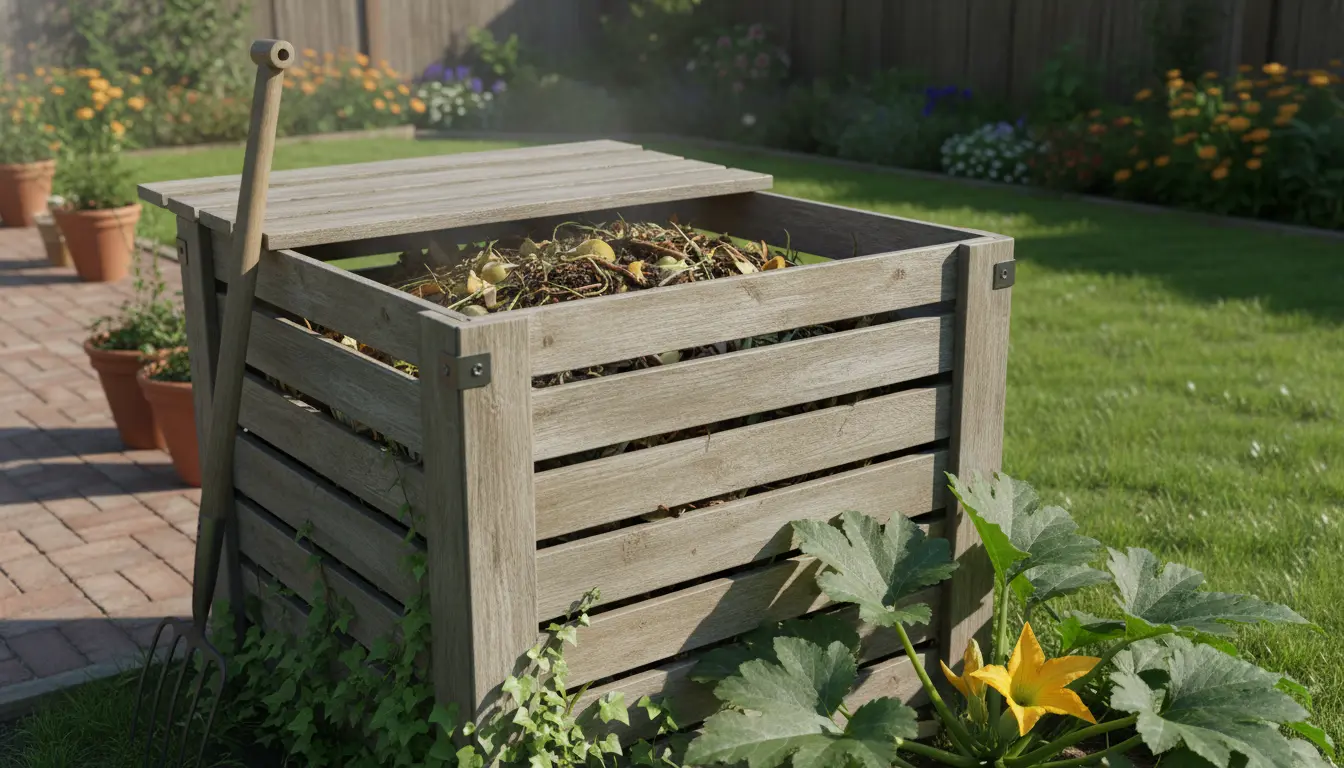
Home composting turns kitchen scraps and yard waste into a valuable soil amendment. This guide explains simple, actionable steps to start and maintain a compost bin at home.
Why Home Composting Matters
Composting reduces landfill waste and returns nutrients to soil. It saves money on fertilizers and improves garden health over time.
For beginners, home composting may seem complex, but following a few clear rules produces reliable results. You do not need specialized equipment to begin.
Choosing a Method for Home Composting
Select a composting method that fits your space and lifestyle. Common options include a simple pile, a tumbling bin, or a closed container for small spaces.
- Open pile: Best for yards with space. Requires layering and occasional turning.
- Tumbler: Faster decomposition with regular turning. Good for neat yards and fewer pests.
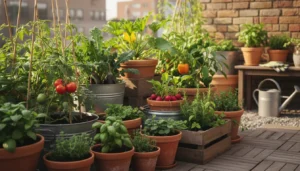
- Container or worm bin: Ideal for apartments or patios. Use vermicomposting for kitchen scraps.
Key placement tips for home composting
Place your compost bin on bare soil if possible to allow organisms to migrate in. Choose a partially shaded area to avoid drying out or overheating.
Ensure easy access for adding materials and turning the pile every 1 to 2 weeks.
What to Compost: Balanced Materials
Successful home composting uses a balance of carbon rich and nitrogen rich materials. This balance helps microbes break down the waste efficiently.
Carbon materials (brown)
- Dry leaves
- Shredded paper and cardboard
- Straw and small wood chips
Nitrogen materials (green)
- Fruit and vegetable scraps
- Fresh grass clippings
- Coffee grounds and tea leaves
A common rule is roughly 3 parts browns to 1 part greens by volume. Adjust based on smell and moisture.
How to Start a Compost Bin
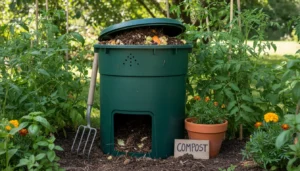
Layer materials to build a working compost system. Start with coarse browns at the bottom, then alternate greens and browns to create structure and airflow.
- Choose a bin and location.
- Add a 10 to 15 cm base layer of coarse brown material for drainage.
- Add a 10 cm layer of greens, then a thicker brown layer.
- Maintain moisture like a wrung-out sponge and turn occasionally.
Turning and aeration
Turning the pile mixes oxygen and speeds decomposition. For a tumbling bin, rotate once or twice a week. For a pile, use a pitchfork to turn every 1 to 2 weeks.
Without aeration, a compost pile becomes anaerobic and smells. Good airflow prevents odors and attracts beneficial organisms.
Troubleshooting Common Problems in Home Composting
Problems are usually simple to fix if you know the signs. Watch for smell, moisture, and pest activity as indicators.
- Bad odor: Add more brown material and turn the pile to introduce air.
- Too dry: Add water and some green material, then mix.
- Pests: Use a closed bin, avoid adding meat or oily food, and bury food scraps under browns.
When Is Compost Ready?
Finished compost is dark, crumbly, and earthy smelling. Depending on method and materials, this takes 2 months to a year.
Screen compost to remove larger pieces and return them to the bin for further breakdown.
Using Home Compost
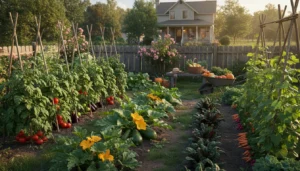
Use finished compost as a soil amendment, top dressing, or potting mix ingredient. It improves soil structure and water retention.
Blend compost into garden beds at a ratio of 1 part compost to 3 parts soil for general use. For seedlings, use a lighter mix.
Small Case Study: Suburban Family Compost System
A family of four started a 200 liter tumbling composter and a small worm bin in 2023. They collected kitchen scraps in a countertop caddy and emptied it into the tumbler three times a week.
Within four months their tumbling bin produced usable compost for container vegetables. They cut grocery waste by nearly half and reported healthier tomato plants the following season.
Key to their success were regular turning, a steady balance of browns and greens, and keeping the bin moist during summer heat.
Practical Tips for Beginners
- Start small and expand as you learn what works for your space.
- Keep a separate small countertop caddy to collect scraps and reduce trips to the bin.
- Chop larger materials so they decompose faster.
- Use a thermometer if you want to maintain hot composting conditions between 55 and 65 degrees Celsius.
Home composting is low cost and high impact. With simple routines and awareness of materials, beginners can produce quality compost and reduce household waste effectively.