
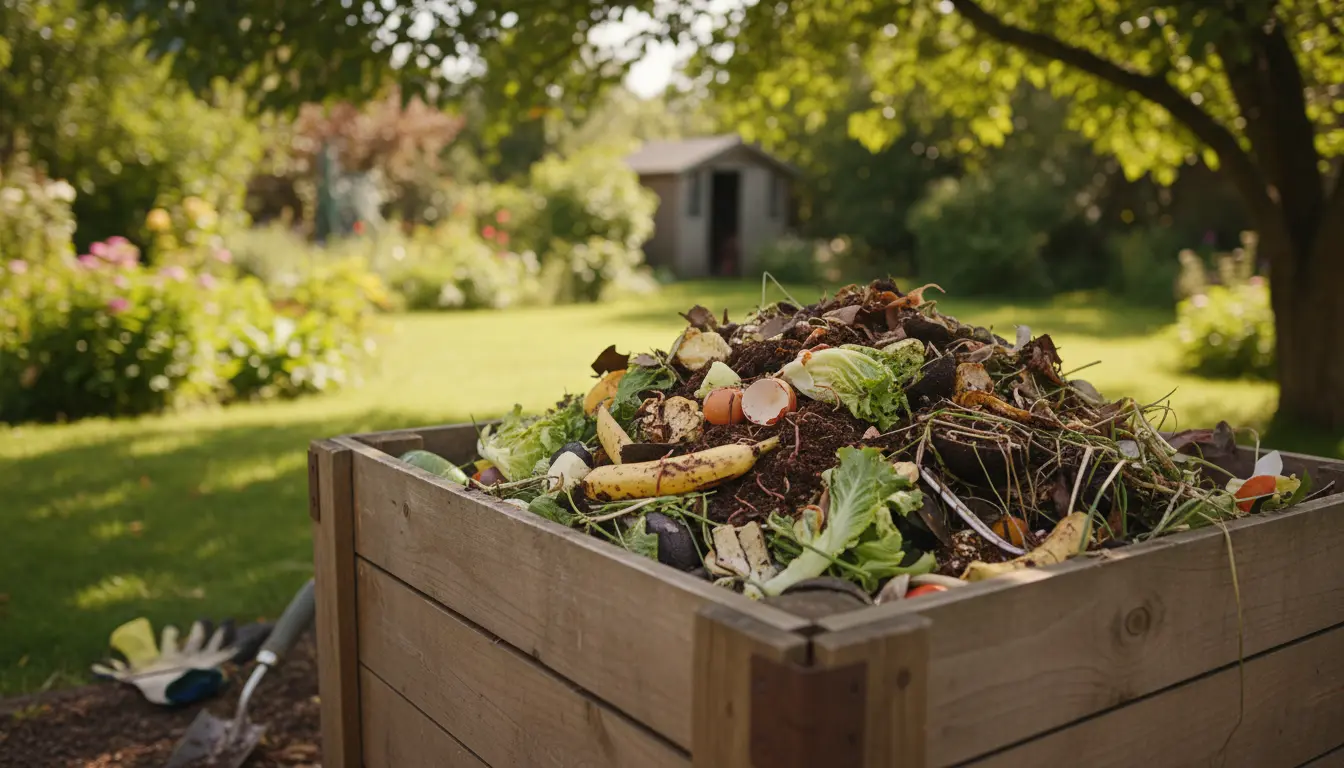
Home Composting for Beginners: Getting Started
Home composting turns kitchen and garden waste into nutrient-rich soil. This guide walks beginners through simple steps, tools, and routines to make reliable compost at home.
Why choose home composting
Composting reduces landfill waste and improves garden health. It also saves money on soil amendments and can be done in small spaces.
Basic Principles of Home Composting for Beginners

Compost is a controlled decomposition process of organic matter. The ideal mix balances carbon-rich “browns” and nitrogen-rich “greens”.
Microbes need moisture, air, and the right particle size to break down materials efficiently. Managing these variables keeps the pile active and odor-free.
Key components to manage
- Carbon (browns): dry leaves, shredded paper, cardboard.
- Nitrogen (greens): vegetable scraps, coffee grounds, fresh grass clippings.
- Air: occasional turning to supply oxygen.
- Moisture: damp like a wrung-out sponge.
Choosing a Bin for Home Composting
Selecting the right bin depends on space, budget, and how quickly you want compost. Options include open piles, tumblers, and stationary bins.
Bin options and when to use them
- Open pile: cheap and flexible for yards, but can attract pests if unmanaged.
- Stationary bin: contained and tidy; good for small yards and steady input.
- Tumbler: speeds up mixing and reduces pests; best for active users who want faster results.
Materials to Compost and What to Avoid
Knowing what to put in your bin prevents problems and speeds decomposition. Start with common kitchen and yard items.
What to add
- Fruit and vegetable scraps
- Tea bags and coffee grounds
- Shredded paper, cardboard, and dry leaves
- Eggshells (crushed)
- Small amounts of yard trimmings
What to avoid
- Meat, fish, dairy, and oily foods (attract pests)
- Diseased plants or invasive weeds with seeds
- Pet waste from carnivores
- Large branches and thick wood (slow to break down)
Simple Routine for Home Composting for Beginners
Establish a short routine to keep your compost active. Consistent, small habits produce steady results without overwhelming effort.
Weekly checklist
- Add kitchen scraps and cover with a layer of browns each time.
- Check moisture and add water if the pile feels dry.
- Turn or mix the pile every 1–2 weeks, depending on bin type.
Troubleshooting Common Problems
Beginners often encounter odors, slow decomposition, or pests. These issues are usually easy to correct with a few adjustments.
Problems and quick fixes
- Bad smell: add more browns and increase turning to introduce air.
- Too dry: moisten the pile gradually; avoid waterlogging.
- Slow breakdown: chop materials smaller and adjust the green to brown ratio.
- Pests: remove meat/dairy, bury food scraps, or use a closed bin/tumbler.
Adding crushed egg shells or small amounts of garden lime can help balance acidity and improve compost quality for vegetable gardens.
How Long Until Compost Is Ready?
Maturity depends on method, materials, and how actively you manage the pile. With a good mix and regular turning, compost can be ready in 2–4 months.
Passive piles may take 6–12 months but still produce useful material. Look for dark, crumbly texture and an earthy smell as signs of readiness.
Using Finished Compost
Finished compost enriches garden beds, improves soil structure, and retains moisture. Use it as a top dressing, mix into potting soil, or create compost tea for liquid feeding.
Practical application tips
- Vegetable beds: mix 2–3 inches into the top 6–8 inches of soil before planting.
- Pots and containers: blend up to 20% compost with potting mix.
- Lawn: thinly spread and rake in to avoid matting.
Small Case Study: Apartment Balcony Compost
Maria lives in a two-bedroom apartment and started a small vermicompost (worm bin) on her balcony. She used a shallow plastic bin with ventilation and red wiggler worms.
Within three months she produced enough compost to refresh several potted herbs and reduced her kitchen waste by half. Regular feeding and keeping the bin moist were key to success.
Final Tips for Home Composting for Beginners
- Start small and scale up as you learn what your bin needs.
- Keep a small countertop container with a lid to collect scraps and reduce trips outside.
- Record what you add and how often you turn to refine your routine.
Home composting for beginners is accessible, low-cost, and environmentally beneficial. With the right materials, a basic routine, and minor troubleshooting, anyone can turn food and yard waste into valuable soil over a single season.