
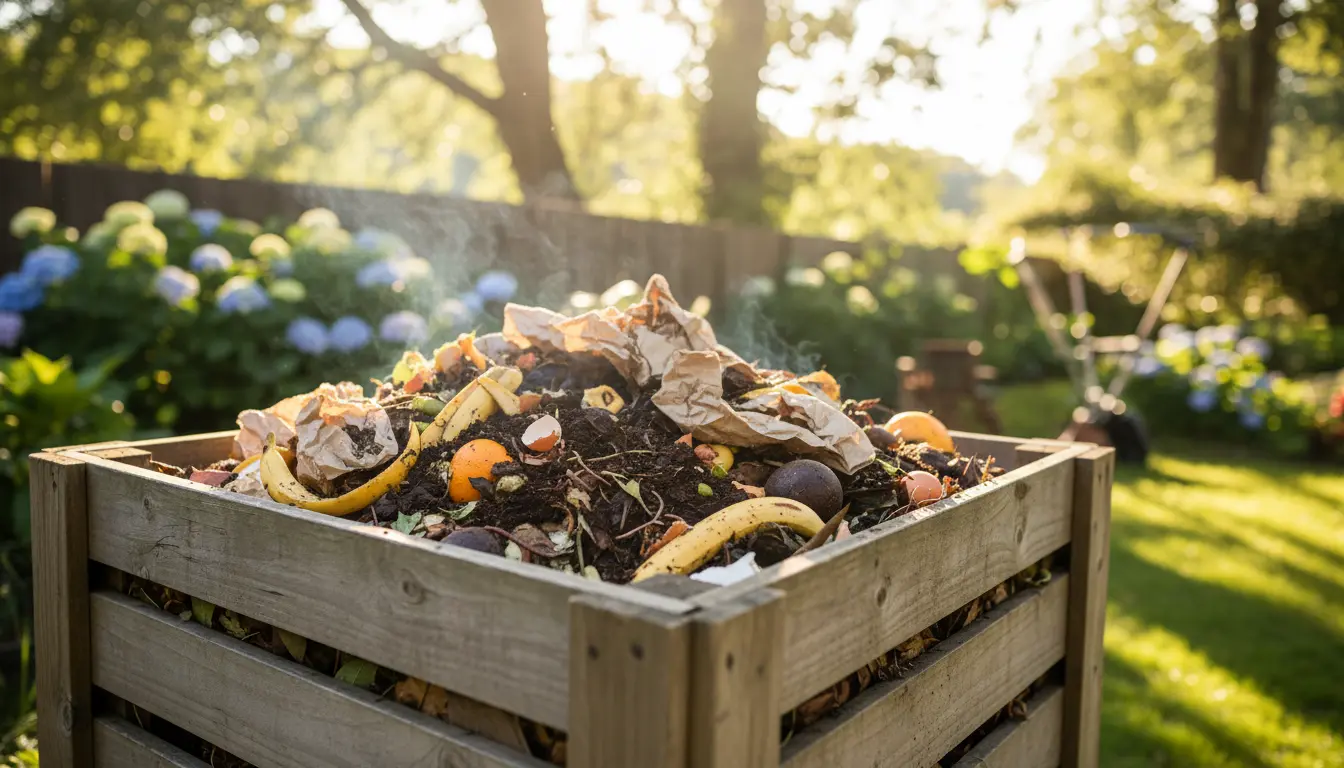
Composting at home is a practical way to reduce waste and nourish your garden. This guide explains clear steps to start and maintain a successful compost pile using everyday materials.
Why Choose Home Composting Basics
Home composting cuts kitchen and yard waste and creates nutrient-rich soil for plants. It lowers landfill contributions and can save money on fertilizers and soil amendments.
Understanding the basic method makes composting easy and low maintenance. The approach here focuses on realistic steps for small yards or apartments.
What You Need for Home Composting Basics
Start with a simple setup and basic tools. You do not need expensive equipment to begin turning scraps into compost.
- Compost container or designated pile: a bin, tumbler, or simple heap.
- Mix of greens and browns: kitchen scraps, yard trimmings, and dry leaves.
- Basic tools: pitchfork or garden fork, and a small shovel.
- Optional: thermometer to monitor temperature for faster composting.
How to Start a Compost Pile: Step-by-Step
Follow a few simple steps to create balanced compost. The key is layering, moisture, and occasional turning.
- Choose a spot: pick a level, well-drained area with some shade.
- Build a base layer: place coarse materials like straw or small branches to improve airflow.
- Add layers: alternate green materials (vegetable scraps, grass clippings) with brown materials (dry leaves, shredded paper).
- Moisten: keep the pile about as damp as a wrung-out sponge. Add water if dry or more browns if too wet.
- Turn regularly: every 1–2 weeks for hot composting, or once a month for slower decomposition.
Greens and Browns Explained
Greens supply nitrogen and speed up decomposition. Browns provide carbon and structure to the pile. Balance matters for an odor-free, active compost.
- Greens: fruit and vegetable scraps, coffee grounds, fresh grass clippings.
- Browns: dry leaves, cardboard, paper, straw, small wood chips.
Maintenance Tips for Home Composting Basics
Regular but simple maintenance keeps the pile healthy. Use these practical tips to avoid common problems.
- Control moisture: too wet causes odor, too dry slows decomposition.
- Mix often: turning introduces oxygen which speeds breakdown and prevents smells.
- Chop materials: smaller pieces decompose faster. Use a kitchen grinder for tough vegetable trimmings if needed.
- Cover the pile: a lid or tarp reduces excess rain and keeps animals away.
Common Problems and Solutions
If the pile smells, add more brown materials and turn it. A dry, slow pile needs more greens and water.
Fruit flies can be reduced by burying food scraps deeper and covering fresh greens with browns.
Composting can reduce household waste by up to 30 percent and return valuable nutrients to garden soil in about 3 to 12 months depending on conditions.
Using Finished Compost
Finished compost looks dark, crumbly, and earthy. It should no longer resemble the original inputs.
Use compost as a soil amendment, mulch, or potting mix ingredient. Spread a 1–2 inch layer around plants or mix into garden beds to improve water retention.
Practical Uses
- Top-dress lawns to improve soil health and reduce need for chemical fertilizers.
- Mix with native soil when planting trees and shrubs for better root establishment.
- Combine with potting soil for container plants to boost nutrient content and structure.
Small Case Study: A Suburban Kitchen Compost
Maria, a homeowner with a small yard, started a 3-bin compost system. She collected kitchen scraps in a sealed container and added them to bin one.
She layered greens and browns, turned the pile every two weeks, and monitored moisture. After six months she had enough compost to enrich three raised beds.
Her garden produced healthier vegetables and she cut household waste by about a third, illustrating that modest effort yields clear benefits.
Quick Start Checklist for Home Composting Basics
- Choose a bin or pile location with good drainage and partial shade.
- Gather a balance of greens and browns before you begin.
- Layer materials, keep the pile moist, and turn regularly.
- Watch for pests, odors, and adjust materials accordingly.
- Harvest finished compost when dark and crumbly, use it in beds or containers.
Home composting is accessible and effective for most households. With simple tools, a little attention, and the balance of greens and browns, anyone can turn waste into valuable soil amendment.