
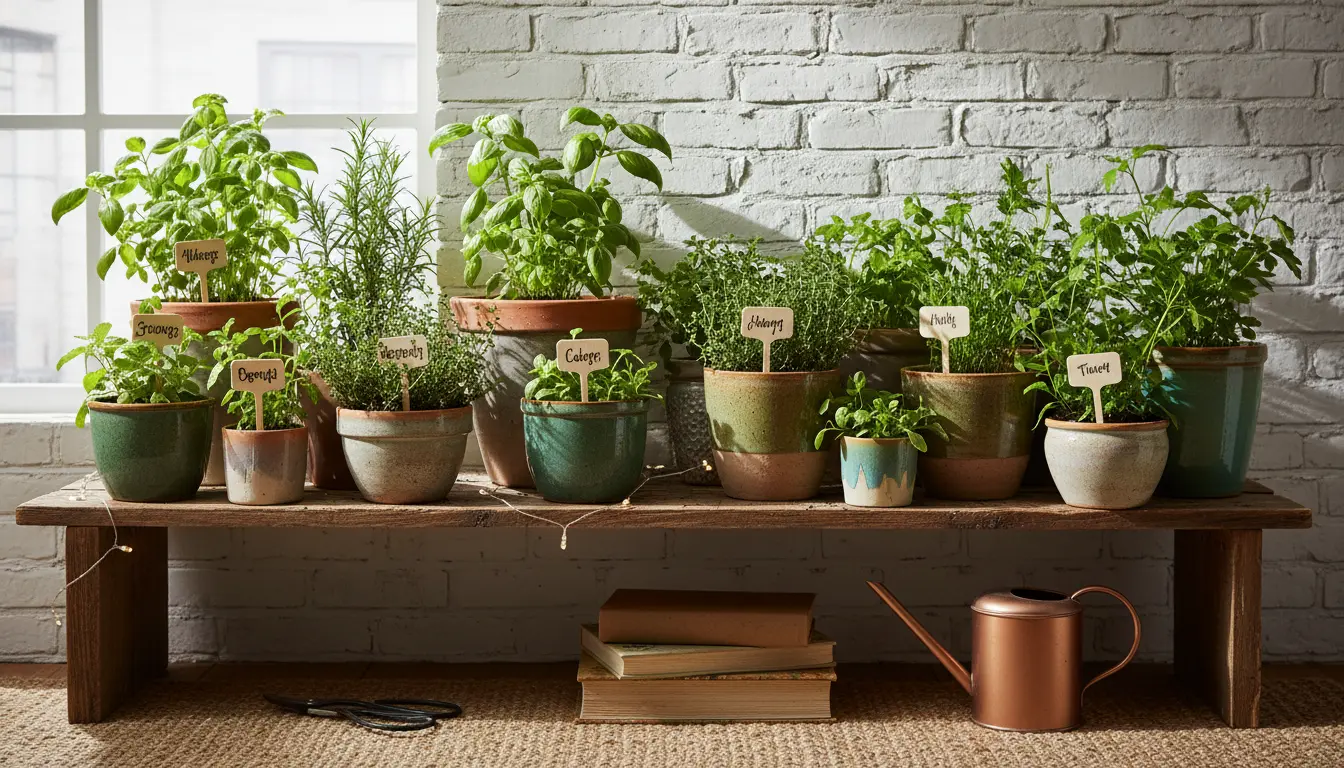
Growing herbs indoors is a practical way to have fresh flavor year-round. With the right setup, most common herbs thrive on a sunny windowsill or under grow lights.
Why Growing Herbs Indoors Works
Indoor herb gardening removes many seasonal limits and reduces trips to the store. It also keeps herbs close to the kitchen for immediate use.
Common herbs like basil, parsley, chives and mint adapt well to pots and limited space. The key is matching light and water needs to each herb.
Essential Requirements for Growing Herbs Indoors
Successful indoor herb growth depends on five basic factors: light, soil, containers, water, and air circulation. Each factor affects root health and leaf flavour.
Light Requirements for Growing Herbs Indoors
Most herbs need 6–8 hours of light daily. A south- or west-facing window often provides enough natural light for many varieties.
When natural light is insufficient, use full-spectrum LED grow lights placed 6–12 inches above the plants. Timers help maintain consistent light cycles.
Soil and Containers for Growing Herbs Indoors
Choose a well-draining potting mix formulated for containers. Heavy garden soil retains too much moisture and can cause root rot.
Use pots with drainage holes and saucers. For small herbs, 4–6 inch pots work initially; upgrade to 8–10 inch containers as plants grow.
Step-by-Step Planting and Care Guide for Growing Herbs Indoors
This step-by-step method helps you start herbs from seed or small plants and keep them productive through the season.
- Select Herbs: Begin with easy varieties: basil, mint, chives, oregano, thyme, and parsley.
- Choose Containers: Pick pots with drainage and the right size for mature roots.
- Fill with Potting Mix: Use a light, well-draining mix; add a handful of perlite for extra drainage.
- Plant Seeds or Seedlings: Follow seed depth instructions or gently loosen nursery root balls before planting.
- Water Carefully: Water thoroughly after planting, then allow the top 1 inch of soil to dry before the next water.
- Provide Light: Place near a bright window or under a grow light for at least 6 hours daily.
- Feed Periodically: Use a balanced liquid fertilizer at half strength every 4–6 weeks during active growth.
Daily and Weekly Care Tips for Growing Herbs Indoors
- Rotate pots weekly to keep growth even.
- Pinch or trim regularly to prevent legginess and encourage bushier growth.
- Monitor for pests like aphids and spider mites; wipe leaves and isolate affected plants.
- Maintain moderate humidity; a small tray of water near plants or occasional misting helps dry indoor air.
Common Problems and Troubleshooting When Growing Herbs Indoors
Indoor herbs can show stress through yellowing leaves, stunted growth, or fungal spots. Diagnosing the cause helps fix problems quickly.
Overwatering and Root Rot
Too much water is the most common issue. If soil stays soggy, reduce watering and consider repotting into fresh, drier mix.
Insufficient Light and Leggy Growth
Leggy stems with wide gaps between leaves indicate not enough light. Move plants closer to a window or add supplemental light.
Pests and Disease
Check undersides of leaves for pests. Treat small infestations with insecticidal soap and increase airflow to reduce fungal risks.
Harvesting and Using Indoor Herbs
Harvest herbs regularly to encourage fresh growth. For leafy herbs, snip outer stems first and leave central growth intact.
Use herbs fresh within a few days for best flavor, or dry and store leaves for longer shelf life. Freezing chopped herbs in olive oil is another option.
Small Real-World Example
Case study: An apartment cook grew three basil plants on a south-facing sill. With six hours of sun and weekly half-strength fertilizer, each plant produced enough leaves to supply pesto twice a month for six months. Minimal space and a single 8-inch pot per plant kept maintenance simple and productive.
Many common culinary herbs, such as basil and cilantro, release more aromatic oils when slightly stressed by moderate watering cycles. This can intensify flavor but avoid extreme stress which reduces yield.
Quick Reference: Best Herbs for Indoor Growing
- Basil — needs warm temperatures and bright light.
- Chives — tolerant of cooler windows and low maintenance.
- Mint — vigorous; keep in its own pot to avoid crowding.
- Thyme and Oregano — prefer drier soil and good light.
- Parsley — slower to start but reliable with steady light.
Growing herbs indoors is an accessible hobby that rewards a little attention with fresh flavor and year-round convenience. Start small, match each herb to its needs, and adjust light and water as plants tell you what they need.
If you want a simple starter plan, choose two easy herbs—basil and chives—place them in bright light, and follow the watering schedule above. You’ll have fresh herbs in weeks, not months.