
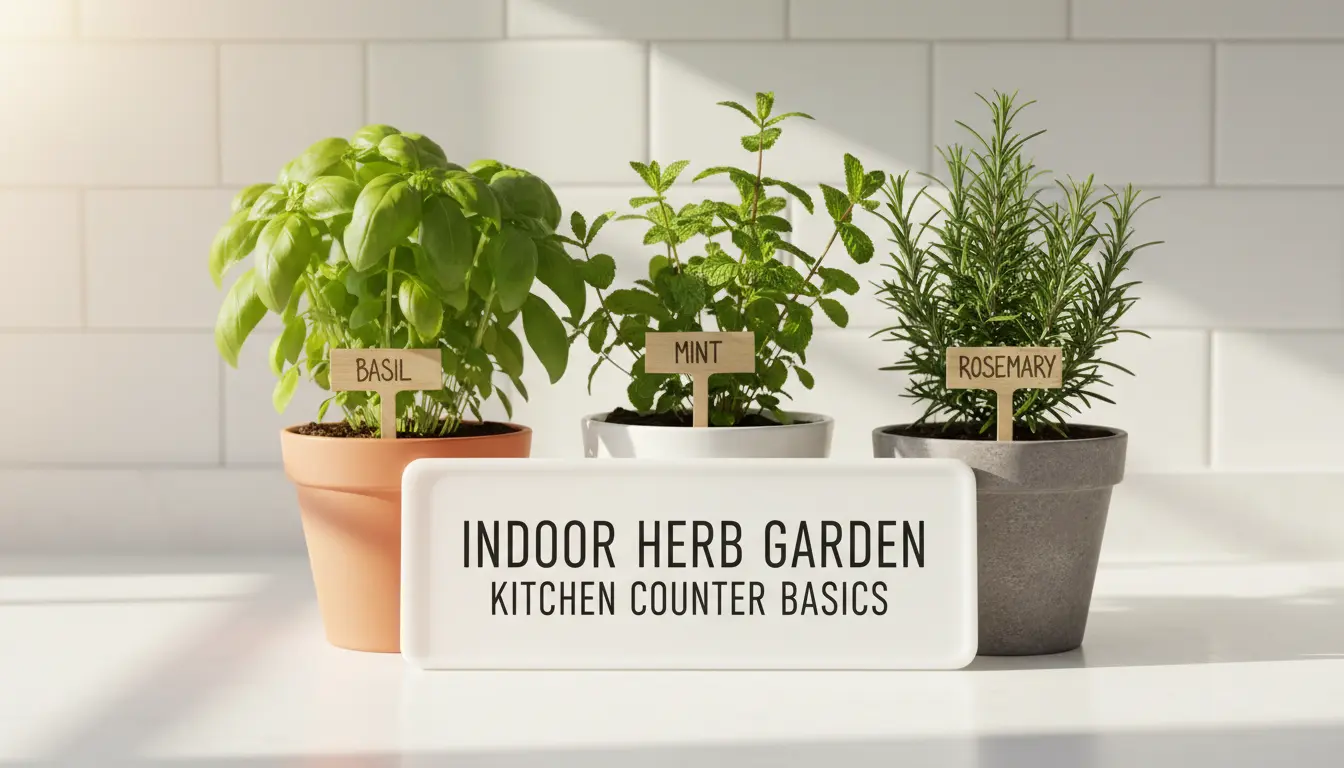
Many people want fresh herbs year round but worry about space and light. This guide explains the essentials for growing herbs indoors in simple steps you can follow on a kitchen counter or windowsill.
Why Choose Growing Herbs Indoors
Growing herbs indoors gives immediate access to fresh flavors and saves money on store-bought herbs. Indoors you control light, temperature, and pests more easily than in a small outdoor plot.

Start with easy varieties and a small setup to build confidence. Most indoor herb setups take little time and give fast rewards.
Getting Started: What You Need for Growing Herbs Indoors
Before you plant, gather a few basic items. A small investment in the right supplies avoids common failures and speeds success.
- Containers with drainage holes (4–8 inch pots for single plants)
- Well-draining potting mix labeled for herbs or vegetables
- Seed packets or small starter plants (basil, chives, mint)
- Grow light if you lack a sunny window (LED full spectrum is best)
- Small hand trowel, spray bottle, and a watering saucer
Choosing the Right Herbs for Indoors
Not all herbs perform the same inside. Choose varieties known for indoor success and frequent harvesting tolerance.
- Basil: Fast growing, needs bright light and regular harvesting.
- Chives: Tolerant of moderate light and regular trimming.
- Mint: Very forgiving but prefers its own pot to avoid spreading.
- Thyme and Oregano: Drier soil lovers, good for sunny spots.
- Parsley: Slower to start but durable once established.
Light, Soil, Water: Basic Care for Growing Herbs Indoors
Light is the top factor for success. Most herbs need 6+ hours of bright light a day. A south or west-facing window is ideal.
If you don’t get enough natural sun, use an LED grow light 12–16 inches above the foliage for 10–14 hours daily. Use a timer to keep the schedule consistent.
Use a light, well-draining potting mix rather than garden soil. Water when the top inch of soil feels dry; avoid waterlogged roots by ensuring pots drain freely.
Step by Step: Planting and Caring for Indoor Herbs
Follow these steps for a reliable start and steady growth.
- Fill the pot with potting mix, leaving 1 inch below the rim.
- If transplanting a starter plant, loosen its root ball gently and place it in the pot. For seeds, follow packet depth instructions and thin seedlings as they grow.
- Water thoroughly until water drains, then let the soil surface dry before the next watering.
- Place the pot in its light location or under a grow light. Rotate pots every week so growth stays even.
- Harvest regularly by pinching or cutting stems—this encourages bushier growth and prevents legginess.
Feeding and Pruning
Feed herbs lightly with a balanced liquid fertilizer once a month during active growth. Overfeeding produces lots of leaves but weak flavor.
Prune herbs to shape plants and remove flower stalks for leafy production. Use clean scissors or snips to avoid disease transfer.
Common Problems and Solutions for Growing Herbs Indoors
Indoor herb gardening is simple, but problems occur. Here are quick troubleshooting tips for common issues.
- Yellow leaves: Often overwatering. Let soil dry and check drainage.
- Leggy, weak stems: Not enough light. Move closer to a window or add a grow light.
- Pest problems (aphids, spider mites): Rinse plants with water or use insecticidal soap for small infestations.
- Mold or root rot: Reduce watering frequency and increase airflow around plants.
Case Study: Kitchen Counter Basil Success
A busy homeowner started with one 6-inch pot of basil on a south-facing counter. They used a light potting mix, watered when the top inch was dry, and harvested weekly.
Within six weeks the plant provided daily fresh leaves for salads and pesto. Adding a simple 10 watt LED undercabinet light during cloudy weeks kept growth steady through winter.
Key results: continuous harvests, minimal pest issues, and reduced grocery buys for herbs.
Growing herbs indoors is an accessible and rewarding hobby. With the right light, soil, and a little regular care you can keep a steady supply of fresh herbs for cooking and garnishing.
Quick Tips for Immediate Success
- Start with 2–4 herbs and expand once you succeed.
- Use pots with good drainage and avoid saucers that hold standing water.
- Harvest weekly to encourage fuller plants and better flavor.
- Keep a small notebook of water and light schedules to track what works.
Follow these practical steps and you’ll have healthy, flavorful herbs inside your home year round.