
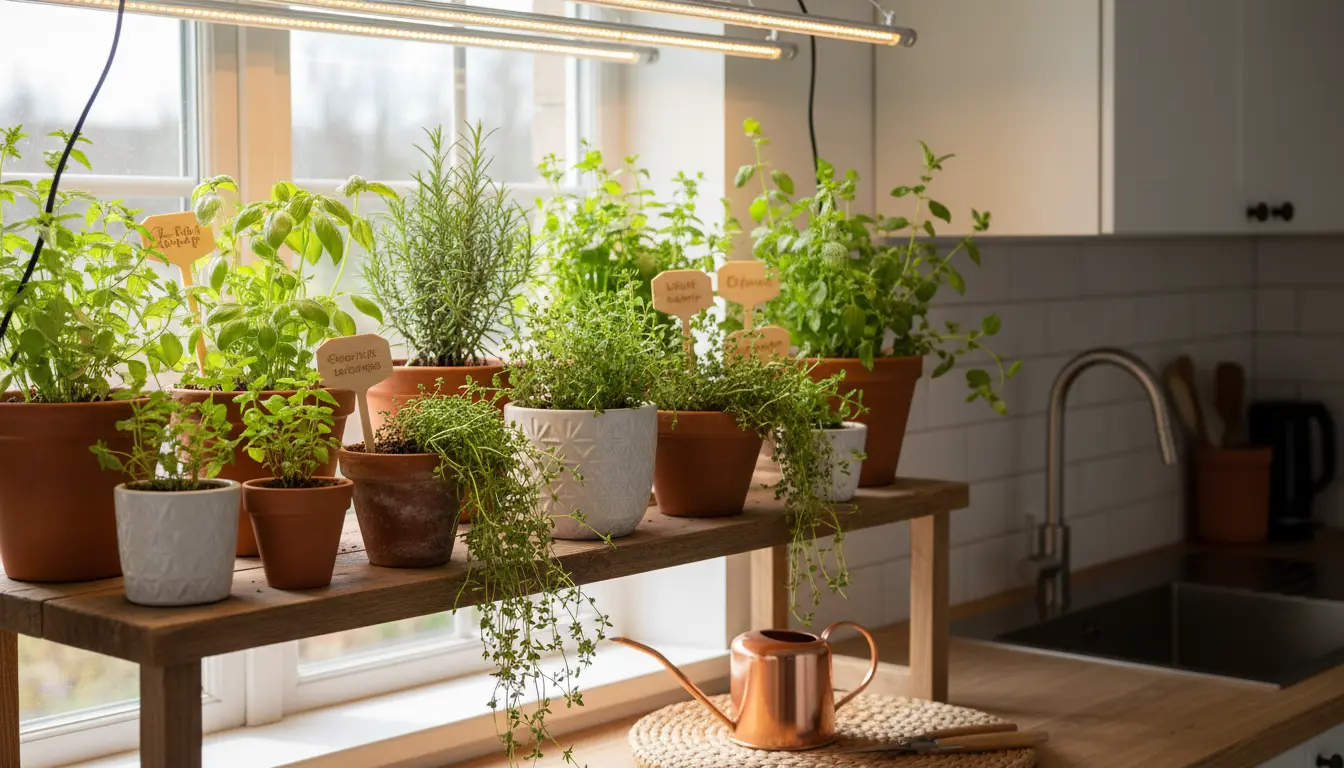
Why grow herbs indoors
Growing herbs indoors gives you fresh flavor all year without a yard. It also reduces waste and saves trips to the store for small amounts of fresh herbs.
This guide shows simple steps to grow herbs indoors effectively, whether you have a sunny windowsill or a dim apartment.
Choose the right herbs to grow indoors
Select herbs that tolerate container life and indoor light. Some herbs need more sun, while others do well in lower light.
- Basil — loves bright light and warmth.
- Parsley — tolerates moderate light, slow to establish.
- Mint — forgiving and grows fast; use a separate pot.
- Chives — compact and hardy in moderate light.
- Rosemary — prefers bright light and good air circulation.
How to grow herbs indoors: light and placement
Light is the most common limiting factor when you grow herbs indoors. Most culinary herbs need at least 6 hours of direct or bright indirect light.
Place herbs on a south- or west-facing windowsill if possible. If natural light is insufficient, use an LED grow light for 10–14 hours per day.
Grow light tips for indoor herbs
Choose full-spectrum LED fixtures designed for plants; they are energy efficient and produce minimal heat. Hang lights 6–12 inches above plants and adjust as herbs grow.
Set a daily timer so plants get consistent light cycles; err on the side of more light rather than less for most herbs.
Soil, pots, and drainage
Use a light, well-draining potting mix labeled for containers. Avoid garden soil, which can compact and restrict roots.
Choose pots with drainage holes. If your container has no hole, add a drainage layer and water more cautiously to avoid root rot.
- Pot size: 6–8 inches for single herbs, larger for mixed containers.
- Material: Terracotta breathes well; plastic retains moisture longer.
- Drainage: Use saucers but empty excess water after 15–30 minutes.
Watering and feeding when you grow herbs indoors
Watering frequency depends on light, pot size, and material. Check soil by finger: water when the top inch feels dry for most herbs.
Mint and parsley like more consistent moisture, while rosemary and sage prefer to dry slightly between waterings.
Fertilizer basics
Feed herbs with a balanced liquid fertilizer diluted to half strength every 4–6 weeks during active growth. Avoid overfertilizing; excess nitrogen can reduce essential oils and flavor.
Pruning, harvesting, and managing pests
Prune regularly to encourage bushy growth and prevent legginess. Pinch tips weekly to stimulate branching on basil and chives.
Inspect leaves for common pests like aphids or spider mites. Treat infestations quickly with insecticidal soap or a water spray.
- Harvesting rule: Never remove more than one-third of a plant at a time.
- Rotate pots periodically for even growth and light exposure.
- Use sticky traps or neem oil for persistent pest problems.
Common problems when you grow herbs indoors and quick fixes
Yellowing leaves often mean overwatering or poor drainage. Improve airflow and let soil dry slightly between waterings.
Leggy, thin stems usually indicate low light. Move plants to a brighter spot or provide supplemental lighting.
Some herbs like basil produce more essential oils and stronger flavor when grown in slightly drier soil and exposed to bright light cycles.
Practical routine: weekly tasks to keep herbs healthy
Create a simple weekly checklist to simplify care. Consistent small tasks prevent major problems later.
- Check soil moisture and water as needed.
- Rotate pots to balance light exposure.
- Harvest or pinch back growth to promote fullness.
- Inspect for pests and remove damaged leaves.
Case study: A kitchen windowsill herb success
Example: Maria, who lives in a small apartment, started with three pots: basil, mint, and chives on a south-facing sill. She uses a 6-inch pot for each and a light potting mix.
By watering when the top inch dried and pinching basil tips weekly, Maria had a steady supply of herbs. She added a 12-hour LED light during winter months and avoided fertilizer excess. Within three months, harvests were regular and pest issues were minimal.
Seasonal tips for year-round growing
In winter, increase light hours and reduce fertilizer frequency. Longer nights and cooler temperatures slow growth; adjust expectations accordingly.
In summer, watch for heat stress near hot windows. Move pots slightly back if leaves wilt during midday heat.
Final checklist to start and maintain indoor herbs
Use this checklist to begin: choose appropriate herbs, use well-draining soil, place in bright light, water carefully, and prune regularly.
- Choose herbs suited to your light conditions.
- Use pots with drainage and quality potting mix.
- Provide 6–14 hours of light depending on species.
- Water based on soil moisture, not a schedule alone.
- Prune and harvest to encourage fresh growth.
With a basic routine and a few tools like a good potting mix and an LED light, anyone can grow herbs indoors year round. Start small, track what works, and expand as you gain confidence.