
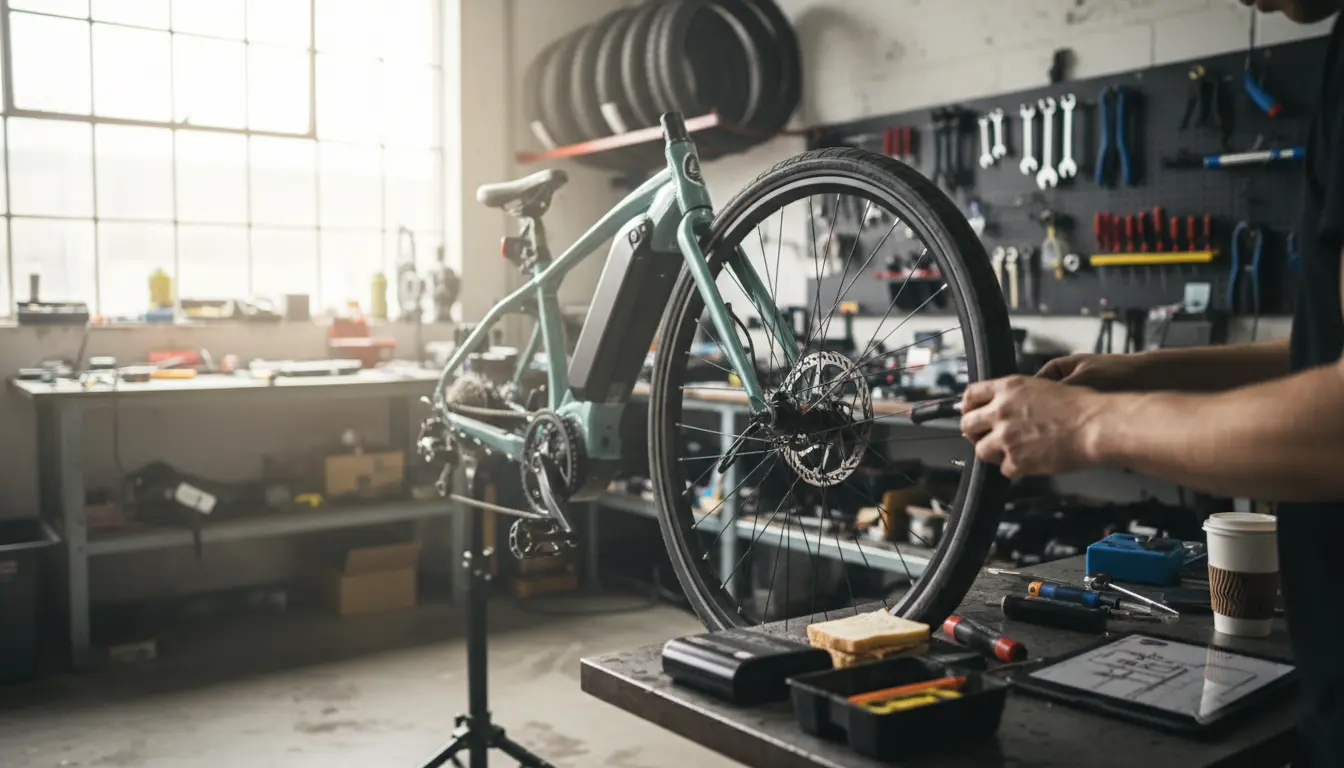
Electric Bike Maintenance Basics
Regular electric bike maintenance keeps your e-bike reliable, safe, and efficient. A short, consistent routine prevents expensive repairs and extends battery life.
Why Electric Bike Maintenance Matters
Electric bikes combine mechanical and electrical systems, so maintenance covers both. Ignoring small issues can reduce range, cause component wear, or create safety hazards.
Regular Maintenance Checklist for Electric Bike Maintenance

Use this checklist weekly or before long rides. These tasks are quick and uncover common issues early.
- Visual inspection: frame, lights, cables, and connectors.
- Tire pressure: check and inflate to the recommended PSI.
- Brake function: test front and rear brakes for responsiveness.
- Chain and drivetrain: clean and lubricate as needed.
- Battery position and connectors: ensure secure fit and clean contacts.
Simple Tools to Keep on Hand
Having basic tools makes routine tasks fast. A multi-tool, tire pump, chain lube, and a socket set cover most needs.
Battery Care for Electric Bike Maintenance
Battery health determines a large part of an e-bike’s performance. Follow manufacturer guidelines and adopt charging habits that extend battery life.
Charging Best Practices

Charge in a cool, dry place and avoid full depletion when possible. Partial charges and avoiding extreme temperatures prolong chemistry health.
- Avoid leaving the battery at 0% for long periods.
- Store batteries at around 40–60% charge if not used for weeks.
- Use the manufacturer charger to protect battery management systems.
Battery Storage and Inspection
Inspect batteries monthly for swelling, corrosion, or damaged cases. If anything looks abnormal, stop using it and consult a service technician.
Brakes, Wheels, and Tires
Good braking and properly inflated tires are essential for safety and efficiency. Regular checks take only a few minutes but can prevent accidents.
Brake Maintenance

Check pad thickness and rotor condition on hydraulic or mechanical disc brakes. Squealing, reduced stopping power, or grinding can indicate worn pads or contamination.
- Replace brake pads before they reach the wear limit.
- Bleed hydraulic brakes annually or when you notice sponginess.
- Align calipers if rotors rub after wheel adjustments.
Tire Care
Inspect tires for cuts, embedded debris, or uneven wear. Use the recommended pressure range marked on the sidewall for best range and comfort.
Cleaning and Preventive Care
Cleaning your e-bike removes grit that wears components and interferes with electronics. Use mild soap, low-pressure water, and avoid direct sprays on connectors and motors.
Cleaning Steps
- Wipe down the frame with a damp cloth and mild detergent.
- Use a brush to remove dirt from drivetrain components.
- Dry thoroughly and apply chain lube sparingly to the chain.
- Inspect electrical connectors and apply dielectric grease if recommended.
Troubleshooting Common Electric Bike Maintenance Issues
Quick troubleshooting helps you decide if a repair is DIY or needs a shop. Start with basic checks before deeper diagnostics.
- No power: check battery charge and connector seating.
- Reduced range: verify tire pressure, heavy accessory load, and battery condition.
- Strange noises: locate the source—pedal area, motor, or brakes—and inspect components.
Keeping your e-bike tires at the correct pressure can improve battery range by up to 10 percent, depending on riding conditions.
When to Seek Professional Service
Some problems require professional attention, especially those involving the motor, battery pack, or complex electronics. If you feel unsure, consult a certified e-bike technician.
Signs you should visit a shop include persistent electrical faults, battery swelling, or unusual motor behavior that basic troubleshooting does not fix.
Case Study: Commuter Electric Bike Maintenance
Maria commutes 15 miles daily on an urban e-bike. She developed a simple weekly routine that saved time and money.
- Morning check: tire pressure and brake test (2 minutes).
- Weekly cleaning: wipe frame and lubricate chain (10 minutes).
- Monthly inspection: battery connectors and drivetrain adjustment (20 minutes).
After six months of consistent care, Maria reported smoother rides, better range, and no major service bills. Her example shows how small, regular steps prevent bigger failures.
Maintenance Schedule Summary
Adopt a simple schedule for lasting performance. Short routines keep an e-bike ready and safe without consuming much time.
- Before each ride: visual inspection, tire pressure, brakes.
- Weekly: clean drivetrain, check battery seating.
- Monthly: inspect brakes, bolts, and connectors.
- Annually: professional service for battery and motor diagnostics.
Final Tips for Effective Electric Bike Maintenance
Keep records of repairs and battery cycles to track performance changes. Use original parts when possible and follow manufacturer maintenance notes.
Regular care is efficient and cost-effective. A small time investment each week keeps your electric bike performing well for years.