
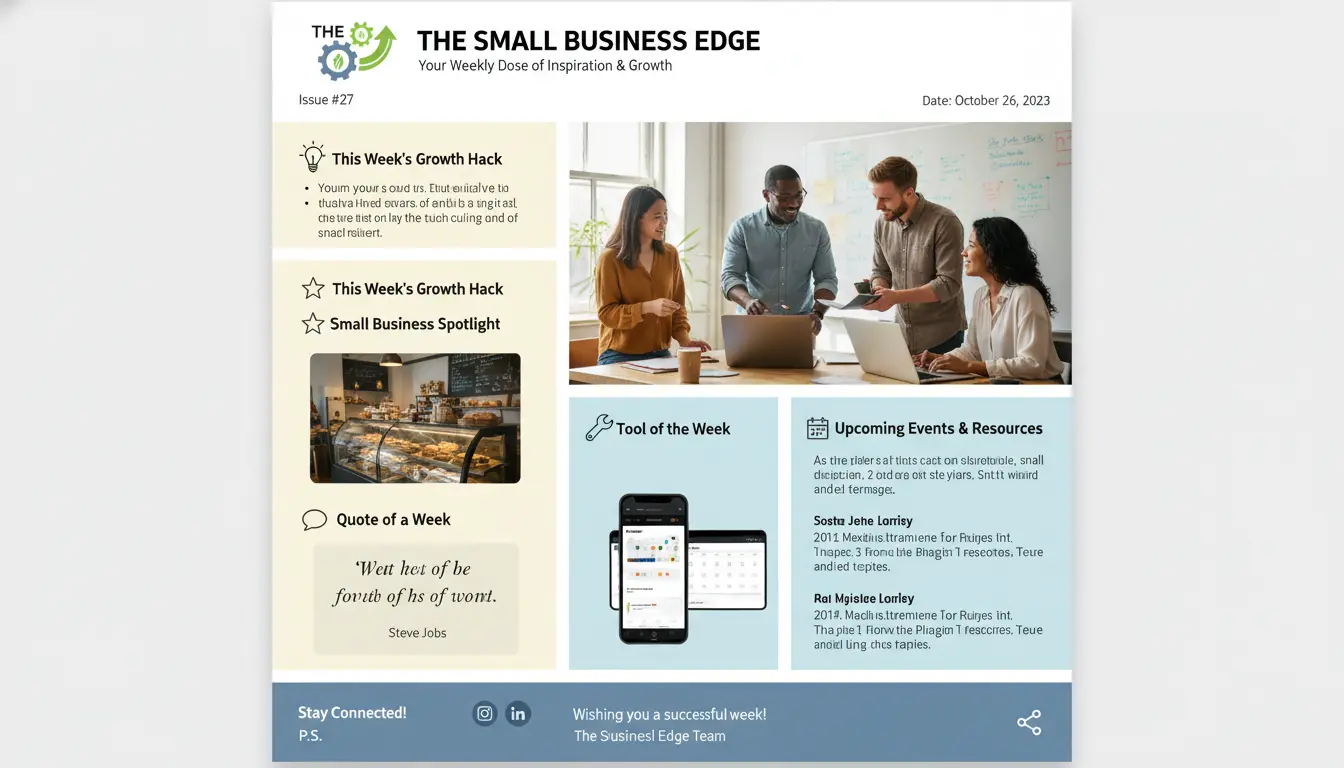
An effective email newsletter helps small businesses keep customers informed, build trust, and drive sales. This guide shows practical steps to create an email newsletter for small businesses with clear actions you can use today.
Why an Email Newsletter for Small Businesses Works
Email is a direct channel to people who already know your brand. Open rates and conversions are often higher than social media, especially for local or niche businesses.

It’s inexpensive and measurable. With the right approach you can see clear returns on time and small budget investments.
Benefits of an Email Newsletter for Small Businesses
- Builds repeat business from existing customers.
- Drives website visits, bookings, or in-store sales.
- Allows targeted messages for promotions or events.
- Provides measurable metrics like open rates and clicks.
How to Create an Email Newsletter for Small Businesses
Follow these steps to plan, build, and improve a newsletter that supports business goals. Each step includes practical tips you can apply quickly.
1. Choose a Clear Goal
Start with one primary goal: increase repeat purchases, promote events, or grow online orders. A focused goal keeps content relevant and measurable.

Example goals: raise monthly sales by 10% or increase event RSVPs by 30%.
2. Pick an Email Service Provider
Choose a provider that matches your needs and budget. Popular options include Mailchimp, Sendinblue, and ConvertKit for small businesses.
Look for easy templates, automation triggers, list segmentation, and basic analytics.
3. Build Your List Ethically

Collect emails with consent. Use signup forms on your website, social media, and in-store. Offer a simple incentive like a small discount or useful guide.
- Use a clear signup form with minimum required fields (email and first name).
- Include a short privacy note explaining how you will use emails.
4. Plan Content for Your Audience
Create a simple content plan with themes that match your business and customers. Mix promotional content with useful or entertaining material.
- Promotions: sales, coupons, new products.
- Educational: how-to tips, product uses, local guides.
- Behind the scenes: staff stories, production steps, milestones.
5. Design and Template Tips
Use a clean, mobile-friendly template. Most readers open email on mobile, so keep layouts single-column and use readable font sizes.
Include a clear call to action (CTA) near the top and again at the end. Use buttons for important CTAs like “Order Now” or “Reserve a Spot.”
6. Schedule and Frequency
Start with a realistic frequency: monthly or biweekly for small teams. Consistency matters more than frequency; choose what you can maintain.
Test timing and day of week to see when open rates improve. Track patterns and adjust gradually.
7. Measure and Improve
Track open rate, click-through rate (CTR), and conversion actions (sales, signups). Use these metrics to refine subject lines, content, and CTAs.
Run simple A/B tests: try two subject lines or two CTAs and compare results over a few sends.
Businesses that segment their email lists see up to 760% increase in revenue, because messages are more relevant to each group.
Examples of Newsletter Content for Small Businesses
Here are practical content ideas you can rotate through a monthly plan. Mix and match based on your goal.
- New product highlights with a short story and link to buy.
- Monthly special offers or exclusive coupon codes for subscribers.
- Customer spotlight or testimonial with photos and short quote.
- Local event calendar or staff picks related to your niche.
- Short how-to articles that show product value (2-3 tips).
Real-World Example: Bakery Case Study
Maple Street Bakery began a monthly newsletter to drive weekday sales. They offered a 10% subscriber discount and shared one recipe tip plus two product highlights each month.
After six months they saw a 18% increase in repeat purchases from subscribers and a 22% lift in weekday foot traffic on coupon days. Their open rate averaged 32% and click rate 6%, which guided them to keep the layout simple and focus on local offers.
Quick Checklist: Launch Your Newsletter
- Define one clear goal for your newsletter.
- Choose an email provider with template and analytics features.
- Set up a signup form with an incentive and privacy note.
- Create a 3-month content plan with themes and CTAs.
- Design a mobile-friendly template with clear CTA buttons.
- Schedule a consistent send frequency and track basic metrics.
Creating an email newsletter for small businesses does not require a large team. Start small, track results, and iterate based on what your audience responds to. Over time, the newsletter can become one of your most reliable channels for revenue and customer engagement.