
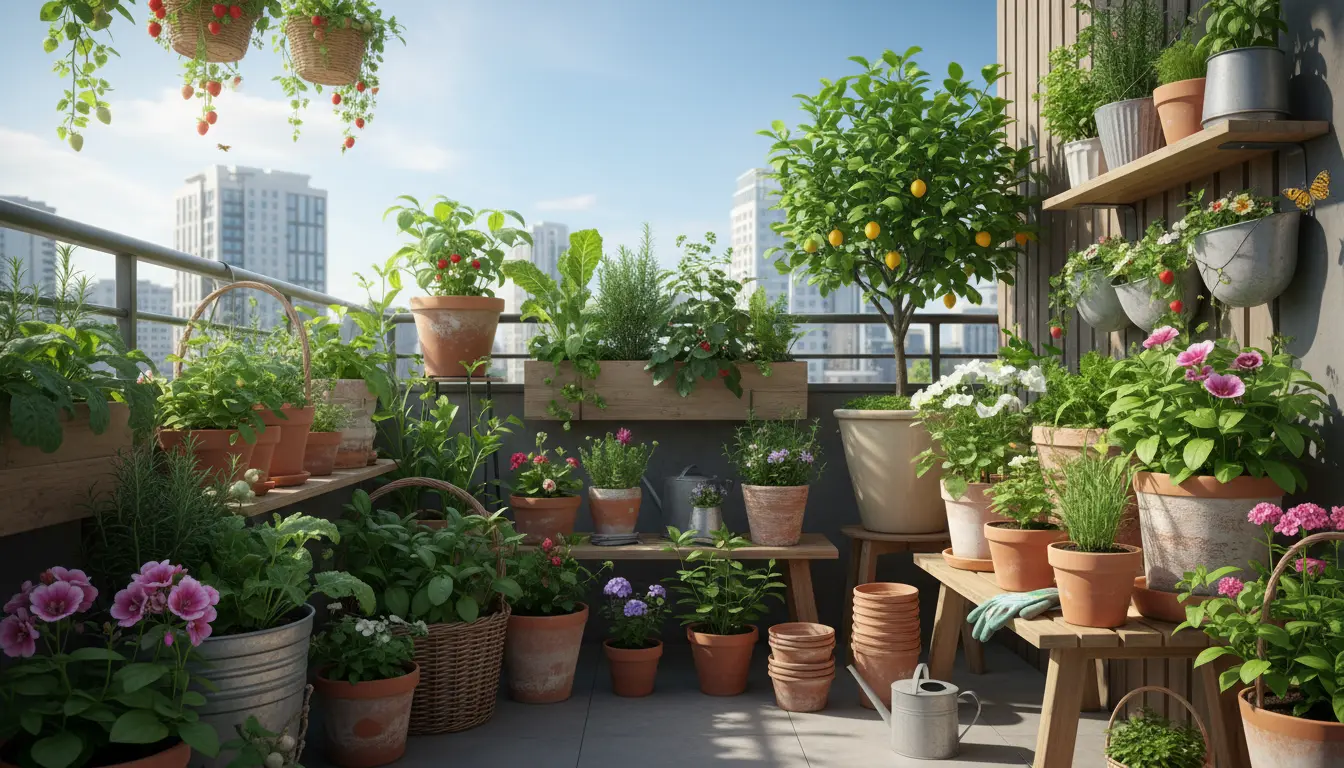
Start Simple with Container Vegetable Gardening
Container vegetable gardening lets you grow food in small spaces like balconies, patios, or windowsills. It works for beginners because it limits soil problems and makes maintenance easier.
Before buying supplies, assess light, space, and how much time you can commit. Most vegetables need 5–8 hours of direct sunlight for reliable production.
Choose Containers That Work
Container choice affects plant health and yield. Use sturdy pots with drainage holes to avoid waterlogging.
- Small containers (1–3 gallons): herbs, lettuce, microgreens.
- Medium containers (5–10 gallons): peppers, dwarf tomatoes, bush beans.
- Large containers (15+ gallons): indeterminate tomatoes, potatoes, small fruit bushes.
Lightweight options include fabric grow bags, plastic pots, and wooden planters. Ensure trays or saucers catch runoff and protect surfaces.
Best Soil Mix for Container Vegetable Gardening
Use a loose, well-draining mix formulated for containers. Heavy garden soil compacts in pots and reduces root oxygen.
- Base: commercial potting mix (peat-free if possible).
- Amendments: perlite or coarse sand for drainage, compost for nutrients.
- Example mix: 60% potting mix, 20% compost, 20% perlite.
Pre-moisten the mix before filling containers to avoid dry pockets that repel water.
Watering and Fertilizing Tips
Containers dry out faster than garden beds, so check moisture daily in warm weather. Water deeply until it runs from the drainage holes.
- Morning watering reduces disease risk and ensures water reaches roots.
- Use a moisture meter or stick your finger 1–2 inches into the soil to check.
- Fertilize regularly: liquid feed every 1–2 weeks or slow-release pellets at planting.
Avoid overfertilizing; follow product instructions to prevent salt buildup and leaf burn.
Plant Selection for Container Vegetable Gardening
Choose compact or bush varieties labeled as container-friendly. Many common vegetables perform well in pots.
- Tomatoes: determinate or patio varieties.
- Peppers: bell and hot peppers.
- Leafy greens: lettuce, spinach, arugula.
- Root crops: radishes, baby carrots, and new potatoes in deep containers.
- Herbs: basil, parsley, chives, cilantro.
Consider staggering plantings for a continuous harvest rather than planting everything at once.
Layout Example for a Small Balcony
Place tallest plants at the back and trailing ones at the edges. Group containers by water needs to simplify care.
- Back row: 2 medium pots with determinate tomatoes.
- Middle: 3 pots with mixed peppers and basil.
- Front: shallow trays with lettuce and herbs.
Containers warm up faster than ground soil, so you can start planting a week or two earlier in spring. However, they also cool faster in fall, extending your harvest with proper placement.
Common Problems and Solutions
Pest and disease pressure tends to be lower in containers but issues still occur. Watch leaves and soil surface daily for changes.
- Aphids or whiteflies: spray with water or insecticidal soap.
- Yellowing leaves: check for overwatering or nutrient deficiency.
- Root-bound plants: repot into a larger container or prune roots and refresh soil.
Rotate crops seasonally and clean pots between uses to reduce disease carryover.
Small Real-World Case Study
Case Study: Maria’s Balcony Garden. Maria started with four 10-inch fabric pots and a south-facing balcony. In her first season she grew cherry tomatoes, basil, and leaf lettuce.
After adjusting watering to twice daily in July and feeding weekly with a balanced liquid fertilizer, Maria harvested cherry tomatoes for three months. Her compact set-up produced about 10–12 lbs of tomatoes and continuous salad greens for two people.
Key takeaways: choose the right pot size for each crop, monitor moisture daily, and adjust fertilizing during peak growth.
Seasonal Checklist for Container Vegetable Gardening
Keep a simple routine to minimize issues and boost productivity. Follow this checklist by season:
- Spring: inspect pots, refresh soil, start seeds or buy transplants.
- Summer: monitor watering, provide shade cloth for extreme heat, harvest frequently.
- Fall: remove spent plants, compost healthy residues, store reusable containers.
- Winter: bring sensitive pots indoors or insulate them to protect roots from freezing.
Final Practical Tips for Success
Start small and expand after you learn your microclimate. Keep notes on what varieties performed best and when you harvested.
Invest in a quality potting mix and a simple watering can or hose attachment. These small investments reduce problems and increase yields.
Container vegetable gardening is a low-risk way to grow fresh food. With proper container choice, soil, watering, and plant selection you can enjoy reliable harvests even with limited space.