
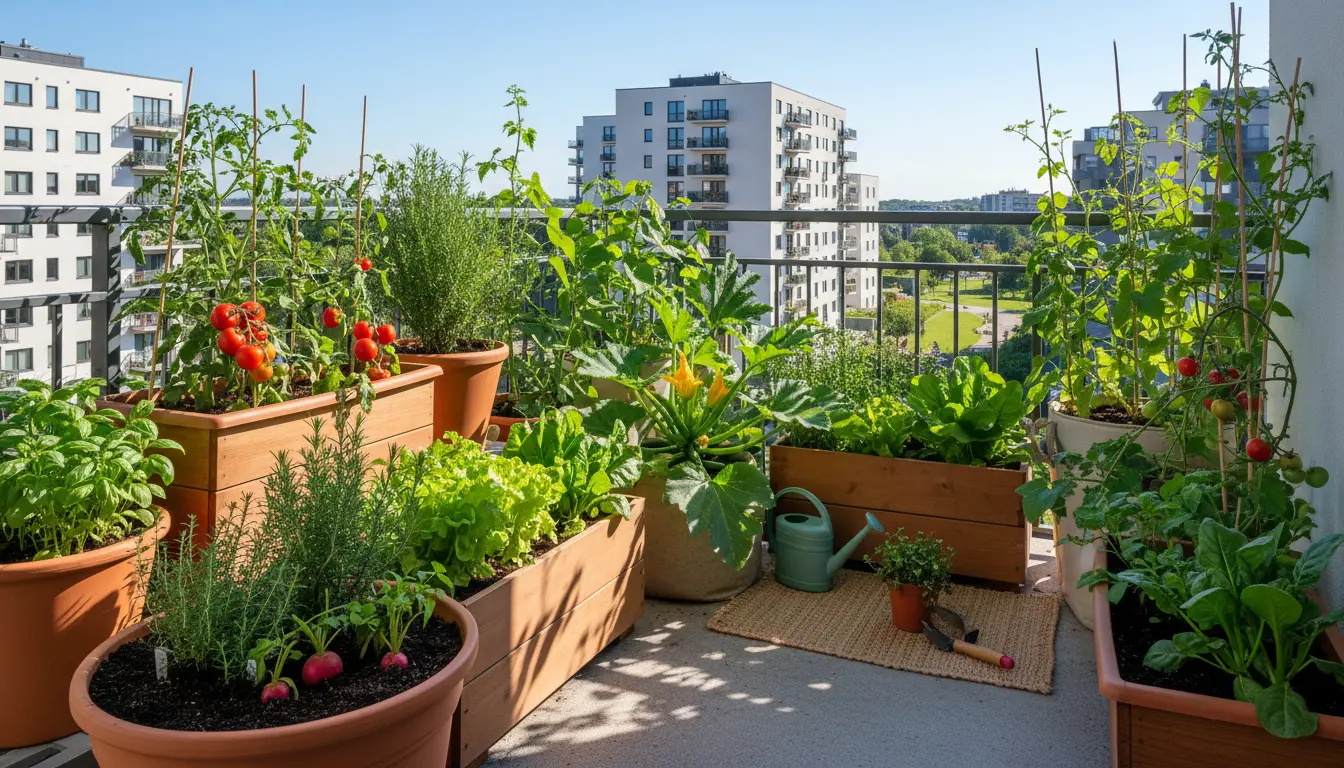
Why choose container vegetable gardening?
Container vegetable gardening is a practical way to grow food when space is limited. It works on balconies, patios, rooftops, and small yards.
This approach gives you control over soil, drainage, and sunlight. It also reduces weed problems and can be easier on your back.
Getting started with container vegetable gardening
Before you plant, evaluate three basics: containers, soil, and location. Each affects plant health and final yield.
Choose the right containers
Pick containers with drainage holes and enough volume for root growth. Larger containers retain moisture and stay stable in wind.
- Small herbs: 6–8 inch pots
- Leafy greens: 8–12 inch pots or window boxes
- Tomatoes, peppers: 5–10 gallon containers
- Root crops like carrots: deep, narrow pots or grow bags
Select good potting soil
Use a high-quality potting mix formulated for containers. Avoid garden soil; it compacts and drains poorly in pots.
Look for mixes with peat, coir, perlite, and slow-release fertilizer. You can also add compost for nutrients.
Find the best location
Most vegetables need 6–8 hours of direct sun. Track light on your balcony or patio for a few days to choose the sunniest spot.
Consider mobility: place heavy containers where they will stay, and use wheeled stands for large pots if you need to move them.
Container vegetable gardening: what vegetables to grow

Select crops suited to pots and your climate. For beginners, choose fast-growing, forgiving vegetables.
- Leafy greens: lettuce, spinach, kale
- Herbs: basil, parsley, chives
- Compact tomatoes: patio or bush varieties
- Peppers: small to medium varieties
- Root vegetables: carrots and radishes in deep containers
Check seed or plant labeling for terms like “compact,” “bush,” or “patio” to find varieties that fit containers.
Planting and spacing in container gardening
Follow spacing guidelines for each crop but err on the side of giving plants room to mature. Crowded pots dry out faster and encourage disease.
Example spacing for common container crops:
- Lettuce: 4–6 inches apart in a long planter
- Basil: 8–10 inches between plants
- Tiny tomato varieties: one plant per 5 gallon pot
Care and maintenance for container vegetable gardens
Containers require regular attention. Maintain a simple routine for watering, feeding, and pruning.
Watering tips
Water deeply until excess drains from drainage holes. Check soil moisture daily during hot weather.
Ways to reduce watering frequency:
- Use larger pots that hold more water
- Mulch the top with straw or bark chips
- Group pots together to reduce evaporation
Fertilizing container plants
Potting mixes contain starter nutrients, but containers need ongoing feeding. Use a balanced liquid fertilizer or slow-release granules.
Feed every 2–4 weeks during the growing season, following label directions for rates.
Troubleshooting common container gardening problems
Containers reduce some issues but create others. Watch for these common problems and simple fixes:
- Poor drainage: add more holes or move to a pot with better drainage
- Yellow leaves: check for nutrient deficiency or overwatering
- Pests: inspect leaves regularly and use soap sprays or hand-picking
- Root bound plants: repot to a larger container if roots circle the pot
Plants in containers can need up to three times more frequent watering than those in the ground, especially in hot weather.
Small case study: Balcony tomato success
Emma, a city renter, grew two determinate tomato plants in 10-gallon fabric pots on a sunny balcony. She used a commercial potting mix and slow-release fertilizer at planting.
With daily morning watering and weekly liquid feedings, both plants produced tomatoes for three months. Emma pruned suckers lightly and rotated pots for even sunlight.
Key takeaways from this example:
- Choose the right pot size and variety
- Consistent watering and feeding improve yield
- Light pruning and support reduce disease and breakage
Seasonal tips for container gardening
Adjust care by season. In spring, start seedlings indoors or buy young plants. In summer, increase watering and shade sensitive plants on heat waves.
In fall, harvest remaining crops and clear pots. Clean containers and store lightweight pots to extend their life through winter.
Conclusion: start small and learn
Container vegetable gardening is a flexible, low-cost way to grow fresh produce in small spaces. Start with a few easy crops and expand as you gain experience.
Track watering, note which varieties perform well, and adjust container size and soil mix over time for better results.
Quick checklist to begin
- Pick sunny location with 6–8 hours of light
- Select containers with drainage and proper size
- Buy a quality potting mix and compost
- Choose 2–4 beginner-friendly crops
- Set a regular watering and feeding schedule