
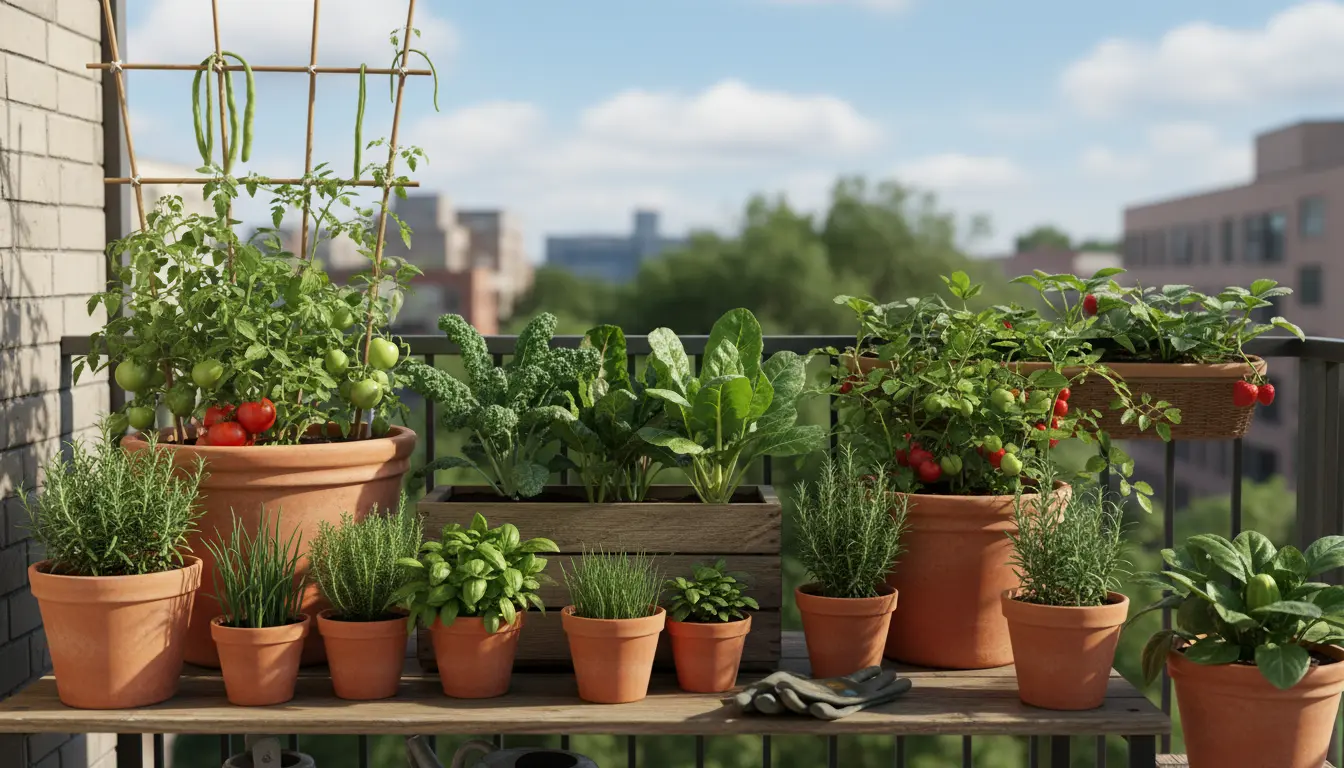
Why choose a Container Vegetable Garden
A container vegetable garden lets you grow food in small spaces like balconies, patios, or small yards. It reduces weeds, gives better soil control, and is easier on your back than in-ground beds.
This guide covers practical steps to start and maintain a healthy container vegetable garden that produces regular harvests.
Planning your Container Vegetable Garden
Start by assessing sunlight, space, and access to water. Most vegetables need at least 6 hours of direct sun. If you have less, choose shade-tolerant crops.
Decide how many containers you can manage and which vegetables suit your space and climate.
Choose the Right Containers for Container Vegetable Garden
Containers can be pots, grow bags, or raised troughs. Key features are drainage, size, and material. Use containers with drainage holes and at least 10–15 liters for small plants.
Bigger vegetables like tomatoes and peppers need 20–40 liter containers for healthy root growth.
Soil and Potting Mix for Container Vegetable Garden
Use a high-quality potting mix formulated for containers; avoid garden soil which compacts and drains poorly. A good mix balances drainage, water retention, and nutrients.
Mixes often contain peat or coco coir, perlite or pumice, and compost. Add slow-release organic fertilizer at planting, then supplement during the season.
Best Vegetables for a Container Vegetable Garden
Choose compact or bush varieties and quick growers. These crops do well in containers and give reliable yields.
- Leafy greens: lettuce, spinach, arugula
- Herbs: basil, parsley, chives
- Root crops: radishes, baby carrots, young beets
- Fruiting plants: cherry tomatoes, patio peppers, dwarf cucumbers
- Legumes: bush beans, bush peas
Planting and Spacing in a Container Vegetable Garden
Follow seed packet or plant label spacing, but you can plant slightly closer in containers to maximize space. Thin seedlings as they grow to avoid overcrowding.
Use companion planting to make the most of each container; for example, plant basil with tomatoes to boost flavor and repel pests.
Watering and Feeding Your Container Vegetable Garden
Containers dry out faster than ground soil, so consistent watering is critical. Check soil moisture daily during hot weather by sticking a finger 2–3 cm into the mix.
Water thoroughly until water drains from the bottom so roots get a deep drink. Early morning is the best time to water.
Fertilizing in a Container Vegetable Garden
Containers need regular feeding because nutrients leach out with frequent watering. Use a balanced liquid fertilizer every 2–3 weeks or a slow-release organic formula at planting.
Adjust fertilizer for leafy crops (more nitrogen) versus fruiting crops (more potassium and phosphorus).
Pest and Disease Management in Container Vegetable Garden
Containers limit many soil-borne pests, but you still face aphids, whiteflies, slugs, and fungal diseases. Monitor plants weekly for early signs of trouble.
- Remove affected leaves promptly.
- Use insecticidal soap or neem oil for soft-bodied pests.
- Improve air circulation by spacing containers and pruning crowded growth.
Container-grown tomatoes can produce fruit up to two weeks earlier than in-ground plants because the soil in containers warms faster in the spring.
Seasonal Care for a Container Vegetable Garden
Adjust care by season. In spring, flush soil once a week and ensure good drainage. During peak summer, increase watering frequency and use shade cloth on very hot days.
In cooler climates, move containers to a protected spot or use insulating wraps to extend the season.
Winterizing Containers
Empty and store lightweight containers indoors or add mulch to protect roots in heavy pots. Clean and disinfect containers before storing to reduce disease carryover.
Harvesting from a Container Vegetable Garden
Harvest regularly to encourage continued production. Pick leafy greens when young for best flavor. For tomatoes and peppers, harvest when fully colored and slightly soft to the touch.
Record harvest dates and yields to refine planting choices and timing for next season.
Small Real-World Case Study
Case study: Sarah’s Balcony Container Vegetable Garden. Sarah had a 6 m2 balcony and wanted fresh salad greens and tomatoes. She used five 20-liter containers and three 10-liter pots.
She planted cherry tomatoes, basil, leaf lettuce, and radishes. With consistent watering and a weekly liquid feed, she harvested salad greens within 4 weeks and a steady supply of cherry tomatoes by week 10.
Her yield: enough salad greens for two people nearly every week and about 30–40 cherry tomatoes per month in peak season. The compact, manageable setup reduced pest pressure and required about 20 minutes of care, three times a week.
Quick Checklist to Start Your Container Vegetable Garden
- Assess light and water access
- Choose containers with drainage and correct size
- Use quality potting mix and add compost
- Select compact vegetable varieties
- Water deeply and fertilize regularly
- Monitor for pests and diseases weekly
Final Tips for Success with Your Container Vegetable Garden
Start small and expand as you gain confidence. Keep records of what works and adapt varieties to your microclimate. Consistency in water and feeding delivers the best results.
With the right containers, soil, and a simple maintenance routine, a container vegetable garden can provide fresh produce, even in limited spaces.