
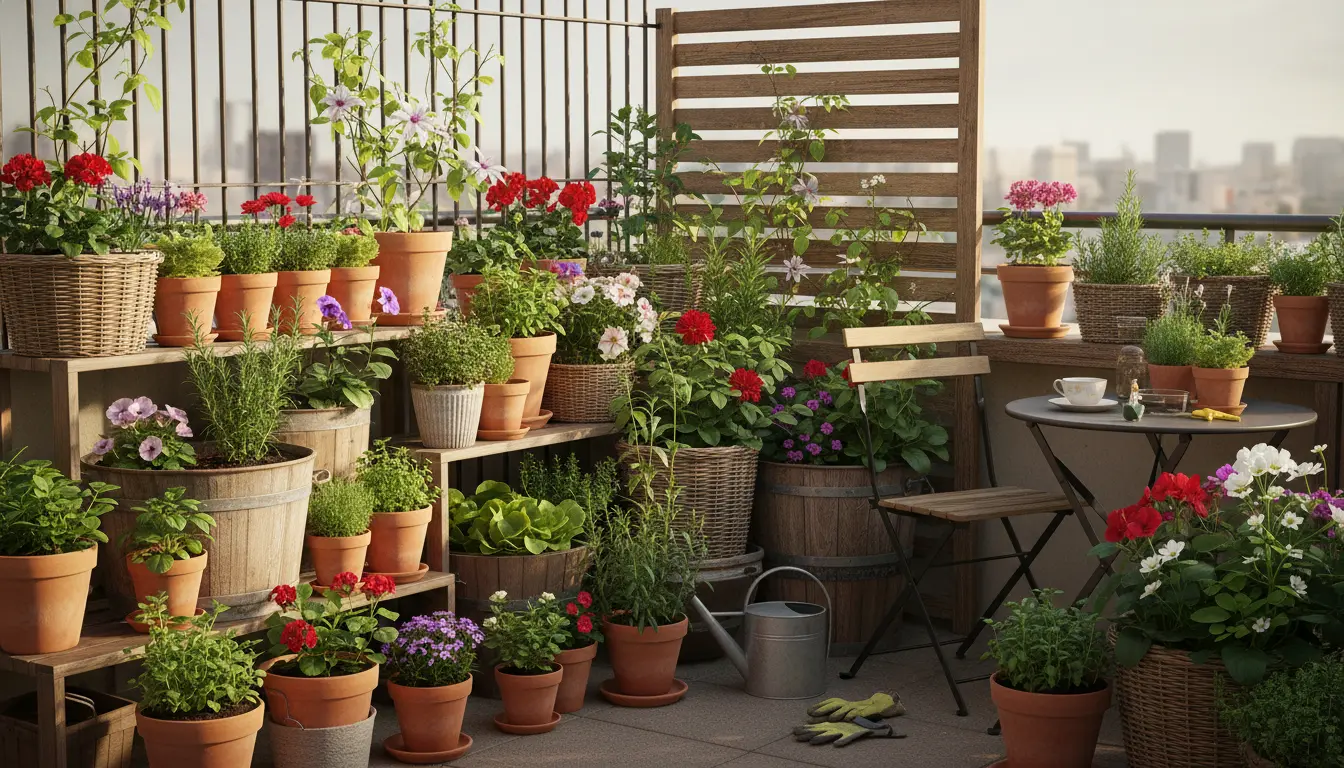
Why container gardening for small spaces works
Container gardening makes growing vegetables, herbs, and flowers possible when ground space is limited. It fits balconies, patios, window sills, and tiny yards while offering control over soil, drainage, and plant placement.
This guide gives practical steps and examples for success in container gardening for small spaces.
Choose the right containers for small spaces

Container choice affects root health, water retention, and mobility. Pick containers that suit the plant size and your space constraints.
- Small herbs: 6–8 inch pots
- Leafy greens: 8–12 inch pots or shallow troughs
- Tomatoes, peppers: 12–18 inch pots with at least 5 gallons capacity
- Vining plants: hanging baskets or tall pots with trellises
Use saucers to catch runoff and plant stands to free floor space. Choose lightweight materials like plastic or fabric grow bags if you move plants often.
Soil and drainage essentials for container gardening
Good container soil must drain well and hold enough moisture and nutrients. Avoid using garden soil alone; it compacts and drains poorly in pots.
- Use a high-quality potting mix labeled for containers.
- Add perlite or coarse sand to improve drainage when needed.
- Ensure pots have drainage holes and use a layer of coarse material only if it does not block holes.
Light requirements for container gardening in small spaces
Assess daily light before choosing plants. Most edible crops need 6+ hours of direct sun, while many herbs and shade-tolerant greens do well in partial sun.
Quick light checklist
- Full sun (6+ hours): tomatoes, peppers, basil, eggplant
- Partial sun (3–6 hours): lettuce, spinach, parsley
- Shade (less than 3 hours): some ferns, moss, ornamental plants
Watering and feeding in small-space containers
Containers dry out faster than garden beds. Develop a simple watering routine that considers pot size, plant type, and weather.
- Check soil moisture daily at the top and 2 inches deep.
- Water until excess drains from the bottom; avoid letting roots sit in water.
- Use a balanced water-soluble fertilizer every 2–4 weeks during the growing season.
Self-watering pots or wick systems reduce daily maintenance for busy households.
Plant selection and spacing for small spaces
Choose compact or dwarf plant varieties labeled for containers. Companion planting and vertical growing increase yield per square foot.
- Grow cherry tomatoes rather than full-size indeterminate types.
- Use vertical supports for cucumbers, beans, or flowering vines.
- Mix shallow-rooted herbs and lettuce in a wider container to maximize space.
Pest and disease management in container gardening
Containers offer some pest control advantage but still require vigilance. Small spaces can intensify disease spread if plants are crowded.
- Inspect leaves weekly for pests and remove affected foliage.
- Improve air circulation by spacing pots and pruning when needed.
- Use insecticidal soap or neem oil for common pests; follow label directions.
Seasonal care and overwintering plants
Containers warm up and cool down faster than ground soil, so plants may start earlier and need protection later. Move sensitive pots indoors or to sheltered spots before frost.
- Use lightweight frost cloths for short cold spells.
- Bring potted herbs indoors on windowsills during colder months.
- Clean and store empty pots to prevent overwintering pests.
Case study: Small balcony yields big flavor
Maria, an apartment resident with a 6×4 foot balcony, converted the space into a productive container garden. She used three 12-inch pots, two 5-gallon pots, and one hanging basket.
Her plan:
- 12-inch pots: tomatoes and basil (one each)
- 5-gallon pots: mixed salad greens and bush beans
- Hanging basket: strawberries
With daily morning watering, weekly fertilizing, and trellised support for the tomato, Maria harvested salad greens multiple times and had steady herbs and tomatoes through summer. She estimated saving $15–$20 per week during peak harvest months.
Practical checklist to start container gardening for small spaces
- Measure your space and note sun exposure throughout the day.
- Select containers that fit the area and suit plant root needs.
- Buy quality potting mix and provide drainage.
- Choose compact varieties and plan vertical supports if needed.
- Set a simple watering and feeding schedule and inspect plants weekly.
Final tips for success
Start small and expand once you establish a routine. Track what thrives in your microclimate and adjust plant choices seasonally.
Container gardening for small spaces rewards consistent care and thoughtful planning. With the right containers, soil, and plant choices you can enjoy fresh produce and greenery even in the smallest urban spots.