
Container gardening for beginners is a practical way to grow vegetables, herbs, and flowers in small spaces. This guide explains the essentials so you can start with confidence and steady results.
Why Choose Container Gardening for Beginners
Container gardening makes plants easier to manage and can fit into patios, balconies, or small yards. It reduces soil-borne pests, lets you control soil quality, and is ideal for renters or people with limited space.
Choosing Containers for Container Gardening
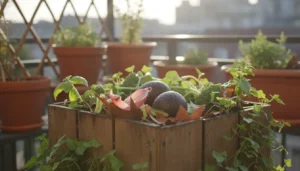
Select containers that match the plants you want to grow and your space. Consider size, drainage, material, and mobility when picking pots.
Container size and type
Deeper containers suit vegetables with larger root systems, like tomatoes and peppers. Shallow containers work for herbs and lettuce.
- Small pots (6–8 inches): herbs, small succulents
- Medium pots (10–14 inches): lettuce, chard, dwarf peppers
- Large pots (18+ inches or grow bags): tomatoes, eggplants, bush beans
Material and drainage
Terra cotta breathes but dries fast; plastic retains moisture and is lightweight. Ensure every container has drainage holes and use a saucer to protect surfaces.
Soil and Fertilizer for Container Gardening
Use a high-quality potting mix designed for containers; garden soil is too heavy and can compact. Potting mixes provide better drainage and aeration for roots.
Feeding potted plants
Containers have limited nutrients so feed plants regularly. Use a balanced liquid fertilizer every 2–4 weeks or a slow-release fertilizer mixed into the potting mix at planting.
Plant Selection for Container Gardening for Beginners
Choose easy-to-grow varieties and compact cultivars labeled for containers. Start with a few resilient crops to build experience and confidence.
- Easy vegetables: cherry tomatoes, bush beans, radishes, salad greens
- Simple herbs: basil, mint (in its own pot), chives, parsley
- Compact fruits: strawberries, dwarf peppers
Light, Water, and Microclimate
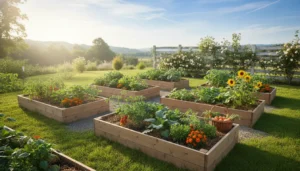
Most vegetables and herbs need 6–8 hours of direct light. Observe your space for morning vs afternoon sun and place containers accordingly.
Watering routine
Containers dry out faster than garden beds. Water when the top inch of soil feels dry and adjust frequency for weather and pot size. Early morning watering reduces evaporation and fungal risk.
- Small pots: often daily in hot weather
- Large pots: every 2–3 days, depending on conditions
- Tip: use mulch or a top dressing of bark to slow moisture loss
Maintenance and Troubleshooting for Container Gardening
Regularly check plants for pests, signs of nutrient deficiency, or overwatering. Remove yellowing leaves and trim crowded growth to improve air flow.
Common problems and solutions
- Wilting: check soil moisture and root health
- Yellow leaves: likely nutrient lack or overwatering; adjust feeding and drainage
- Pests: hand-pick, rinse leaves, or use an insecticidal soap for small outbreaks
Growing in containers can produce faster harvests because you control soil temperature and nutrients. Some crops like lettuce mature several days earlier in warm, well-drained pots.
Small Real-World Example: Balcony Salad in Weeks
Case study: Sarah, a renter with a south-facing balcony, started container gardening with three 12-inch pots. She planted one pot with mixed salad greens, one with basil and parsley, and one with a compact cherry tomato.
Within six weeks she harvested continuous salad leaves and two rounds of basil. She kept a consistent watering schedule, rotated pots weekly for even light, and used a balanced liquid feed every three weeks.
Result: Fresh salad servings for two people twice a week and a steady supply of herbs. Her success came from matching plant size to pot size and staying consistent with watering.
Seasonal Tips for Container Gardening for Beginners
Adjust plant choices by season: cool-season greens in spring and fall, heat-loving vegetables in summer. Move containers to protect roots from extreme temperatures.
- Spring: start seeds indoors or buy seedlings for cabbage, lettuce, and peas
- Summer: grow tomatoes, peppers, eggplants in large pots
- Fall: replant with spinach, kale, and cover pots for frost protection
Quick Start Checklist
- Choose suitable containers with drainage
- Buy potting mix and slow-release or liquid fertilizer
- Select beginner-friendly plants and compact varieties
- Place pots where they get required sunlight
- Water consistently and monitor plant health
Container gardening for beginners can deliver satisfying results with minimal space and expense. Start small, learn from each season, and gradually expand as you gain confidence.