

Why Choose Container Gardening for Beginners
Container gardening is an accessible way to grow vegetables and herbs when space is limited. It fits balconies, small patios, and even windowsills and delivers quick results for new gardeners.
Containers reduce weeding and soil-borne pests, and they let you control soil quality and drainage. For beginners, that control simplifies many common gardening problems.
Essential Tools and Materials for Container Gardening

Before planting, gather a few basic items to set yourself up for success. The right materials make care and maintenance straightforward.
- Containers: pots, grow bags, or recycled tubs with drainage holes.
- Potting mix: a lightweight, well-draining blend labeled for containers.
- Fertilizer: balanced, slow-release or liquid feed for vegetables.
- Basic tools: a trowel, watering can, and a pair of pruning scissors.
Choosing Containers for Container Gardening
Container size affects plant health more than container type. Deeper and wider pots hold more soil and moisture, so they support larger vegetables.
Examples of container choices:
- Small pots (6–8 inches): herbs and lettuce.
- Medium pots (10–14 inches): peppers, bush tomatoes, dwarf beans.
- Large pots or grow bags (15+ inches): full-size tomatoes, potatoes, eggplants.
Container Gardening Tip: Drainage and Material

Ensure containers have drainage holes to prevent root rot. Terra cotta breathes but dries faster, while plastic retains moisture longer. Match material to your watering routine and climate.
Soil and Fertility for Container Gardening
Use a high-quality potting mix designed for containers rather than garden soil. Potting mix contains ingredients that improve drainage and aeration, like peat, coir, or perlite.
Fertilize regularly because nutrients leach out with frequent watering. A schedule might be a slow-release fertilizer at planting plus monthly liquid feeds in peak growing season.
Container Gardening Feeding Schedule (Example)
- At planting: incorporate a small amount of balanced slow-release fertilizer into the mix.
- Every 2–4 weeks: liquid fertilizer during active growth.
- Midseason: check for yellowing leaves and adjust feed or soil pH if needed.
Light and Placement for Container Gardening
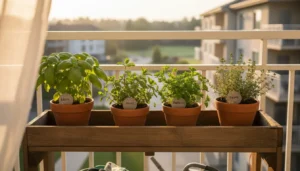
Light is the most important factor for vegetable success. Most vegetables need 6–8 hours of direct sunlight each day.
If you have limited sun, choose shade-tolerant crops like leafy greens, herbs, and some radishes. Use reflective surfaces or moveable pots to capture more light when possible.
Watering Best Practices for Container Gardening
Containers dry out faster than ground beds, so consistent watering is critical. Check soil moisture daily by sticking a finger 1–2 inches into the mix.
Water thoroughly until excess drains from the bottom, then allow the top inch to dry before watering again. Mulch the surface with straw or shredded bark to slow evaporation.
What to Plant First in Container Gardening
Start with easy, fast-growing crops to build confidence. Good beginner choices include:
- Herbs: basil, mint, parsley.
- Leafy greens: lettuce, spinach, arugula.
- Compact vegetables: cherry tomatoes, peppers, bush beans.
Succession Planting for Steady Harvests
Plant a small batch of salad greens every 2–3 weeks to keep a continuous supply. Container space is limited, so succession planting maximizes yield over a season.
Pest and Disease Management in Container Gardening
Containers reduce many pest problems, but issues still arise. Inspect leaves regularly for pests like aphids and caterpillars.
Use physical controls—handpicking, trap crops, or insecticidal soap—before chemical options. Improve air circulation and avoid overwatering to reduce fungal diseases.
Tomato plants grown in larger containers can produce 2–4 times more fruit than those in small pots because roots have more room to develop.
Small Real-World Case Study
Emma, a city renter, converted a 6-foot balcony into a container garden. She used four 15-inch pots and two window boxes to grow tomatoes, basil, and lettuce.
By following a simple feeding and watering schedule, she harvested fresh salads twice a week and a steady supply of tomatoes across the season. Initial cost was under $150, and she reduced grocery herb purchases by 75 percent.
Common Beginner Mistakes and How to Avoid Them
- Overwatering: Check soil before each watering and use pots with drainage.
- Undersized containers: Choose larger pots for fruiting vegetables.
- Poor soil choice: Always use labeled potting mix, not garden soil.
- Ignoring light needs: Track sun exposure before placing plants.
Next Steps for New Container Gardeners
Start small with 2–4 containers and expand as you gain confidence. Keep a simple journal of watering, feeding, and harvests to learn what works in your microclimate.
Join local gardening groups or online forums to ask questions and share results. Container gardening is flexible, low-risk, and rewarding for beginners ready to grow their own food.