
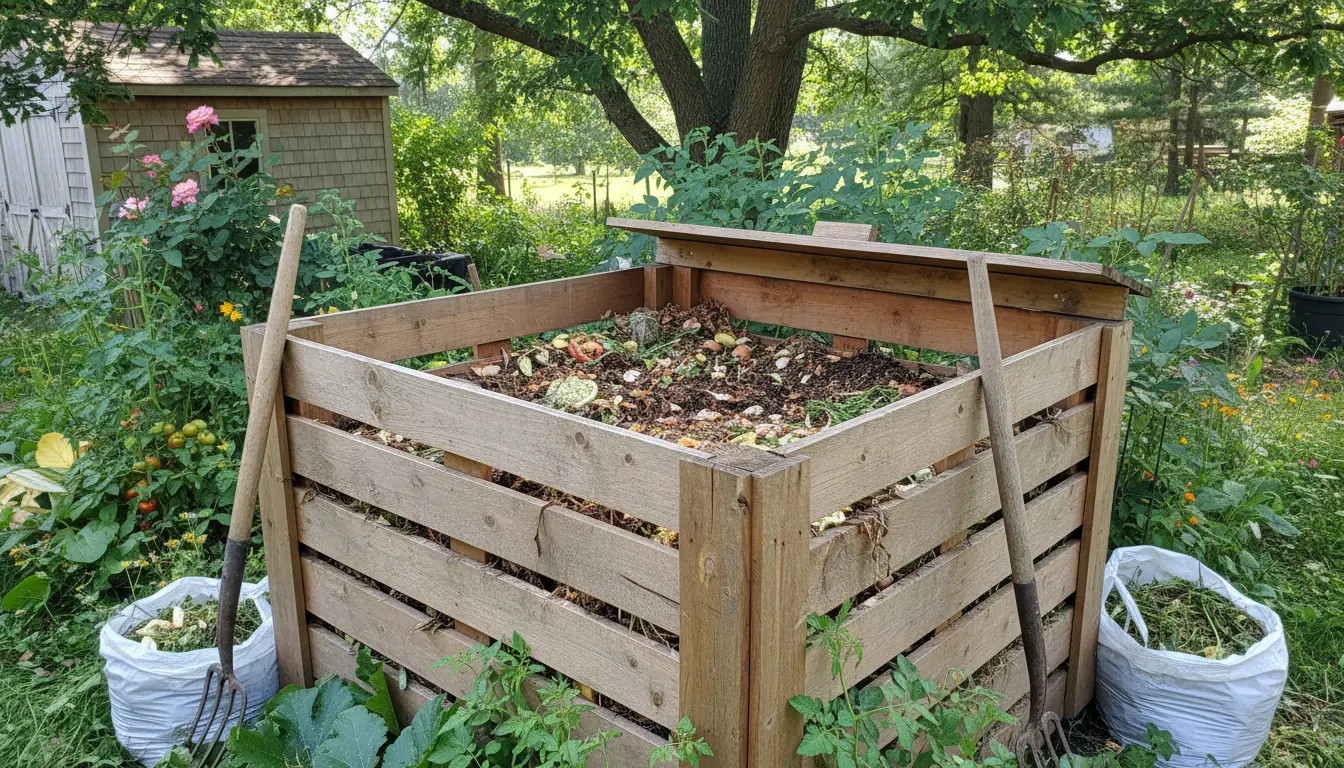
Composting at home turns kitchen scraps and yard waste into a valuable soil amendment. This guide gives clear, practical steps to start and maintain a healthy compost pile in a small yard or even on a balcony.
Why composting at home matters
Composting reduces landfill waste and returns nutrients to soil. It improves soil structure, water retention, and plant health without chemical fertilizers.

For households, composting also lowers waste collection costs and supports local sustainability efforts. Even a small bin can make a measurable difference.
Getting started with composting at home
Starting composting at home requires three basics: a container, a mix of materials, and some routine care. You do not need special equipment to get started.
Choosing a bin for composting at home
Select a bin based on space, effort, and aesthetics. Options include open piles, tumblers, plastic bins, and wooden crates.
- Open pile: Cheapest, best for yards with space.
- Tumbler: Easier turning, faster decomposition, good for small yards.
- Plastic or wooden bin: Neat appearance, moderate airflow, easy to build.
Materials to compost at home
Balance green (nitrogen) and brown (carbon) materials for efficient breakdown. Aim for roughly 2–3 parts brown to 1 part green by volume.
- Greens: vegetable scraps, fruit peels, fresh grass clippings, coffee grounds.
- Browns: dry leaves, straw, shredded paper, cardboard, small wood chips.
Add water until the pile feels like a wrung-out sponge; avoid making it soggy.
What not to compost at home
Avoid meat, dairy, oily foods, diseased plants, and pet waste unless you use a hot composter designed for those materials. These can attract pests or carry pathogens.
How to maintain composting at home
Maintaining a home compost pile is mostly about monitoring moisture, aeration, and temperature. Regular attention keeps decomposition steady and prevents problems.
Turning and aeration
Turn your pile every 1–2 weeks if possible. Turning mixes materials, introduces oxygen, and speeds breakdown.
If you use a tumbler, rotate it several times a week. For static bins, use a pitchfork to lift and mix layers.
Moisture and temperature
Keep the pile moist but not waterlogged. Too dry and microbes slow down; too wet and anaerobic odors develop.
Composting at home in a well-managed pile will heat to 120–140°F (49–60°C) if large enough, which helps kill weed seeds and pathogens. Small piles may not reach those temperatures and will decompose more slowly.
Troubleshooting common problems
- Bad odors: Add more browns, turn the pile, reduce moisture.
- Pests: Avoid food scraps on the surface, use a closed bin, bury fresh scraps in the center.
- Slow decomposition: Chop materials smaller, increase greens, keep moist and aerated.
Properly managed home compost can reduce household waste by up to 30 percent and return essential nutrients like nitrogen and phosphorus to your garden soil.
Using finished compost from your home pile
Finished compost is dark, crumbly, and earthy-smelling. Use it to amend garden beds, topdress lawns, or mix into potting soil for containers.
- Vegetable beds: Mix 1–2 inches of compost into topsoil before planting.
- Lawns: Topdress thinly in spring or fall to improve soil.
- Containers: Replace up to 20–30 percent of potting mix with compost.
How long does composting at home take?
Time varies by method and materials. Active hot composting can finish in 2–3 months. Cooler, passive piles may take 6–12 months to produce finished compost.
Small real-world example: Composting at home in a townhouse
Case study: A family of three living in a townhouse started composting in a 50-gallon tumbler on their patio. They collected kitchen scraps in a countertop container and layered shredded paper from their home office as the brown material.
After two months of weekly turning and occasional watering, the tumbler produced usable compost. The family mixed finished compost into potted herbs and the community raised bed, cutting their kitchen waste by half and improving plant health.
Additional tips for successful composting at home
- Chop materials into smaller pieces to speed decomposition.
- Keep a balanced mix and avoid large amounts of one material type.
- Use a mesh screen to sift finished compost and remove large bits for another cycle.
- Label bins and keep tools dedicated to compost use to avoid cross-contamination.
Composting at home is an accessible way to reduce waste and improve soil health. Start small, keep the basic balance of greens and browns, and adjust by observing how your pile behaves. With a little routine care, you can produce nutrient-rich compost for healthier plants and a smaller environmental footprint.