
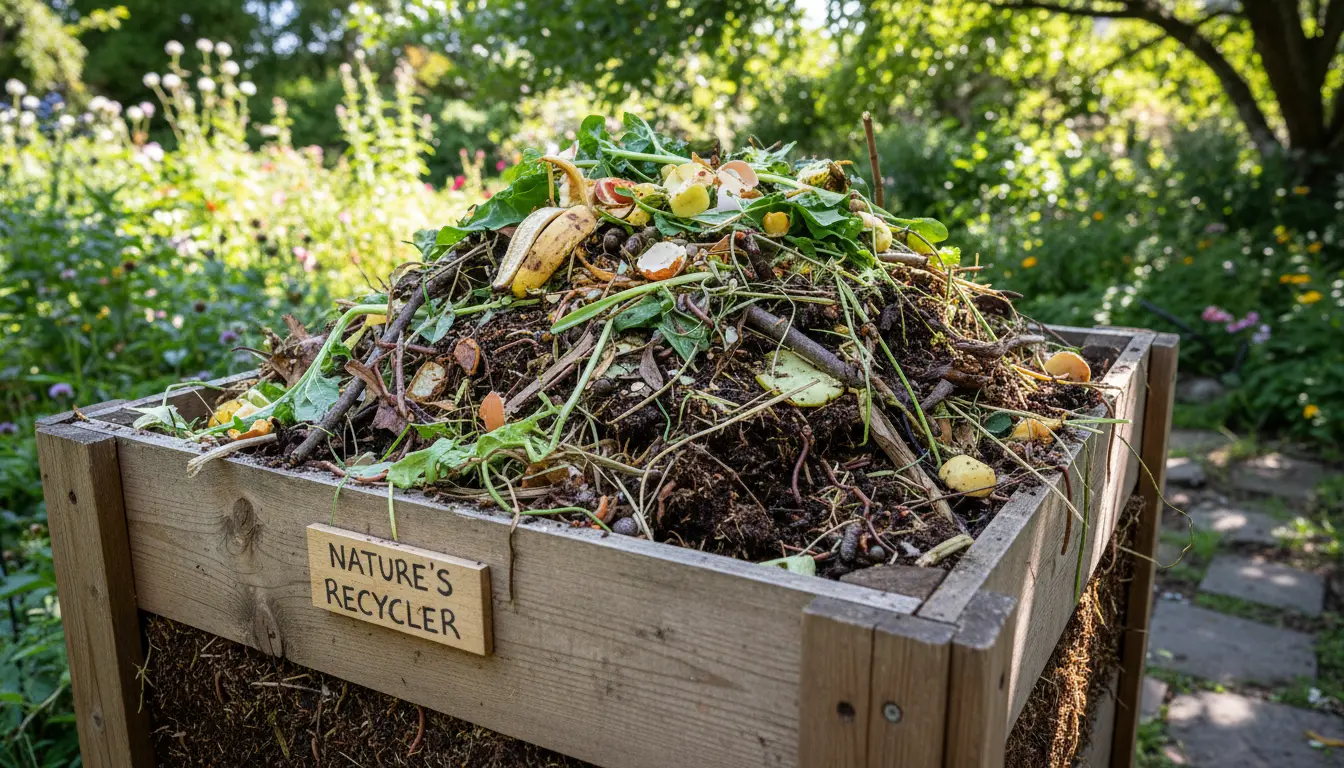
What is composting at home and why do it?
Composting at home turns kitchen scraps and yard waste into nutrient-rich soil. It reduces household waste, lowers landfill methane, and improves your garden soil.
This guide shows practical, step-by-step actions for beginners. You will learn to pick a system, manage materials, and troubleshoot common problems.
Choosing a compost bin for home composting
Select a compost container that fits your space and effort level. Options include tumblers, stationary bins, open piles, and worm bins (vermicomposting).
Consider these factors when choosing:
- Available space (balcony, yard, garage)
- How often you want to turn the pile
- Volume of kitchen and yard waste you produce
- Local climate and temperature
How to start composting at home: the basics
Start with a base and add materials in layers. Aim for a mix of carbon-rich “browns” and nitrogen-rich “greens.” Browns provide structure; greens supply moisture and nitrogen.
Common materials:
- Browns: dry leaves, shredded paper, cardboard, straw
- Greens: vegetable scraps, coffee grounds, fresh grass clippings
Step-by-step setup
1. Place bin on soil or a surface that allows drainage and microbial access.
2. Add a layer of coarse browns to improve airflow.
3. Alternate greens and browns in 3:1 to 2:1 volume ratios (browns:greens).
4. Keep the pile moist like a wrung-out sponge. Too dry slows decomposition; too wet causes smells.
Managing your compost: turning, moisture, and temperature
Turning the pile adds oxygen and speeds up decomposition. For hot composting, turn every 1–2 weeks. For slow composting, turn monthly or not at all.
Temperature indicates activity. Warm piles (130–160°F) break down fast. Cooler piles still work but take longer.
Simple maintenance checklist
- Check moisture weekly and add water or dry browns as needed.
- Turn the pile on schedule for faster results.
- Add more browns when you add many wet kitchen scraps.
- Chop large items to increase surface area and speed up decomposition.
Troubleshooting common problems in home composting
Smell: Usually caused by too many greens or poor aeration. Fix by adding dry browns and turning the pile.
Slow decomposition: Add nitrogen-rich materials, increase surface area by shredding, or keep the pile warmer by insulating it.
Pests: Avoid meat, dairy, and oily foods. Use a closed bin or bury kitchen scraps within the pile to deter animals.
Adding a thin layer of finished compost or garden soil to new kitchen scraps can jump-start decomposition by introducing helpful microbes.
When is compost finished and how to use it?
Finished compost is dark, crumbly, and smells earthy. It should no longer resemble its original materials and will be cool to the touch.
Use finished compost to:
- Top-dress lawns and garden beds
- Mix with potting soil for container plants
- Improve soil structure and water retention
Small case study: A simple backyard success
Case: Sarah, a homeowner in Portland, started a 60-gallon tumbling composter. She added a mix of fall leaves and weekly kitchen scraps.
After three months of turning twice a week and balancing moisture, Sarah had dark, usable compost. She used it to amend her tomato beds and saw healthier growth and fewer watering needs.
Practical tips and examples for fast results
- Chop or blend greens to speed decomposition.
- Keep a small sealed kitchen caddy for scraps to avoid odors between trips to the bin.
- Save shredded cardboard or dry leaves during fall for brown material supply.
- Use a compost thermometer if you want to manage hot composting precisely.
Quick troubleshooting examples
- Problem: Foul smell. Fix: Add dry leaves, mix, and reduce wet inputs.
- Problem: Fruit flies. Fix: Bury new food scraps and secure the bin lid.
- Problem: Pile too dry. Fix: Add greens or water and mix to distribute moisture.
Final checklist before you begin composting at home
- Choose a bin type that matches your space and effort level.
- Keep a good balance of browns and greens.
- Monitor moisture and aeration weekly.
- Avoid meat, dairy, and diseased plants to reduce problems.
Composting at home is a low-cost, effective way to reduce waste and boost garden health. Start small, learn by doing, and adjust your routine to fit your household needs.