
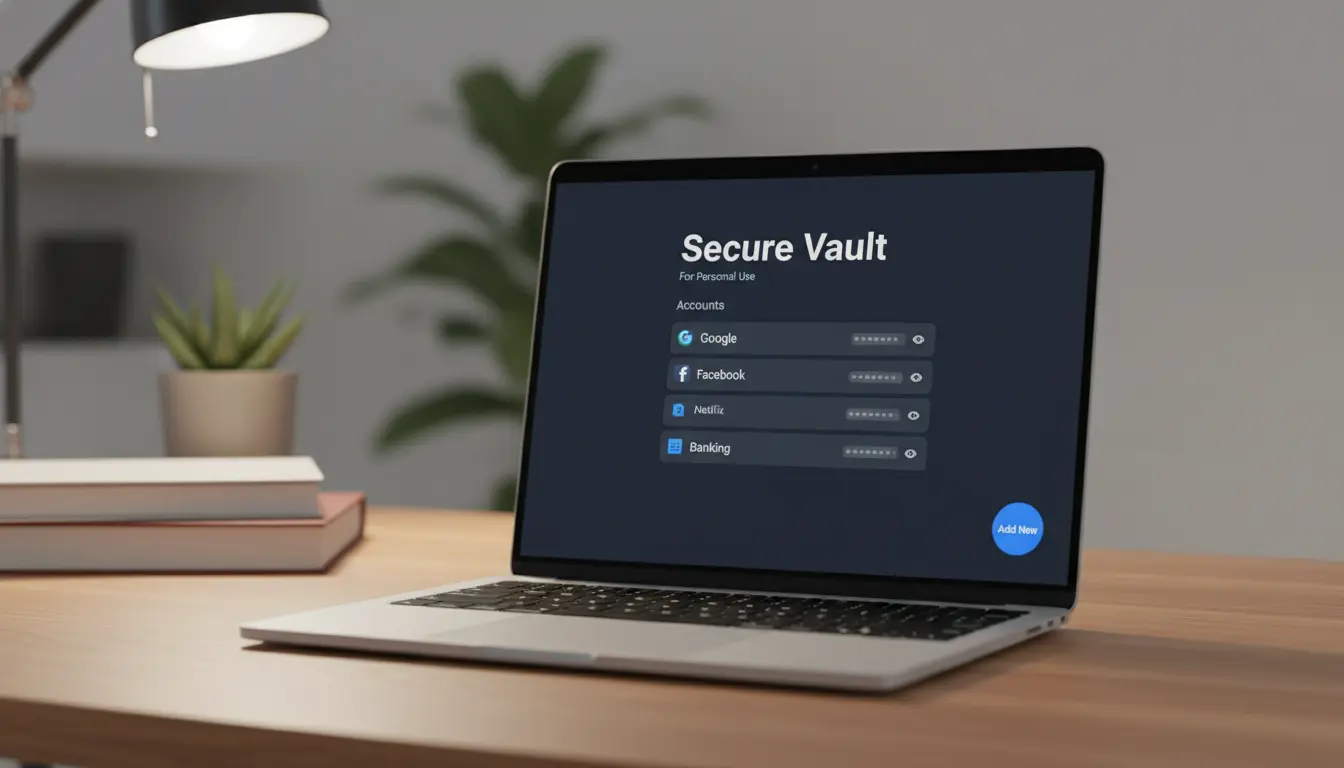
Why Use a Password Manager
A password manager stores and autofills your passwords so you do not reuse weak credentials. It creates strong unique passwords for each site and keeps them encrypted behind a single master password.
Using a password manager reduces the risk of account breaches and simplifies logging in across devices. It is one of the most effective basic steps to improve personal cybersecurity.
What Is a Password Manager
Definition of Password Manager

A password manager is software that saves login credentials and other sensitive data in an encrypted vault. The vault is unlocked with a master password or another secure method like biometrics.
Password managers may also include features such as password generators, secure notes, and breach monitoring. They come as browser extensions, mobile apps, and desktop clients.
Benefits of a Password Manager
- Strong, unique passwords for every account
- Easy autofill on websites and apps
- Encrypted storage for notes and payment info
- Cross-device syncing with secure encryption
- Alerts for breached accounts or weak passwords
How to Choose the Right Password Manager
Choosing a password manager means balancing security, usability, and cost. Look for independent security audits, strong encryption standards, and clear privacy policies.
Security Features to Check
- End-to-end encryption (zero-knowledge architecture)
- Multi-factor authentication (MFA) support
- Secure password generation and complexity settings
- Regular third-party security audits
- Transparent breach reporting and update policy
Usability and Compatibility

Assess whether the password manager integrates with your devices and browsers. Good sync features and easy import/export make migration simpler.
Consider family sharing options, browser extension quality, and whether a mobile app meets your needs. Free trials can help you test workflow before committing.
How to Set Up a Password Manager
Step-by-Step Setup
- Choose a reputable password manager and create an account.
- Set a strong master password and enable multi-factor authentication.
- Install browser extensions and mobile apps for autofill and sync.
- Import existing passwords or add important logins manually.
- Use the built-in generator to replace weak or reused passwords.
After setup, run a password audit to find duplicates and weak entries. Prioritize updating high-risk accounts like email, banking, and cloud storage first.
Best Practices When Using a Password Manager

Follow simple habits to keep your password manager secure and effective. Regular maintenance ensures long-term protection of your accounts.
- Create a unique and memorable master password. Consider a long passphrase you can reliably recall.
- Enable multi-factor authentication for the password manager account.
- Keep the app and browser extensions up to date.
- Back up your recovery codes and store them securely offline.
- Avoid storing the master password in plain text or on the same device without protection.
Most breaches are caused by reused or weak passwords. Using a password manager can dramatically reduce your exposure by generating unique passwords for every account.
Common Concerns and How to Address Them
What if the Password Manager Is Hacked?
Reputable managers use end-to-end encryption so providers cannot read your passwords. Enable MFA and use a strong master passphrase to reduce risk.
Keep recovery options secure and monitor breach notifications so you can act if a service is compromised.
What About Offline Access?
Some password managers offer local vaults with optional cloud sync. If you prefer offline control, choose a manager that supports local-only storage and secure export.
Simple Case Study: A Real-World Example
Maria is a freelance writer who managed her accounts with memory and repeated variations of one password. She experienced a credential stuffing attack on an old forum account that used the same base password.
After the breach, Maria chose a popular password manager, created a long master passphrase, and replaced passwords on 20 critical accounts. She enabled two-factor authentication on email and banking.
Within a month she noticed fewer account lockouts and faster logins. The password manager’s breach alerts helped her quickly rotate any exposed credentials.
Quick Checklist Before You Start
- Pick a provider with independent audits and good reviews.
- Create a strong master password and enable MFA.
- Install the app and browser extensions on devices you use.
- Import passwords and run an initial security audit.
- Replace weak or reused passwords starting with critical accounts.
Final Thoughts on Password Manager Use
A password manager is a practical, everyday tool to improve online security. It simplifies account management while enforcing safer password habits.
Invest a little time in setup and regular maintenance to get long-term security benefits. For most individuals, a reputable password manager is an essential part of a basic security toolkit.