
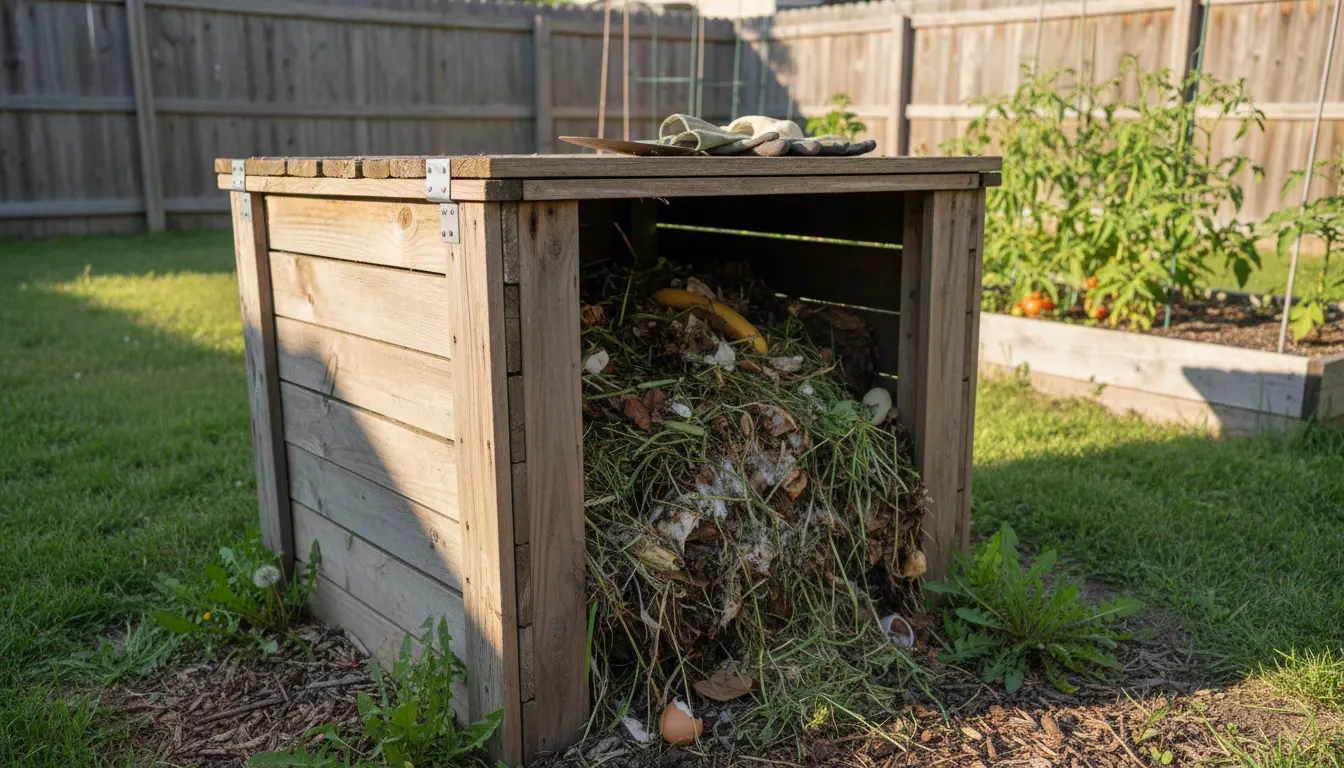
Home composting turns food scraps and yard waste into rich soil that feeds gardens and reduces trash. This guide gives step-by-step instructions and troubleshooting tips for beginners.
About 30% of household waste is compostable. Composting reduces methane from landfills and returns nutrients to soil.
What Is Home Composting?
Home composting is the process of letting organic materials decompose under controlled conditions. The result is humus, a stable, nutrient-rich material that improves soil structure and fertility.
Composting uses microbes, oxygen, moisture, and the right balance of materials. You do not need fancy equipment—just a plan and basic upkeep.
How to Start Home Composting
Follow a few simple steps to begin composting at home. Start small and expand as you learn how materials break down in your setup.
1. Choose a Location and Bin
Select a level spot with partial shade and good drainage. Close access to water makes maintenance easier and prevents mess during transport to the garden.
Types of bins:
- Open pile on soil — cheapest and works for large spaces.
- Stationary bin — simple box or wooden pallet enclosure.
- Tumbler — convenient for turning and faster results.
2. Collect Materials: Browns and Greens
Balance carbon-rich ‘browns’ and nitrogen-rich ‘greens’. Aim for roughly a 3:1 ratio of browns to greens by volume to keep the pile active and odor-free.
- Browns: dry leaves, straw, shredded paper, cardboard.
- Greens: vegetable scraps, coffee grounds, grass clippings.
Do not add meat, dairy, oils, or diseased plants to a home compost pile, as these attract pests and slow decomposition.
3. Layering and Moisture
Start with a layer of coarse browns to help airflow. Alternate greens and browns in 4–6 inch layers. Lightly moisten each layer; the pile should feel like a wrung-out sponge.
If the pile is dry, decomposition will stall. If it is too wet, add more browns and turn to aerate.
4. Turning and Time
Turning introduces oxygen and speeds decomposition. For a hot pile, turn every 1–2 weeks. For a low-maintenance pile, turn less often and expect compost in 6–12 months.
Temperature is a good indicator. A hot active pile reaches 120–160°F (49–71°C) for several days, which helps kill weed seeds.
Maintenance Tips for Home Composting
- Monitor moisture: add water in dry weather, add browns if soggy.
- Chop materials into small pieces to speed breakdown.
- Keep a balanced mix: add extra browns in fall when leaves are abundant.
- Cover fresh food scraps with a layer of browns to reduce flies and odors.
Troubleshooting Common Problems
Most composting problems have simple fixes. Check the balance of greens and browns first.
- Bad smell: pile too wet or too many greens. Add browns and turn.
- Slow breakdown: pile too dry, too compact, or lacks nitrogen. Add water, greens, or turn to aerate.
- Pests: remove meat/dairy, bury food under browns, or switch to a sealed tumbler.
Small Case Study: Urban Balcony Composting
Anna, a city dweller, started composting in a 20-gallon tumbling bin on her balcony. She collected kitchen scraps and mixed them with shredded cardboard and dry leaves.
After three months of weekly turning, Anna produced crumbly dark compost. She used it to top dress potted herbs and saw improved plant growth within two months.
Key takeaways: keep the bin balanced, turn regularly, and shield the container from extreme sun to maintain moisture.
Using Finished Compost
Finished compost is dark, crumbly, and smells earthy. Use it to enrich potting mixes, topdress lawns, or amend garden beds.
Apply a 1–2 inch layer on garden beds or mix 10–20% compost into potting soil for seedlings and containers.
Quick Checklist to Start Home Composting
- Choose a bin and place it in a convenient spot.
- Collect greens and browns and aim for a 3:1 ratio.
- Layer materials and keep moisture at a wrung-out-sponge level.
- Turn the pile regularly or use a tumbler for easier aeration.
- Harvest finished compost after a few months to a year, depending on method.
Final Tips for Successful Home Composting
Start with what you have and scale gradually. Small changes—like saving vegetable peels and shredded paper—add up quickly.
Be patient and observant. Composting is part science and part habit. With basic care you will reduce waste and create nourishing soil for your plants.