
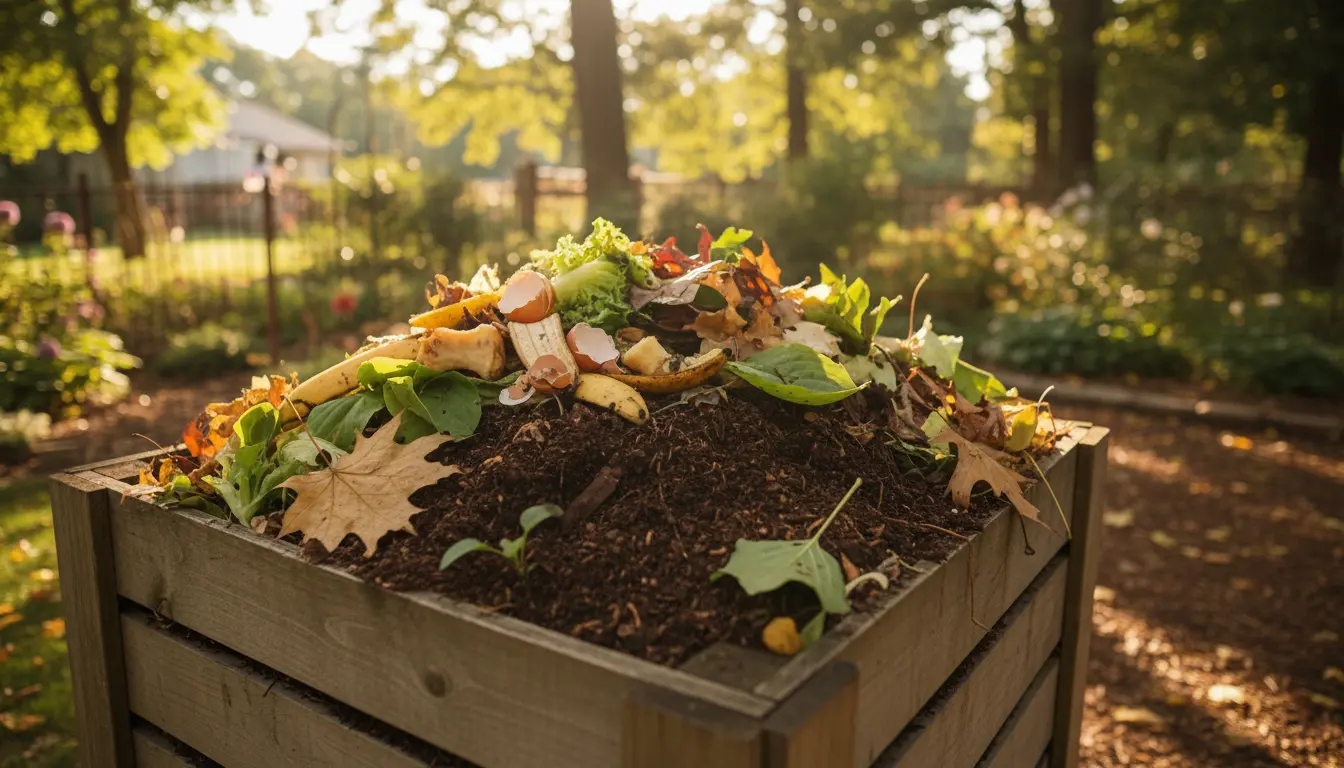
Why Home Composting Matters
Home composting turns kitchen scraps and yard waste into nutrient-rich soil. It reduces household waste and supports healthier plants without chemical fertilizers.
For beginners, composting may seem technical, but the basics are simple and low-cost. This guide focuses on practical steps you can apply whether you have a backyard or a small balcony.
How to Start Home Composting
Starting home composting requires three core elements: the right container, a balance of materials, and occasional maintenance. With these in place, decomposition happens naturally.
Choose a Bin for Home Composting
Select a bin that fits your space and effort level. Options include a simple pile, tumblers, or enclosed plastic bins for small spaces.
Tumblers turn easily and speed up decomposition, while open bins are cheaper and hold more volume. For apartment dwellers, a compact worm bin (vermicompost) works well.
What to Compost
Compost materials fall into two groups: greens and browns. Greens provide nitrogen and include fruit peels, vegetable scraps, coffee grounds, and fresh grass clippings.
Browns supply carbon and include dry leaves, shredded paper, cardboard, and straw. Aim for a roughly 2:1 or 3:1 ratio of browns to greens by volume for balanced composting.
Step-by-Step Setup for Composting for Beginners
Follow these simple steps to start composting at home:
- Pick a dry, shady spot near a water source if you have a yard.
- Place a bin or build a simple open pile on bare soil to allow worms and microbes in.
- Add alternating layers of greens and browns, keeping the pile moist like a wrung-out sponge.
- Turn or mix the pile every 1–2 weeks to aerate and accelerate decomposition.
- Harvest finished compost when it looks dark, crumbly, and smells earthy—usually 2–6 months depending on conditions.
Maintaining Your Compost
Maintenance is mostly about moisture, aeration, and balance. Check the pile weekly and adjust if it’s too wet or dry.
If the pile smells bad, add more browns and turn it to introduce oxygen. If decomposition is slow, add greens or smaller particle materials to increase surface area.
Troubleshooting Common Problems
Beginners often face a few recurring issues. Here are quick fixes:
- Bad Odor: Add dry browns and turn the pile to reduce anaerobic pockets.
- Too Dry: Water the pile lightly and cover with a tarp to retain moisture.
- Pests: Avoid adding meat, dairy, or oily foods. Use a closed bin or bury scraps in the center of the pile.
- Slow Breakdown: Chop materials smaller, keep moisture steady, and aerate regularly.
Speeding Up Home Composting
To speed up composting, increase the surface area of materials and maintain warmth. Shredding cardboard and chopping kitchen scraps helps microbes work faster.
Turning the pile often and keeping it between 40–65°C (104–149°F) speeds decomposition. Use a compost thermometer if you want to track progress precisely.
A typical household can divert up to 30% of its waste to compost, cutting landfill trash and producing soil amendment for gardens and potted plants.
Using Finished Compost
Finished compost is versatile. Mix it into garden beds to improve soil structure, top-dress lawns, or blend it with potting mix for container plants.
A little compost goes a long way: use a 1–2 inch layer in garden beds once or twice a year, or add 10–20% compost to new potting mixes for seedlings and houseplants.
Small Real-World Example: Apartment Tumbler Case Study
Maria lives in a two-bedroom apartment and started home composting with a 40-liter tumbler on her balcony. She used kitchen scraps, coffee grounds, and shredded cardboard.
By turning the tumbler every 3 days and keeping the mix moist, she had usable compost in about 3 months. Her indoor plants and balcony herbs showed quicker growth, and she reduced weekly trash by roughly 40%.
Composting Tips for Beginners
- Keep a small counter compost pail with a lid to collect scraps before transferring them to the main bin.
- Chop or shred larger items to speed decomposition.
- Layer materials instead of dumping only one type to avoid imbalance.
- Use finished compost as a soil amendment rather than replacing all potting mix.
Final Checklist for Home Composting
- Choose the bin type that suits your space and commitment.
- Balance greens and browns; aim for 2–3 parts brown to 1 part green.
- Keep the pile moist but not soggy and aerate regularly.
- Monitor and troubleshoot odors or pests quickly.
- Use finished compost to enrich soil and reduce fertilizer needs.
Home composting for beginners is a low-cost, practical way to reduce waste and improve garden health. Start small, keep it simple, and adjust as you learn what works for your space.