
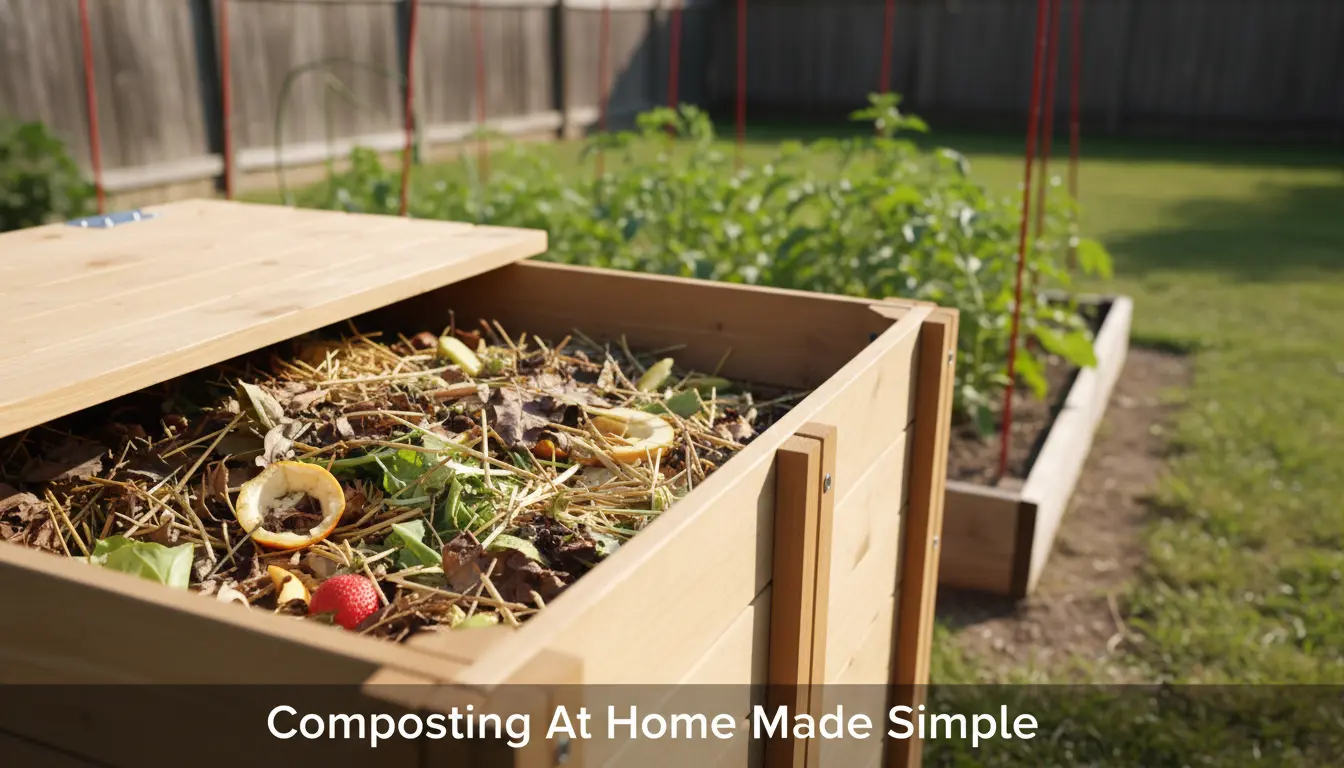
Why Choose Composting at Home
Composting at home turns kitchen scraps and yard waste into rich soil that benefits plants and reduces landfill waste. It is a low-cost, eco-friendly practice that anyone can start with minimal equipment.
This guide explains simple steps, materials, and common problems so you can begin composting today and see results within a few months.
Basic Principles of Home Composting
Composting is a controlled decomposition process where microbes break down organic matter. The key elements are carbon, nitrogen, air, moisture, and time.
Balancing these elements creates the right environment for microbes and speeds up decomposition.
Essential Materials and Ratios for Composting at Home
Use a mix of “browns” (carbon-rich) and “greens” (nitrogen-rich). A common rule is roughly 2 to 3 parts browns to 1 part greens by volume.
- Browns: dry leaves, straw, shredded paper, cardboard.
- Greens: fruit and vegetable scraps, coffee grounds, grass clippings.
- Avoid: meat, dairy, oily foods, diseased plants, and pet waste.
Choosing a Composting Method
Select a method that matches your space, time, and goals. Several proven options work well for home settings.
- Bin composting: Simple enclosed bin for backyard use. Good for beginners.
- Tumbler composting: Faster turning and fewer pests, ideal for small yards.
- Vermicomposting: Uses worms to process food scraps indoors or on patios.
- Trench or pit composting: Bury waste in soil; low maintenance for gardeners.
How to Start a Backyard Compost Bin
Follow these practical steps to build a backyard compost bin and begin processing waste quickly.
- Pick a location: Choose a partly shaded spot with good drainage near a water source.
- Prepare the base: Lay twigs or coarse material to help air circulation.
- Layer materials: Start with a layer of browns, then add greens, and alternate.
- Maintain moisture: Keep the pile like a damp sponge; water if it’s too dry.
- Turn regularly: Mix every 1–2 weeks to add oxygen and speed decomposition.
Monitoring Progress and Troubleshooting
Healthy compost heats up to 120–160°F in the center during active decomposition. If your pile is cold or smelly, adjust these factors.
- Smell: Add more browns and turn the pile to introduce oxygen.
- Too dry: Add water and greens to rehydrate the pile.
- Pests: Avoid putting meat or oily foods; use a closed bin or tumbler.
- Slow decomposition: Chop materials smaller and increase turning frequency.
Vermicomposting: Composting at Home Indoors
Vermicomposting uses red wiggler worms to convert food scraps into worm castings. It’s suitable for apartments or cold climates.
Set up a shallow bin with bedding (shredded paper, cardboard), keep it moist, and feed small amounts of fruit and vegetable scraps.
Basic Vermicompost Care
- Temperature: Aim for 55–77°F for best worm activity.
- Feeding: Add small amounts of food gradually to avoid odors.
- Harvesting: Collect castings after a few months; move contents to one side and add fresh bedding to encourage worms to migrate.
Compost can improve soil structure, increase water retention by up to 20%, and boost beneficial microbial activity that helps plants resist disease.
Using Finished Compost
Finished compost is dark, crumbly, and smells earthy. Use it in potting mixes, as a top dressing, or to enrich garden beds.
Apply a 1–3 inch layer around plants or mix 10–20% compost into garden soil when planting.
Small Real-World Example: Community Garden Success
A community garden in a mid-size city started a three-bin compost system for shared plots. Gardeners collected household food scraps and yard waste weekly.
Within six months they produced enough compost to top-dress beds and improve soil for spring planting. Crop yields increased and the garden reduced its landfill waste by 40%.
Safety, Regulations, and Good Practices
Check local regulations for composting in urban areas; some cities have guidelines for outdoor bins or require specific containment.
Use gloves when handling raw materials and finished compost. Avoid composting meat, bones, or pet waste to prevent pathogens and pests.
Tips for Consistent Success
- Chop or shred bulky materials to speed decomposition.
- Keep a small kitchen caddy for scraps and empty it regularly.
- Record turning and watering dates to track activity.
- Start small and scale up as you gain confidence.
Conclusion: Start Simple and Improve
Composting at home is achievable with basic equipment, a little planning, and regular attention. Begin with a simple bin or vermicompost setup and refine your process over time.
Small changes in how you manage kitchen waste lead to healthier soil, lower trash bills, and a positive environmental impact.