
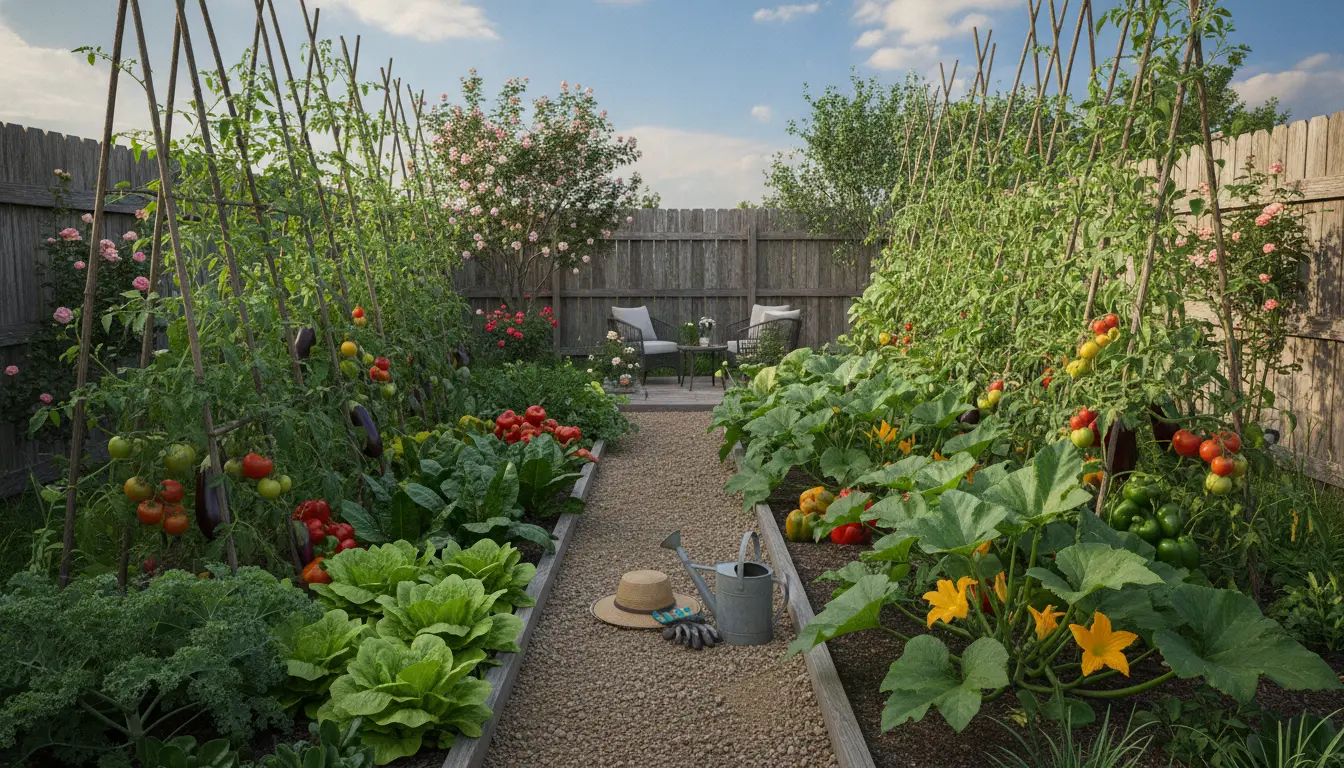
Plan Your Small Vegetable Garden
Starting a small vegetable garden begins with clear planning. Decide goals: fresh salad greens, herbs, or a mix of vegetables for family meals.
Measure available space and note sun exposure. Most vegetables need 6–8 hours of direct sun each day.
Choose Location for a Small Vegetable Garden
Place the garden near a water source to simplify watering. Avoid low spots that collect cold air or water.
Consider access and visibility so you can tend plants regularly. A visible garden is less likely to be neglected.
Select Vegetables for a Small Vegetable Garden
Pick vegetables that match your climate and season. For beginners, choose fast-growing, forgiving crops.
- Lettuce and spinach — quick harvest and continuous sowing.
- Tomatoes and peppers — productive in warm months.
- Radishes and carrots — good root crops for tight spaces.
- Herbs like basil, parsley, and chives — compact and useful.
Prepare Soil and Beds for a Small Vegetable Garden
Healthy soil is the foundation of a productive small vegetable garden. Test soil pH and texture if possible.
Add compost to improve structure and nutrient levels. For compact spaces, raised beds or containers work well.
Raised Beds vs In-Ground in a Small Vegetable Garden
Raised beds warm earlier in spring, drain better, and reduce compaction. They are ideal for small gardens with limited space.
In-ground beds can be cheaper and deeper when soil is already good. Choose the option that fits your budget and long-term plans.
Planting and Care in a Small Vegetable Garden
Sow seeds or transplant seedlings according to spacing recommendations. Overcrowding leads to disease and lower yields.
Use succession planting to maximize production. When one crop finishes, plant another in the same spot.
Watering and Fertilizing a Small Vegetable Garden
Water deeply and less often to encourage strong roots. Aim for consistent moisture, especially during flowering and fruiting.
Fertilize based on plant needs. A balanced organic fertilizer or weekly compost tea suits most vegetables in small gardens.
Pest Control and Maintenance for a Small Vegetable Garden
Monitor plants weekly to catch problems early. Hand-pick pests, use row covers, or introduce beneficial insects to reduce damage.
Rotate crops each season to reduce soil-borne pests and disease. Clean up plant debris to remove overwintering sites for pests.
- Inspect leaves for holes, eggs, or sticky residue.
- Remove weeds that compete for water and nutrients.
- Stake or cage tall plants to save space and improve airflow.
Seasonal Tips for a Small Vegetable Garden
Spring: Start seeds indoors for longer-season crops and prepare beds with compost. Direct sow cool-season crops early.
Summer: Mulch to conserve moisture and reduce weeds. Shade young plants if extreme heat arrives.
Fall: Plant cover crops or add compost to beds after harvest. Many leafy greens thrive in cooler weather.
Container-grown tomatoes can yield nearly as much as in-ground plants when given regular feeding and deep containers. Good varieties adapt well to small gardens.
Tools and Supplies for a Small Vegetable Garden
Keep tools simple and efficient for a small garden. Essential items include a hand trowel, pruning shears, a watering can or hose with a gentle nozzle, and a soil fork.
Use small-scale supplies like 3–4 inch seed trays, biodegradable pots, and lightweight mulch. They save space and reduce waste.
Case Study: A Small Vegetable Garden That Fed a Family
Example: Sarah converted a 10 x 4 foot strip beside her patio into three raised beds. She started with compost-amended soil and chose high-yield varieties.
In the first season she grew tomatoes, bush beans, lettuce, and basil. By staggering sowings, she harvested summer greens every two weeks and canned excess tomatoes.
Results: Enough fresh salad greens for a family of four most weeks, and 30 jars of stewed tomatoes after one harvest. Regular mulching and weekly inspections kept pests low.
Quick Checklist to Start a Small Vegetable Garden
- Choose a sunny location near water.
- Decide on raised beds or containers.
- Improve soil with compost and organic matter.
- Select beginner-friendly vegetables for your season.
- Water consistently and mulch to retain moisture.
- Inspect plants weekly and manage pests early.
Starting a small vegetable garden is manageable with planning and simple routines. Focus on soil health, right plant choices, and regular care to get steady yields in limited space.