
Why starting a vegetable garden is a good choice
Starting a vegetable garden is a straightforward way to grow fresh food, save money, and enjoy outdoor time. It works for small patios, balconies, and full backyards.
This guide focuses on practical steps you can follow today, whether you plan containers, raised beds, or rows in the ground.
Starting a Vegetable Garden: First Steps

Begin with a simple plan. Decide where to place your garden, what you want to grow, and how much time you can commit each week.
These first decisions set the stage for success and reduce overwhelm.
Choose the right site
Vegetables need at least 6 hours of direct sunlight per day. Look for a spot with morning sun and good drainage.
Avoid areas shaded by trees and places that stay soggy after rain.
Decide on garden type
Common options include containers, raised beds, and in-ground rows. Each has pros and cons:
- Containers: Good for balconies and patios; warms quickly but needs frequent watering.
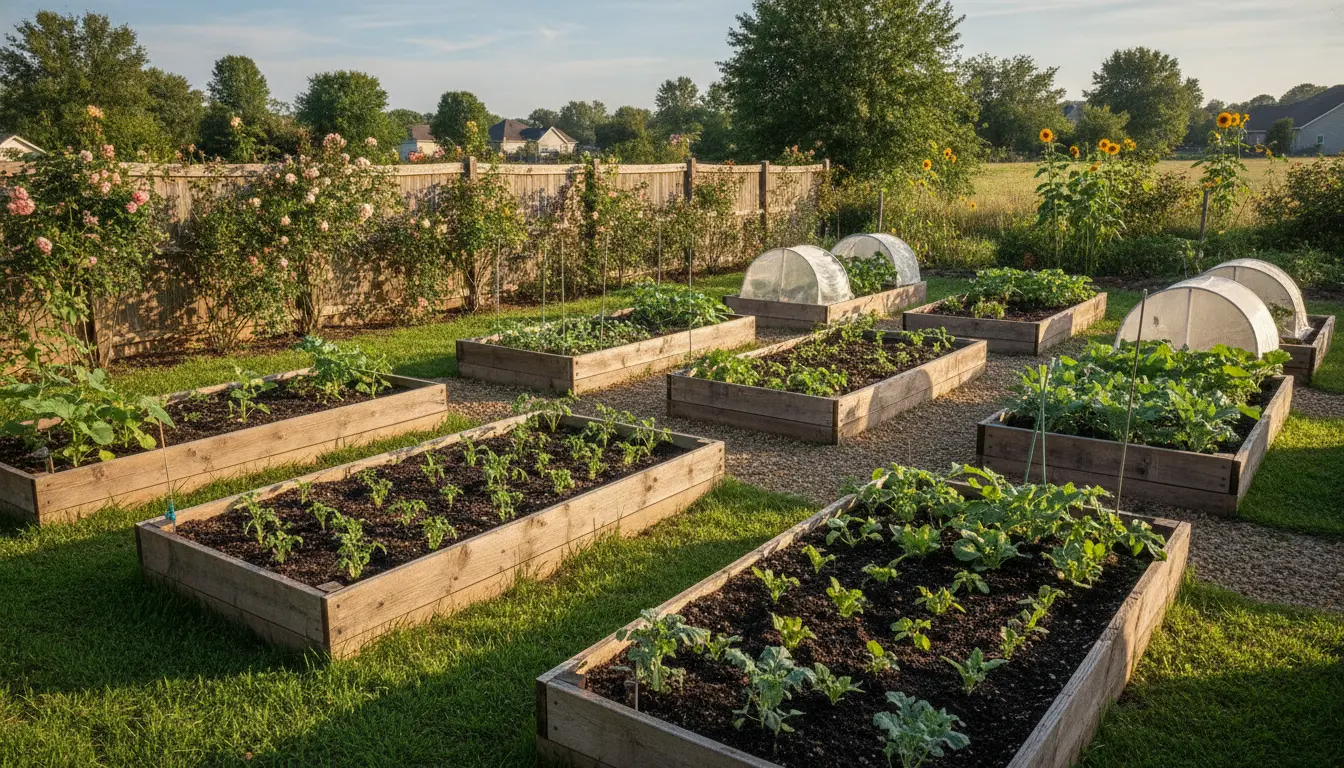
- Raised beds: Improve drainage and soil depth; reduce bending and compaction.
- In-ground rows: Cost-effective for larger areas; may need more soil improvement.
Soil and preparation when starting a vegetable garden
Healthy soil is the most important factor for plant health. Test and amend soil before planting to avoid common problems.

A few hours of prep can save weeks of troubleshooting later.
Test soil and add amendments
Use a simple pH test kit or send a sample to a local extension service. Most vegetables prefer a pH between 6.0 and 7.0.
Add compost to improve structure and nutrients. For heavy clay, mix in coarse sand and organic matter. For sandy soil, add compost and mulch to retain moisture.
Make a planting map
Sketch a simple map showing bed size and plant placement. Group plants by sun and water needs to simplify care.
Rotate crop families each season to reduce pests and soil nutrient depletion.
Choosing plants for starting a vegetable garden
Pick easy, reliable crops as a beginner. Fast-growing vegetables give quick feedback and build confidence.
Consider your climate and growing season length when selecting varieties.
Beginner-friendly vegetable list
- Leafy greens: Lettuce, spinach, Swiss chard — quick and forgiving.
- Root vegetables: Radishes, carrots, beets — simple and space-efficient.
- Warm-season staples: Tomatoes, peppers, bush beans — productive with basic care.
- Herbs: Basil, parsley, chives — useful and easy in containers.
Planting and early care
Plant at the correct time for your zone. Seed packets and nursery labels indicate ideal planting windows.
Water consistently during establishment and mulch to reduce weeds and conserve moisture.
Watering basics
Water deeply and less often to encourage strong roots. Aim for 1 to 1.5 inches of water per week, adjusted by rainfall and soil type.
Use drip irrigation or soaker hoses to deliver water to the root zone and keep leaves dry.
Mulching and weed control
Apply 2 to 3 inches of organic mulch like straw or shredded leaves. Mulch moderates soil temperature and suppresses weeds.
Pull weeds when small to prevent competition for nutrients and water.
Pest, disease, and maintenance tips
Common problems are preventable with good practices: crop rotation, clean tools, and healthy soil.
Scout weekly to catch issues early and take simple corrective steps.
- Handpick pests like slugs and caterpillars.
- Encourage beneficial insects with flowering plants.
- Use row covers early in the season to protect seedlings.
- Remove damaged leaves to reduce disease spread.
Harvesting and continuous planting
Harvest vegetables at peak ripeness for best flavor and to encourage continued production. Regular harvesting increases yield for many crops.
Practice succession planting: sow small batches of fast crops every 2–3 weeks for continuous harvests.
Interplanting fast and slow crops, like lettuce between tomatoes, maximizes space and lets you harvest lettuce before tomatoes shade the bed.
Small case study: Maria’s four raised beds
Maria converted a 12 x 12 ft sunny corner into four 4 x 4 ft raised beds filled with compost-rich soil. She planted tomatoes, peppers, lettuce, carrots, and beans.
In her first season she spent about 3 hours per week on watering, weeding, and harvesting. By late summer she harvested enough tomatoes and greens to replace several store trips and saved about $120 in produce.
Key wins: raised beds improved drainage, mulching cut watering time, and succession planting extended harvests into fall.
Quick checklist for starting a vegetable garden
- Choose a sunny site and garden type (container, raised bed, or ground).
- Test soil and add compost; set pH if needed.
- Select beginner-friendly crops suitable for your climate.
- Plan irrigation, mulching, and a planting map.
- Scout regularly and harvest often to encourage production.
Final tips for gardeners starting a vegetable garden
Start small, learn one season at a time, and keep notes on what worked. Gardening is iterative and improves with observation.
Join a local gardening group or extension program for tailored advice. Practical habits and simple planning lead to steady success.