
How to Start a Vegetable Garden: A Practical Guide for Beginners
Starting a vegetable garden is achievable with basic planning and steady care. This guide shows clear steps to set up a productive garden, whether you have a backyard, patio, or balcony.
Choose the Right Location for a Vegetable Garden
Light and access determine most early decisions. Most vegetables need at least six hours of direct sunlight per day.
Select a spot with good sunlight, easy water access, and reasonable drainage. Avoid low areas that collect water for long periods.
Sun, shade, and wind
Observe the site through the day to confirm sunlight hours. Use windbreaks like fencing or hedges for exposed spots.
Prepare Soil for Vegetable Gardening
Good soil is the main factor in successful vegetable gardening. Test and amend soil before planting.
Soil testing and improvement
- Get a basic soil test to check pH and nutrient levels.
- Add compost to improve structure and fertility.
- For heavy clay, add coarse sand and organic matter to improve drainage.
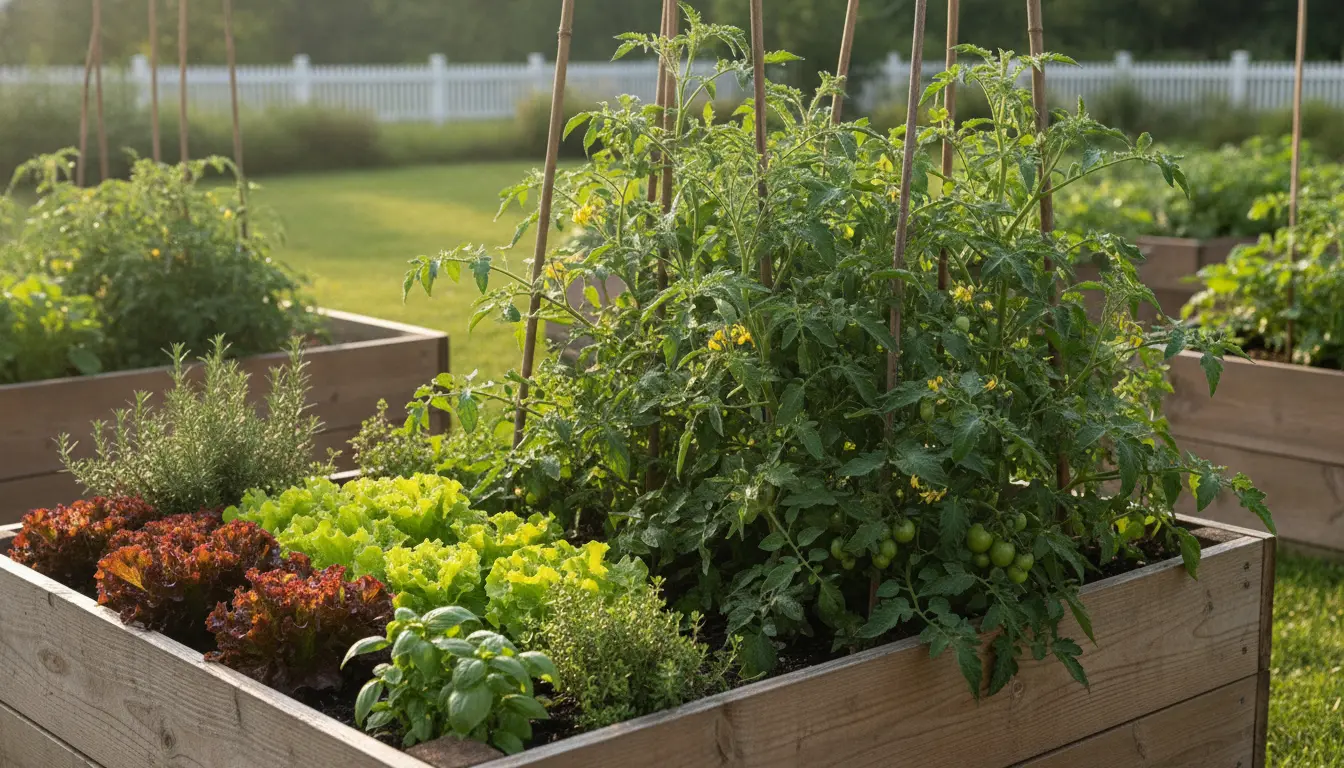
Raise beds or containers can be filled with a custom mix to avoid poor native soil.
Plan What to Plant in Your Vegetable Garden
Choose crops that suit your climate, space, and schedule. Start with easy vegetables to build confidence.
- Easy starters: lettuce, radishes, green beans, cherry tomatoes, and herbs.
- Space-efficient choices: bush varieties, vertical supports for peas and cucumbers.
Timing and succession planting
Follow planting dates for your zone. Stagger plantings every 2–3 weeks for continuous harvests.
Planting and Basic Care for Vegetable Gardening

Plant at proper depths and spacing as indicated on seed packets or plant tags. Watering and mulching are essential ongoing tasks.
Watering tips
- Water deeply once or twice a week rather than shallow daily sprinkles.
- Morning watering reduces disease risk compared to evening watering.
Mulching and weed control
Apply 2–3 inches of organic mulch to retain moisture and suppress weeds. Pull large weeds by hand early to prevent seed set.
Pest and Disease Management in Vegetable Gardening
Start with prevention: healthy soil, proper spacing, and crop rotation reduce many problems. Monitor plants weekly for insects and disease signs.
Nonchemical controls
- Handpick large pests like caterpillars and slugs.
- Use row covers for early-season protection from pests and frost.
- Encourage beneficial insects by planting flowering margins.
Harvesting and Storage
Harvest vegetables at their recommended maturity for best flavor and storage life. Regular harvesting encourages more production in crops like beans and zucchini.
Store root vegetables in cool, dark places and use leafy greens quickly for best quality.
Planting marigolds near tomatoes can reduce nematode damage and attract beneficial insects that control pests naturally.
Common Problems and Simple Solutions
- Yellow leaves: Check watering and soil nutrients; add compost or a balanced fertilizer if needed.
- Poor germination: Ensure seed-to-soil contact, correct depth, and consistent moisture.
- Blossom end rot on tomatoes: Usually a calcium issue from uneven watering; stabilize moisture and add calcium if required.
Small Case Study: Urban Balcony Vegetable Garden
Maria, an apartment resident, converted a 6-foot balcony into a productive garden. She used three 12-inch deep containers: one for cherry tomatoes, one for mixed salad greens, and one for bush beans.
She placed containers along the railing to maximize sunlight and used a slow-release organic fertilizer to keep feeding low-maintenance. Within two months she harvested salad leaves weekly and tomatoes after 10 weeks.
Key takeaways: choose compact varieties, use good container mix, and water consistently to succeed in small spaces.
Essential Tools and Materials for a Vegetable Garden
- Hand trowel and fork for planting and weeding
- Garden hose with a soft nozzle or a watering can
- Compost or well-rotted manure for soil improvement
- Mulch, stakes, and netting for support and protection
Final Tips for New Vegetable Gardeners
Start small and learn one season at a time to avoid feeling overwhelmed. Keep a simple garden journal of planting dates and harvests to improve each year.
Enjoy the process—gardening rewards patience and steady care with fresh, homegrown produce.
Short checklist to begin:
- Pick a sunny spot and test the soil
- Decide containers or raised beds
- Choose easy starter crops for your climate
- Prepare soil and mulch after planting
- Water consistently and monitor pests weekly
Following these steps will help you create a productive and enjoyable vegetable garden, whether you have a backyard or a small balcony.