
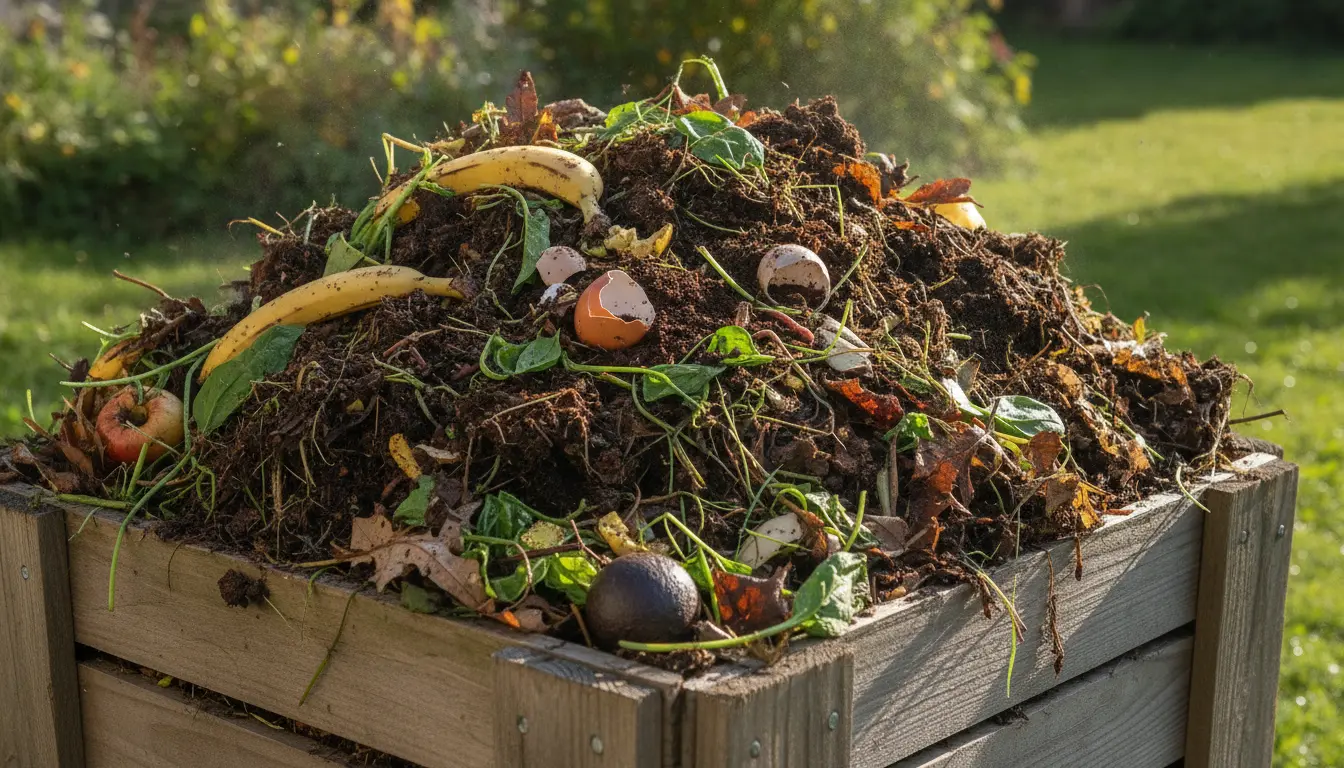
Home Composting for Beginners: Why Start
Composting turns kitchen scraps and yard waste into rich soil. It reduces household trash and supports healthier garden soil.
This guide gives clear, practical steps so beginners can start composting at home with confidence.
Choose a System for Home Composting for Beginners
Start by choosing a compost system that fits your space and lifestyle. Small apartments, suburban backyards, and rural properties each need different approaches.
Common options
- Tumbler bin: Fast, contained, and easy to turn. Good for small yards.
- Stationary bin: Affordable and simple, suitable for larger volumes of yard waste.
- Compost pile: Low-cost and flexible, best for larger properties.
- Vermicompost (worms): Ideal for apartments or indoor setups using a worm bin.
Materials to Use and Avoid
Balance carbon-rich (browns) and nitrogen-rich (greens) materials. A good balance helps the pile heat up and break down efficiently.
What to add
- Greens: fruit and vegetable scraps, coffee grounds, fresh grass clippings.
- Browns: dry leaves, straw, shredded paper, cardboard.
- Small amounts of soil or finished compost to introduce microbes.
What to avoid
- Meat, dairy, and oily foods (they attract pests and smell).
- Diseased plants, invasive weeds with seeds, and pet waste.
- Bleached paper products or glossy printed materials.
Step-by-Step Process for Home Composting for Beginners
Follow these simple steps to build and maintain a healthy compost pile.
- Choose a location: partial sun and good drainage are ideal.
- Start with a layer of coarse material for aeration, like small branches.
- Add a mix of greens and browns in roughly a 1:3 ratio by volume.
- Moisten the pile: it should feel like a wrung-out sponge.
- Turn or aerate the pile every 1–2 weeks to speed decomposition.
- Harvest finished compost when dark and crumbly, usually in 2–6 months.
Troubleshooting Common Problems
Many issues are easy to fix once you know the signs. Check these points for quick solutions.
Bad odor
Cause: too much green or poor aeration. Fix: add dry browns and turn the pile to introduce air.
Pile too dry or too wet
Dry: add water and fresh greens. Wet: add more browns and improve drainage or aeration.
Slow breakdown
Cause: low surface area or insufficient nitrogen. Fix: chop materials into smaller pieces and add greens or a scoop of finished compost to introduce microbes.
How to Use Finished Compost
Finished compost improves soil structure, water retention, and plant nutrition. Use it in several ways around your home.
- Top-dress lawns or mix into garden beds at 1–2 inches depth.
- Blend with potting mixes for container plants.
- Use as a seed-starting amendment when mixed lightly with soil.
Small Real-World Example
Case study: A two-person household in a small suburban lot installed a 60-gallon tumbler. They added kitchen scraps and yard trimmings, turning the tumbler weekly. In six months they produced about 6 cubic feet of compost, which they mixed into vegetable beds. Their trash volume dropped by one bag per week.
Tips for Success for Home Composting for Beginners
Small habits make composting easier and more reliable. Here are practical tips to keep your system working well.
- Keep a small counter caddy for kitchen scraps and empty it daily.
- Chop or shred larger items to speed breakdown.
- Mix finished compost into soil rather than dumping large amounts at once.
- Label your bins with “greens” and “browns” to make balancing easier.
- Use a thermometer if you want to monitor internal pile temperatures.
Final Checklist
Before you start, confirm these basics to set yourself up for success.
- Choose the right bin for your space and volume of waste.
- Gather a steady supply of browns to balance kitchen scraps.
- Set a schedule for turning or feeding the system.
- Monitor moisture and odors, and adjust as needed.
Home composting for beginners is practical and scalable. Start small, learn by doing, and adjust your approach to match your household size and garden needs.