
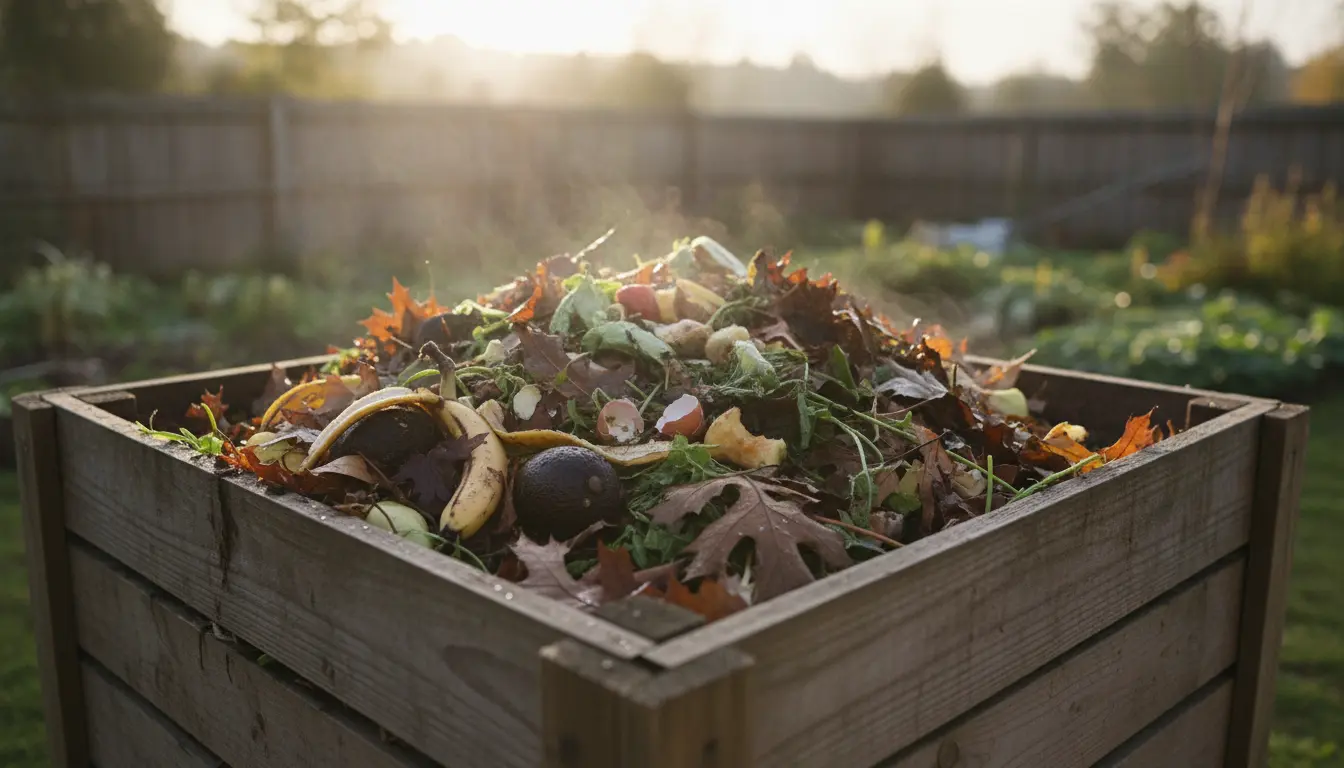
What Is Home Composting for Beginners?
Home composting for beginners is the simple process of turning kitchen scraps and yard waste into nutrient-rich compost. This guide explains basic methods anyone can use, even with limited space.
Why Try Home Composting for Beginners
Composting reduces landfill waste and improves soil health. For beginners, it is an accessible way to lower household waste and support garden growth with minimal cost.
Key Benefits of Home Composting for Beginners
- Reduces kitchen and yard waste by up to 30–60 percent.
- Creates free fertilizer for houseplants and gardens.
- Improves soil structure and water retention.
Choose the Right Method for Home Composting for Beginners
Select a method that fits your space and time. Beginners have three common choices: a simple bin, a tumbler, or vermicomposting with worms.
Options Explained
- Stationary bin: Low-cost, simple to maintain, good for yards.
- Rotating tumbler: Faster decomposition, easier turning, ideal for small yards.
- Worm bin (vermicompost): Best for apartments and indoor setups, composts food scraps quickly.
Step-by-Step Setup for Home Composting for Beginners
Follow these steps to start composting at home. Each step is short and practical so beginners can get results quickly.
1. Pick a Location
Choose a spot with partial shade and decent drainage. Near the kitchen or backyard works well to make adding scraps easy.
2. Gather Materials
Collect a mix of greens (nitrogen) and browns (carbon). Greens are wet and rich in nitrogen; browns add carbon and structure.
- Greens: fruit and vegetable scraps, coffee grounds, fresh grass clippings.
- Browns: dry leaves, shredded paper, cardboard, small twigs.
3. Build the Pile or Fill the Bin
Start with a layer of coarse material for airflow, then add alternating layers of greens and browns. Aim for a rough 3:1 ratio of browns to greens by volume.
4. Maintain Moisture and Air
The pile should be as moist as a wrung-out sponge. Turn or aerate the pile every 1–2 weeks to speed decomposition and prevent odors.
5. Know When Compost Is Ready
Finished compost is dark, crumbly, and smells earthy. Depending on method and care, compost can be ready in 2–6 months.
Troubleshooting for Home Composting for Beginners
Common problems are easy to fix once you know the signs. Use simple checks to keep the process on track.
Common Issues and Quick Fixes
- Smelly pile: Add more browns and aerate.
- No heat or slow breakdown: Chop materials finer and increase greens slightly.
- Pests: Avoid adding meat, dairy, or oily foods and use a closed bin if needed.
Composting one ton of food waste can prevent about 0.5 tons of carbon dioxide emissions from entering the atmosphere. Small household efforts add up fast.
Practical Tips for Home Composting for Beginners
- Keep a small countertop caddy to collect scraps before transferring to the bin.
- Shred bulky browns like cardboard to speed decomposition.
- Use finished compost as a top dressing or mix into potting soil at a 10–30% rate.
What to Avoid
- No meat, dairy, or cooked oils in regular compost bins.
- Avoid large branches or whole corn cobs; break them down first.
- Do not add diseased plants or chemically treated wood.
Real-World Example: Small Apartment Success
Case study: Laura lives in a two-bedroom apartment and started vermicomposting with a small bin. She fed the worms kitchen scraps and shredded cardboard. Within three months, she produced enough compost to refresh her balcony herb pots.
Results: Laura reduced her kitchen waste by an estimated 50 percent and used the compost to double her herb harvest. Her system needed 10 minutes of weekly care and fit under a sink when not in use.
Cost and Time Estimates for Home Composting for Beginners
Startup cost can be minimal. A basic bin or DIY container can cost $0–$30. Tumblers and worm kits range from $50–$200. Time spent is typically 5–15 minutes per week for maintenance.
Simple Starter Checklist
- Bin or container
- Kitchen caddy for scraps
- Source of browns (leaves, cardboard)
- Garden fork or turning tool
Next Steps After You Start Home Composting for Beginners
Monitor the pile weekly and adjust moisture and balance as needed. Once you have finished compost, test it on a small patch of plants before widespread use.
Join local composting groups or online forums to learn tips specific to your climate and materials. Practical feedback from others helps beginners improve faster.
Home composting for beginners is a low-cost, high-impact step toward reducing waste and improving soil. Start small, learn the signs, and build a routine that fits your household.