
Why Home Composting Matters
Home composting turns kitchen scraps and yard waste into a useful soil amendment. It reduces household waste, lowers greenhouse gas emissions, and improves garden soil structure.
This guide focuses on simple, practical steps that work for apartments, small yards, and beginner gardeners.
What Is Home Composting?
Home composting is the controlled decomposition of organic materials like fruit peels, vegetable scraps, coffee grounds, grass clippings, and leaves. Microorganisms break down these materials into humus, a dark, crumbly material rich in nutrients.
Compost can be used in potted plants, garden beds, or as a lawn top dressing to boost water retention and fertility.
Choose the Right Compost System
Pick a system that fits your space, time commitment, and budget. Different systems require different levels of effort and produce compost at different speeds.
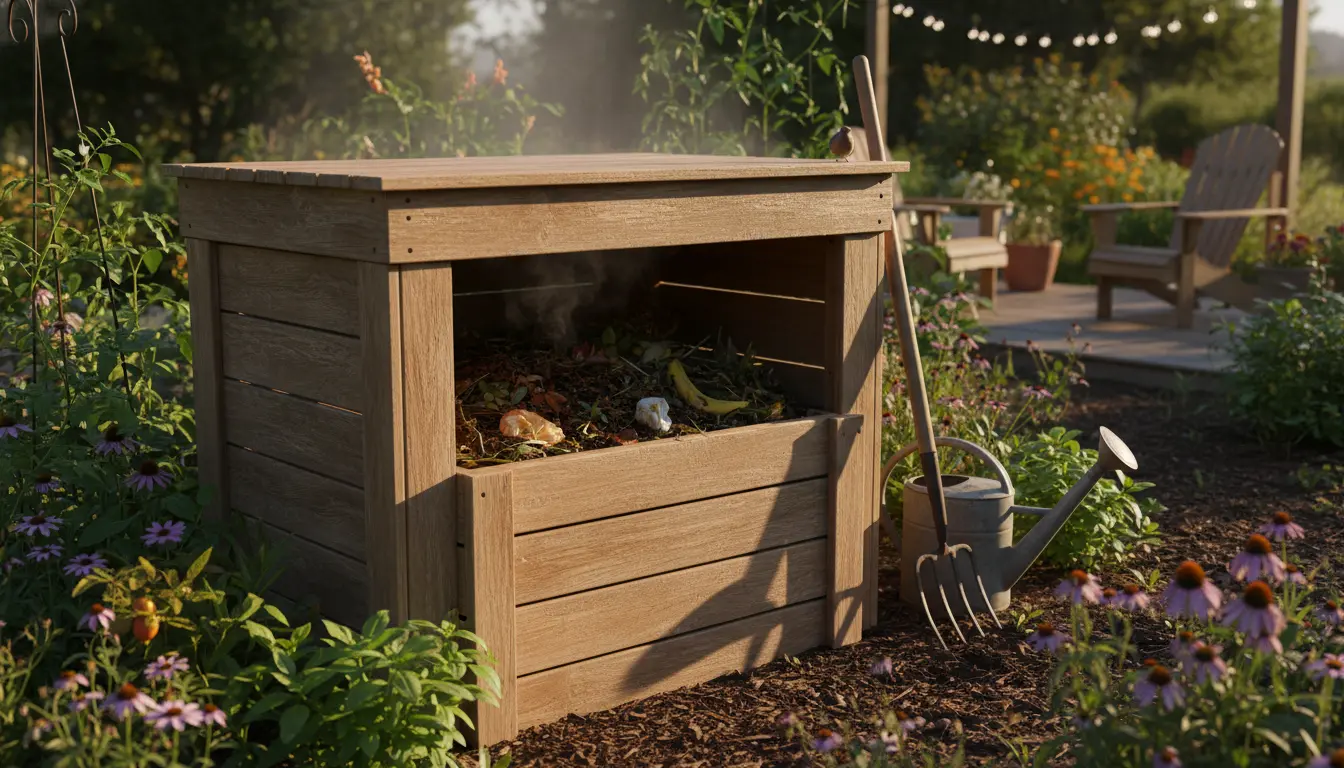
- Bin composting — A closed or open bin is easy and neat for small yards.
- Tumbler composting — Tumblers rotate to mix material and speed up decomposition.
- Vermicomposting — Worm bins use red worms to process food scraps indoors or on balconies.
- Cold pile — A simple heap requires low effort but decomposes slowly.
What to Compost: Browns and Greens
Balance “greens” and “browns” for a healthy compost pile. Greens provide nitrogen and energy for microbes. Browns add carbon and structure.
- Greens: vegetable and fruit scraps, coffee grounds, fresh grass clippings.
- Browns: dry leaves, shredded paper, cardboard, small wood chips.
A common rule is roughly two to three parts browns to one part greens by volume.
Materials to Avoid
Do not add meat, dairy, oils, diseased plant material, or pet waste from carnivores. These items attract pests and can spread pathogens.
Step-by-Step: Starting Your First Compost Bin
Follow these practical steps to start composting today. Each step helps maintain balance and avoid common problems.
- Choose a container and a level, shaded spot with good drainage.
- Start with a 2–4 inch layer of coarse browns like small branches to aid airflow.
- Add alternating layers of greens and browns. Keep layers thin for faster decomposition.
- Keep the pile moist, like a wrung-out sponge. Water lightly during dry periods.
- Turn or mix the pile every 1–2 weeks to add oxygen and speed breakdown.
Maintain Your Compost: Troubleshooting and Tips
Common issues are easy to fix when you know what to look for. Regular checks prevent odors and slow decomposition.
- Bad smell: Add more browns and turn the pile. Smells usually mean too much moisture or not enough air.
- Pile too dry: Add water and more greens. Covering the pile during droughts helps.
- Slow decomposition: Chop materials smaller and increase turning frequency.
- Pests: Avoid meat and keep a closed bin. Bury scraps in the center of the pile.
Speeding Up Composting
To speed up the process, shred or chop materials, keep the pile warm and moist, and turn it regularly. A balanced mix and active aeration encourage faster breakdown.
Compost can improve soil water retention by up to 20 percent and reduces the need for chemical fertilizers.
Real-World Example: Small Balcony Vermicompost Case Study
Case: Maria, a city renter, started a small worm bin on her balcony. She used a 10-gallon plastic bin with drainage holes and bedding made from shredded cardboard and coconut coir.
Maria fed the bin kitchen scraps two times a week and kept the bin in partial shade. After three months she harvested dark, crumbly compost and noticed her potted herbs grew faster and required less watering.
Lessons from this example: vermicomposting works in small spaces and produces usable soil amendment within months with low effort.
Using Compost in Your Garden
Finished compost looks dark, crumbly, and earthy-smelling. Use it to enrich potting mixes, top-dress lawns, or mix into garden beds before planting.
Apply a 1–2 inch layer around plants or mix 10–20 percent compost into garden soil for better structure and fertility.
Safety and Best Practices
Wear gloves when handling compost if you have cuts or immune concerns. Wash hands after working with compost and avoid inhaling dusty material.
Rotate compost use and avoid applying uncomposted food scraps directly to edible plant surfaces.
Quick Checklist to Start Home Composting
- Choose a bin that fits your space.
- Gather brown and green materials.
- Layer materials and keep the pile moist.
- Turn regularly and monitor for problems.
- Harvest finished compost when it is dark and crumbly.
Home composting is a practical way to reduce waste and improve soil health. Start small, learn from experience, and adjust your system to match your living situation.