
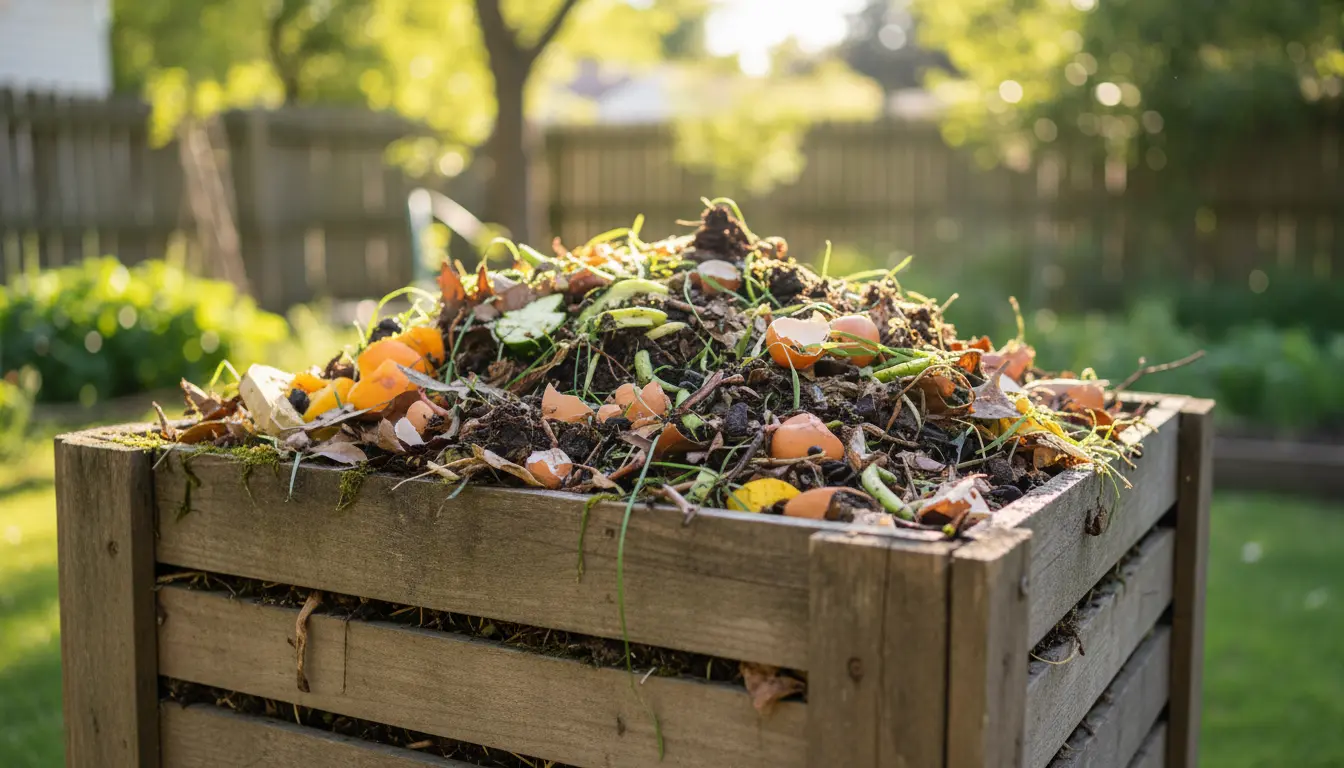
Home Composting Basics
Home composting turns kitchen scraps and garden waste into a useful soil amendment. It reduces landfill waste, improves soil structure, and can save money on fertilizers.
This guide covers practical steps for starting and maintaining a compost pile or bin at home. Follow simple rules and you can produce usable compost in a few months.
Composting a family of four can divert around 400 to 600 pounds of organic waste from the landfill each year when food scraps and yard waste are composted instead.
What Is Home Composting?
Home composting is the controlled decomposition of organic material in a small-scale setting. Microorganisms break down carbon- and nitrogen-rich materials into humus.
Humus improves water retention, adds nutrients, and supports healthy plant roots.
Benefits of Home Composting
- Reduces household waste and related disposal costs.
- Creates free, nutrient-rich compost for your garden.
- Improves soil health and plant resilience.
- Lowers greenhouse gas emissions from landfills.
What to Compost in Home Composting
Know what goes into your compost to avoid smells and pests. Use a mix of ‘greens’ and ‘browns’ for the best results.
Greens (Nitrogen Rich)
- Vegetable and fruit scraps
- Coffee grounds and tea bags (remove staples)
- Fresh grass clippings in moderation
Browns (Carbon Rich)
- Dry leaves and straw
- Shredded paper or cardboard (small amounts)
- Wood chips and small twigs
Avoid meat, dairy, oils, diseased plant material, and pet waste to prevent odors and pests.
How to Start Home Composting
Starting is simple: choose a method, gather materials, and maintain the pile. Below are practical, step-by-step actions.
Choose a Bin for Home Composting
Select a bin that fits your space and needs. Options include tumblers, stationary bins, and simple heap composting.
- Tumbler: Easy turning, faster composting, good for small yards.
- Stationary bin: Cheaper, larger capacity, requires manual turning.
- Open heap: Lowest cost, works for large gardens but slower and may attract wildlife.
Building Your First Home Compost Pile
- Start with a coarse layer (twigs or straw) for airflow.
- Add alternating layers of greens and browns about 3-4 inches thick each.
- Keep the pile moist like a wrung-out sponge; add water during dry spells.
- Turn or mix the pile every 1–2 weeks to add oxygen and speed decomposition.
Compost Ratios and Maintenance for Home Composting
A common rule is roughly 2–3 parts browns to 1 part greens by volume. Fine adjustments are normal based on smell and decomposition rate.
Monitoring and Troubleshooting
Check these signs regularly to maintain a healthy compost.
- Smells like soil or earth: good and active.
- Ammonia or rotten smells: add more browns and turn the pile.
- Too dry: add water and fresh greens.
- Too wet and compacted: add browns and turn to improve aeration.
Troubleshooting Home Composting Problems
Common issues have straightforward fixes. Keep records of what you add to learn how your system responds.
Pests and Odors
Pests usually indicate inappropriate materials or exposed food scraps. Bury new food under browns or use a closed bin.
- Use a secure bin or tumbler to deter rodents.
- Add dry leaves or cardboard to reduce smells.
Slow Decomposition
If your pile is slow, increase particle size reduction and turning. Chopping materials speeds up breakdown.
Adding a handful of finished compost or garden soil can introduce beneficial microbes.
Using Finished Compost from Home Composting
Finished compost looks dark, crumbly, and smells earthy. It should be free of recognizable food scraps.
Use finished compost to:
- Top-dress lawns and garden beds
- Mix into potting soil or planting holes
- Create compost tea for foliar feeding
Home Composting Case Study
Maria, a small urban gardener, started home composting using a 60-liter tumbler. She collected kitchen scraps and shredded paper for a 3:1 browns-to-greens ratio.
Within four months she had enough compost to top-dress her raised vegetable beds. Her tomato yield improved and soil moisture retention increased, reducing watering by 20% during summer.
Key successes: consistent turning, avoiding meat scraps, and keeping a balance of dry materials.
Quick Checklist to Start Home Composting
- Choose a bin suited to your space.
- Gather a steady supply of browns and greens.
- Layer materials and keep the pile moist and aerated.
- Monitor and adjust ratio and moisture as needed.
- Harvest finished compost and apply to your garden.
Home composting is a low-cost, effective way to reduce waste and improve garden health. With a small time commitment and the right balance of materials, almost any household can succeed.