
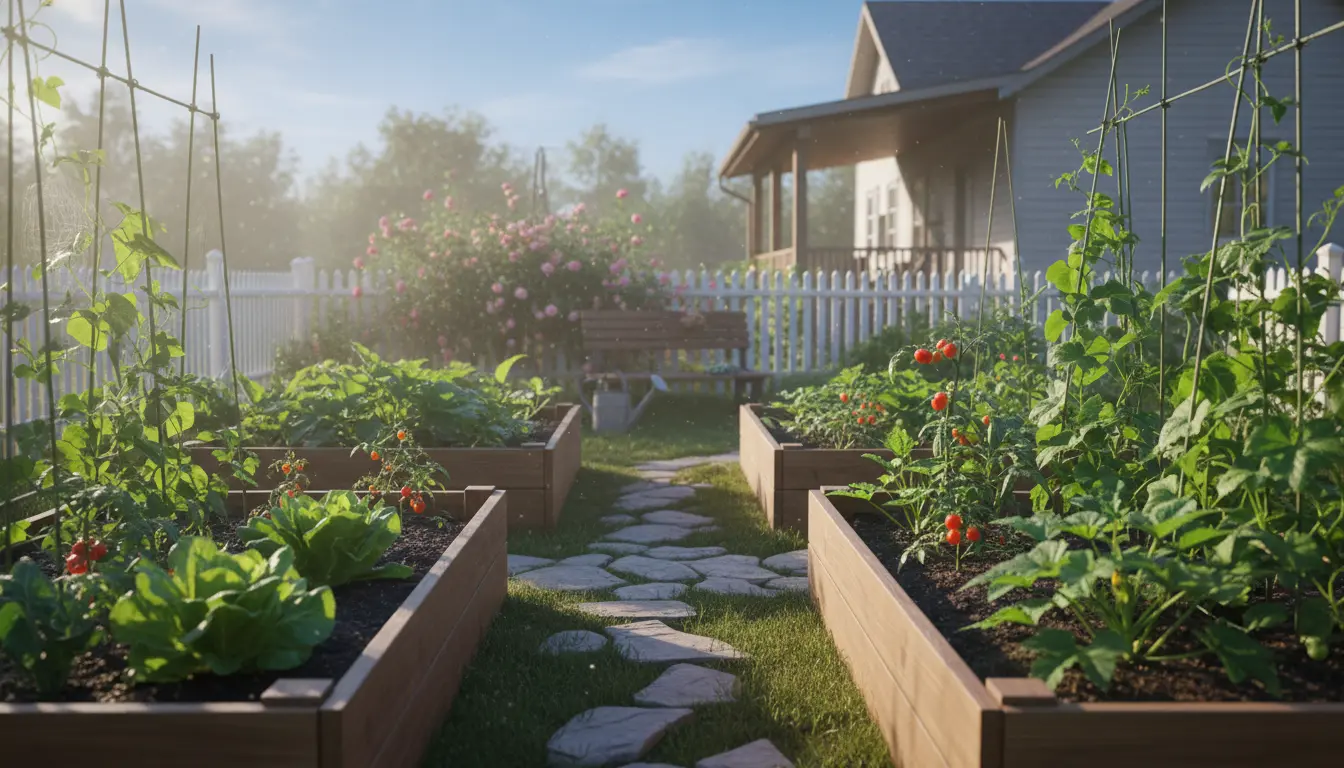
Starting a vegetable garden is a satisfying way to grow fresh food and learn practical growing skills. This guide breaks the process into clear steps so you can plan, plant, and maintain a productive garden without unnecessary complexity.
Start a Vegetable Garden: Planning and Site Selection
Choose a site that gets at least 6 hours of direct sunlight daily. Most vegetables need full sun to produce well.
Consider proximity to water, ease of access, and visibility from your home. A location near a hose or rain barrel saves time and improves watering consistency.
Start a Vegetable Garden: Size and Layout
Begin small—4 to 10 raised bed square meters is ideal for new gardeners. Small plots are easier to manage and learn from.
- Use raised beds or defined rows for better soil control.
- Allow 2–3 feet wide beds for easy reach.
- Keep paths between beds at least 18 inches wide.
Soil and Compost: Key Steps to Start a Vegetable Garden
Test your soil pH and basic nutrients before planting. Local extension services often offer low-cost tests.
Improve soil with compost and organic matter to increase fertility and drainage. Aim for a loose, crumbly texture that holds moisture.
- Add 2–3 inches of compost on top and work it into the top 6–8 inches of soil.
- For heavy clay soils, mix in coarse sand and more compost to improve structure.
- For sandy soils, add compost and well-rotted manure to increase water retention.
Start a Vegetable Garden: Choosing Plants and Timing
Select plants suited to your climate and season. Focus on a few high-yield, easy-care crops like tomatoes, lettuce, beans, and herbs.
Check the last frost date for your area and plan planting dates for cool-season and warm-season crops.
Starter Plant List
- Leafy greens: lettuce, spinach, Swiss chard.
- Roots: carrots, radishes, beets.
- Vining and fruiting: beans, peas, tomatoes, peppers.
- Herbs: basil, parsley, cilantro.
Start a Vegetable Garden: Planting and Care
Follow seed packet directions for depth and spacing. Crowding reduces airflow and increases disease risk.
Plant in blocks rather than long single rows to improve pollination and microclimate for crops.
Watering and Mulching
Water deeply and less often to promote strong root systems. Aim for 1–1.5 inches of water per week, more in hot weather.
Apply mulch to retain moisture, suppress weeds, and moderate soil temperature. Use straw, wood chips, or shredded leaves.
Fertilizing
Use balanced organic fertilizers based on soil test results. Overfertilizing promotes foliage over fruit.
Side-dress heavy feeders like corn and squash with compost or a slow-release organic fertilizer midseason.
Pest and Disease Management When You Start a Vegetable Garden
Use preventive measures first: clean tools, crop rotation, and healthy soil reduce pest pressure significantly.
At first sign of pests, identify the insect or disease. Many issues can be managed with handpicking, row covers, or targeted organic sprays.
- Encourage beneficial insects with flowering plants like marigolds and alyssum.
- Rotate crops annually to reduce soil-borne diseases.
- Remove diseased plants quickly to prevent spread.
Small Real-World Example: A First-Year Backyard Garden
Case study: Sarah, a new gardener with a 10 x 12 ft raised bed, chose tomatoes, lettuce, bush beans, and basil. She tested her soil, added compost, and planted in late spring after frost.
Using a simple drip hose and 3 inches of straw mulch, she maintained consistent moisture. By midsummer she harvested weekly salads and 8–10 pounds of tomatoes.
Lessons learned: start small, water consistently, and add compost each season for continued improvement.
Healthy soil can contain more organisms in a teaspoon than there are people on Earth. These organisms help break down organic matter and support plant health.
Quick Checklist to Start a Vegetable Garden
- Select a sunny site and measure available space.
- Test soil and add compost or amendments.
- Choose 4–6 easy crops suited to your climate.
- Plant according to frost dates and seed directions.
- Mulch and set up a consistent watering routine.
- Monitor pests weekly and use targeted controls when needed.
Common Mistakes and How to Avoid Them
Two common mistakes are overplanting and inconsistent watering. Overplanting leads to competition and increased disease problems.
Inconsistent watering causes fruit cracking and blossom end rot on crops like tomatoes. Mulch and a scheduled watering plan help prevent these issues.
Final Tips for Beginners Starting a Vegetable Garden
Keep a garden journal to track planting dates, varieties, and yields. This simple habit speeds learning and improves next season’s plan.
Join a local gardening group or extension workshop for region-specific advice and shared experience.
With basic planning and regular care, most beginners can harvest vegetables in their first season. Start small, learn fast, and expand as you gain confidence.