
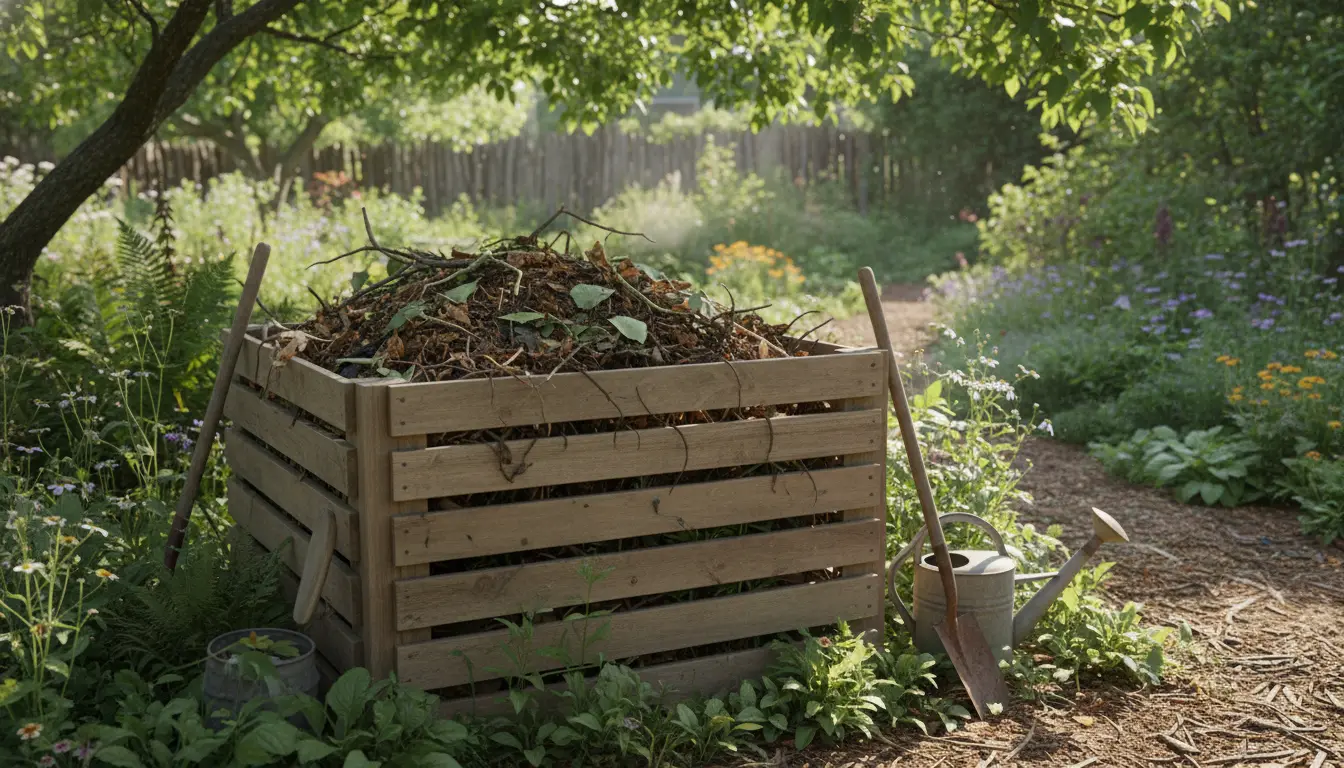
Composting at home turns kitchen and yard waste into valuable soil amendment. This guide gives clear, step-by-step instructions and troubleshooting tips so you can set up a working system in small spaces or a backyard.
What Is Home Composting?
Home composting is the controlled breakdown of organic materials like food scraps and yard trimmings into nutrient-rich compost. It uses microbes, moisture, air, and a mix of materials to transform waste into soil feed.
Benefits of Home Composting
Home composting reduces household waste and lowers your trash volume. The finished compost improves soil structure, water retention, and plant health.
- Reduces landfill waste and methane emissions
- Saves money on fertilizer and soil amendments
- Improves garden yields and soil biology
How to Start Home Composting
Choose a method that fits your space: a simple bin, tumbler, or a worm composting (vermicompost) setup. Each method has different management needs but the same basic inputs.
Step 1: Pick a Container
For small yards or balconies, use a closed compost bin or a worm bin. For larger yards, a three-bin system or an open pile works well. Make sure the container allows airflow and drainage.
Step 2: Balance Greens and Browns
Compost needs a balance of nitrogen-rich “greens” and carbon-rich “browns.” Aim for roughly a 2:1 ratio by volume of browns to greens for slower systems, or 1:1 for active hot composting.
- Greens: vegetable scraps, coffee grounds, fresh grass clippings
- Browns: dry leaves, shredded paper, straw, cardboard
Step 3: Add Materials in Layers
Start with a coarse layer like twigs to aid drainage. Add alternating layers of greens and browns, keeping materials shredded or small to speed decomposition.
Step 4: Maintain Moisture and Air
Keep the pile damp like a wrung-out sponge. Turn the pile every 1–2 weeks for faster aerobic composting. In a worm bin, avoid frequent turning and maintain moisture around 60–70%.
Quick Setup Options for Small Spaces
Not everyone has a backyard. These compact methods work well in apartments and small gardens.
- Worm bin: Ideal for kitchens and patios, produces rich vermicompost.
- Tumbler: Enclosed, easy to rotate, faster decomposition with less odor.
- Bokashi: Fermentation method that handles all food scraps, including meat and dairy; requires a soil or compost step afterward.
Compost Troubleshooting
Common issues usually stem from imbalance, moisture, or lack of airflow. Check these areas first if your compost smells or isn’t breaking down.
Problem: Bad Odor
A rotten smell indicates anaerobic conditions. Add dry browns, mix the pile, and increase airflow by turning or adding bulky materials like twigs.
Problem: Slow Decomposition
Slow breakdown can come from materials being too large, too dry, or too cold. Chop or shred items, add water if dry, and insulate or move the bin to a warmer spot.
Problem: Fruit Flies or Pests
Cover fresh kitchen scraps with a layer of browns or finished compost. Use a closed bin or worm system to reduce access, and avoid adding meat or oily foods to open piles.
Did You Know?
Did You Know? A typical household can divert up to 30% of its waste to composting, reducing trash pickup frequency and lowering disposal costs.
Small Real-World Example: Urban Balcony Composting Case Study
Anna lives in a two-bedroom apartment and started a worm bin on her balcony. She used a 20-liter plastic bin with ventilation holes and red worms.
Within three months she had a steady supply of worm castings to top-dress her potted herbs. She saved money on store-bought fertilizer and reduced her kitchen waste by about 10 liters per week.
Using Finished Compost
Finished compost is dark, crumbly, and earthy-smelling. Screen it if you need a fine texture, or use it as-is to improve raised beds and potting mixes.
- Top-dress lawns and vegetable beds with a thin layer
- Mix 10–30% compost into potting soil for container plants
- Use as a seed starting mix additive to boost microbe activity
Safety and Best Practices
Avoid adding diseased plant material or weeds with mature seeds unless you have a hot compost that reaches sufficient temperatures. Keep compost away from drinking water sources and maintain good hygiene when handling raw materials.
Checklist to Start Home Composting
- Choose the right container for your space
- Collect greens and browns separately
- Shred or chop materials when possible
- Monitor moisture and aeration regularly
- Harvest finished compost every few months
Home composting is a practical way to reduce waste and improve garden health. Start small, observe your system, and adjust the balance of materials. With simple care you can produce valuable compost while shrinking your environmental footprint.