
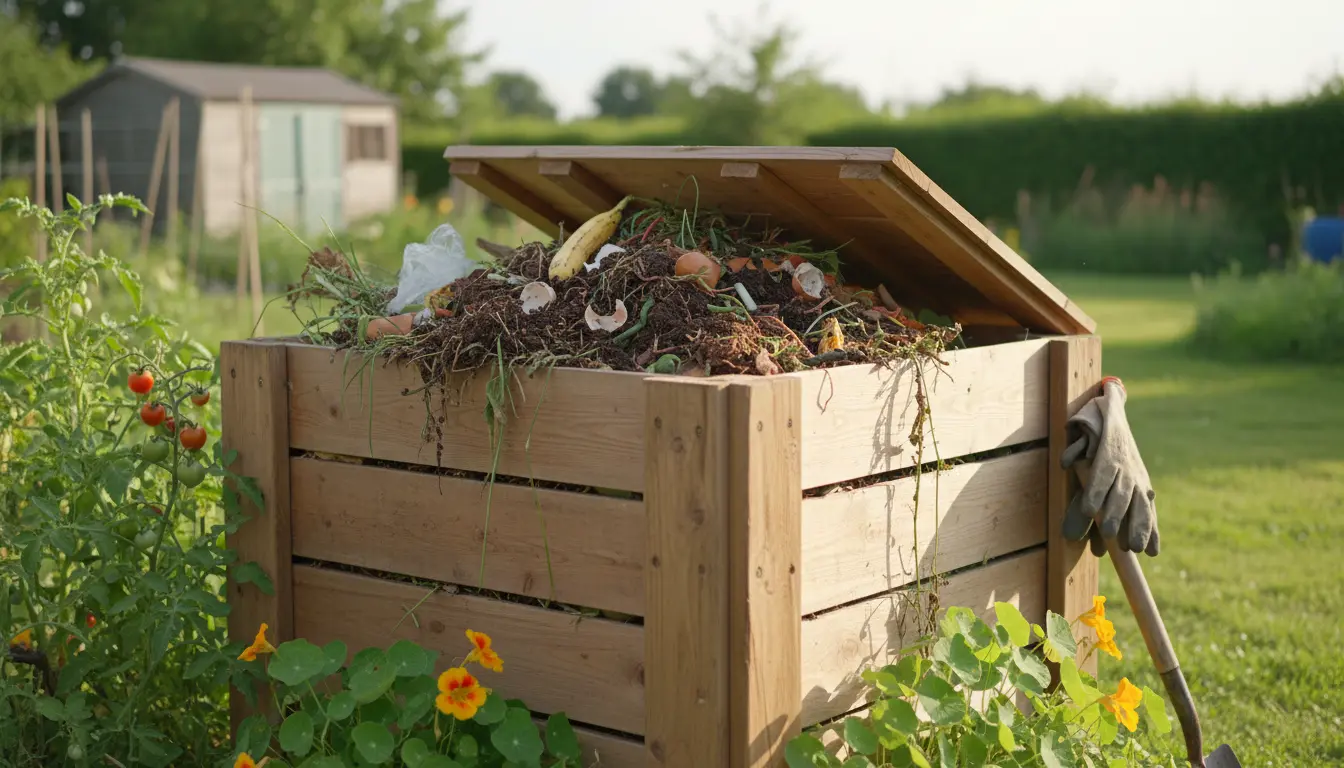
Composting at home turns kitchen scraps and yard waste into nutrient-rich soil. This guide explains the basic steps, tools, and troubleshooting tips for home composting for beginners.
Home Composting for Beginners: What It Is
At its core, composting is controlled decomposition. Microbes, worms, and insects break down organic material into humus that improves soil structure and plant nutrition.
Home composting is suitable for apartments with small systems and for yards with larger bins or piles. The goal is to balance materials, moisture, and airflow.
Why Home Composting for Beginners Matters
Composting reduces landfill waste and methane emissions while returning nutrients to soil. It saves money on fertilizers and supports healthier gardens.
For beginners, composting is low-risk and scalable. Start simple and expand as confidence grows.
Getting Started: Tools and Basics
You don’t need fancy equipment. Start with one of these simple setups and a few basic tools.
- Tumbler or closed bin for fast, contained composting.
- Open bin or pile for larger yards and bulk materials.
- Bokashi bucket for fermented food waste in apartments.
- Pitchfork or garden fork to turn material, and a garden thermometer for monitoring.
Choosing a Bin or Method
Choose based on space and goals. Tumblers are tidy and fast but hold less volume. Open bins and piles are cheaper and handle more yard waste.
Bokashi works inside and accepts dairy and meat after fermentation, but requires burial or integration into a composting stage later.
What to Compost and What Not to Compost
Balance “greens” (nitrogen) and “browns” (carbon). A good ratio is roughly 2–3 parts browns to 1 part greens by volume.
- Greens: Vegetable scraps, fruit peels, coffee grounds, fresh grass clippings.
- Browns: Dry leaves, shredded paper, cardboard, straw, sawdust (untreated).
- Avoid: Meat, dairy, oils, diseased plants, pet waste (unless using specialized systems).
Step-by-Step Composting Process
Follow these steps to build and maintain a healthy compost pile or bin.
- Start with a layer of coarse browns like twigs to help airflow at the base.
- Add alternating layers of greens and browns. Chop or shred larger pieces to speed decomposition.
- Moisture: keep the pile as damp as a wrung-out sponge. Add water if too dry, or more browns if too wet.
- Turn or mix the pile every 1–2 weeks to introduce oxygen and speed breakdown.
- Monitor temperature: active piles heat to 40–65°C (104–149°F). Cooler piles mean slower decomposition.
- When material looks dark and crumbly and has an earthy smell, it’s finished and ready to use.
How Much Time Will It Take?
Time depends on method and conditions. Hot, managed systems can produce compost in 2–3 months. Cold piles may take 6–12 months.
Smaller, frequently turned piles decompose faster than large, unmoved heaps.
Troubleshooting Common Problems
Even simple systems can run into issues. Address problems early with small adjustments.
- Smell: Usually from too much wet green material or poor aeration. Add browns and turn the pile.
- Pests: Avoid meat, dairy, and oily foods. Use closed bins or bury food scraps deep in the pile.
- Too Dry: Water the pile and add some green materials. Cover to retain moisture.
- Too Slow: Chop materials smaller, increase turning, or add a nitrogen-rich green to boost microbes.
About 30% of household waste is compostable. Proper composting can cut your garbage weight substantially and improve garden yields without chemical fertilizers.
Small Real-World Example
Case study: A two-person household in a small townhouse started a 60-liter tumbler. They used kitchen scraps and yard clippings, turning the tumbler twice weekly.
After three months they had rich compost to mix into potted herbs. Their weekly trash volume dropped by roughly 40% and their herb plants grew noticeably fuller.
Final Tips for Home Composting for Beginners
Start small, monitor conditions, and adjust. Consistency matters more than perfection.
- Keep a small container with a tight lid for kitchen scraps and empty it into the bin regularly.
- Shred or chop large items to speed decomposition.
- Keep records of what you add and how often you turn the pile to learn faster.
Home composting for beginners is accessible and rewarding. With basic tools, a little attention, and simple balancing, anyone can convert household waste into valuable soil amendment.