
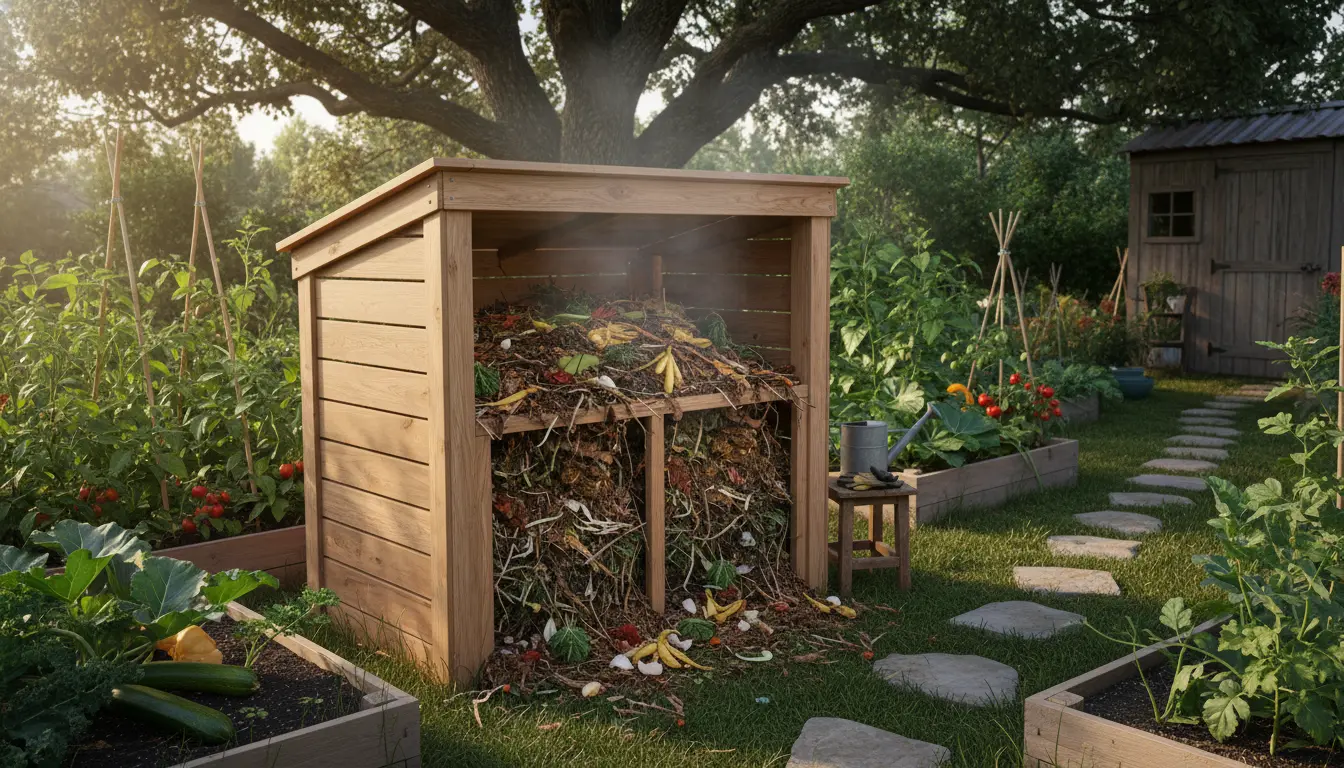
Home composting turns kitchen scraps and yard waste into a nutrient-rich soil amendment. This guide gives clear, practical steps so beginners can start composting at home with confidence.
Why Home Composting Matters
Composting reduces landfill waste and returns organic matter to soil. It also improves garden health by adding nutrients and enhancing soil structure.
Small changes at home can reduce household waste and lower your carbon footprint.
How to Start Home Composting
Starting composting involves choosing a method, gathering materials, and keeping a balance between carbon and nitrogen. Follow these basic steps to get started.
1. Choose a Composting Method
Select the method that fits your space and lifestyle. Common options include backyard bins, tumblers, worm bins (vermicomposting), and indoor bokashi systems.
Backyard bins and tumblers are best for yards. Vermicomposting works well in apartments or small spaces.
2. Choose a Bin or Container
Choose a bin size and type that matches your waste volume and outdoor space. Options include plastic bins, wooden frames, and rotating tumblers.
- Plastic bins: affordable and low maintenance.
- Wooden bins: breathable and sturdy.
- Tumblers: faster mixing and fewer pests.
- Worm bins: compact and good for indoor use.
3. Gather Materials: Greens and Browns
Compost needs a balance of nitrogen-rich “greens” and carbon-rich “browns.” Aim for a rough ratio of 2 to 3 parts browns to 1 part greens by volume.
- Greens (nitrogen): vegetable scraps, coffee grounds, fresh grass clippings.
- Browns (carbon): dry leaves, shredded paper, straw, cardboard.
4. Build Layers and Keep It Moist
Start with a layer of coarse browns for airflow, then add alternating layers of greens and browns. Keep the pile as moist as a wrung-out sponge.
Aerate by turning the pile every 1–2 weeks for faster decomposition, or leave it undisturbed for a slower, low-maintenance approach.
Managing Your Home Composting System
Good management keeps the process efficient and odor-free. Focus on temperature, moisture, aeration, and particle size.
Temperature and Speed
Active, hot composting heats the pile to 130–160°F (54–71°C) and works faster. Cold composting decomposes slowly but requires less effort.
If you want finished compost in months, use smaller particles, more frequent turning, and maintain moisture for hot composting.
Moisture and Aeration
Too wet leads to odors and anaerobic conditions. Too dry slows decomposition. Add water during dry spells and add brown material if it’s soggy.
Turn the pile to supply oxygen. Tumblers simplify this step with easy rotation.
Troubleshooting Common Problems in Home Composting
Problems are common but fixable. Use these quick checks.
- Bad smells: Add more browns, turn the pile, and check moisture.
- Slow breakdown: Chop materials smaller, increase greens, and aerate.
- Pests: Use a closed bin or bury scraps under browns; avoid meat and dairy.
- Flies: Cover food scraps with a layer of browns and keep the surface dry.
What to Compost and What to Avoid
Most kitchen and yard waste is compostable. Avoid adding meat, dairy, oily foods, diseased plants, and pet waste from carnivores.
Compostable: fruit and vegetable peels, eggshells, coffee grounds, shredded paper, leaves, and grass clippings.
Small Case Study: Neighborhood Garden Compost
In a small urban neighborhood, a community garden started a shared 200-gallon tumbler. Members donated kitchen scraps and dry leaves.
Within four months the group reported rich, dark compost and reduced their green-bin waste by nearly half. The tumbler cut turning time and kept pests away.
Tips and Examples for Easy Success
- Keep a small countertop caddy with a tight lid to collect scraps and reduce trips outside.
- Shred cardboard and paper before adding to speed decomposition.
- Use a garden fork or tumbler for regular turning; aim for once every 1–2 weeks in active systems.
- Test your compost: finished compost smells earthy and is dark and crumbly.
Final Checklist to Start Home Composting
- Choose a bin and location with good drainage and access.
- Collect greens and browns and aim for balance.
- Monitor moisture and aerate as needed.
- Use finished compost in gardens, potted plants, or as a soil top dressing.
With minimal effort and basic management, home composting is a reliable, low-cost way to cut waste and nourish your soil. Start small, learn by doing, and scale up as you gain confidence.