
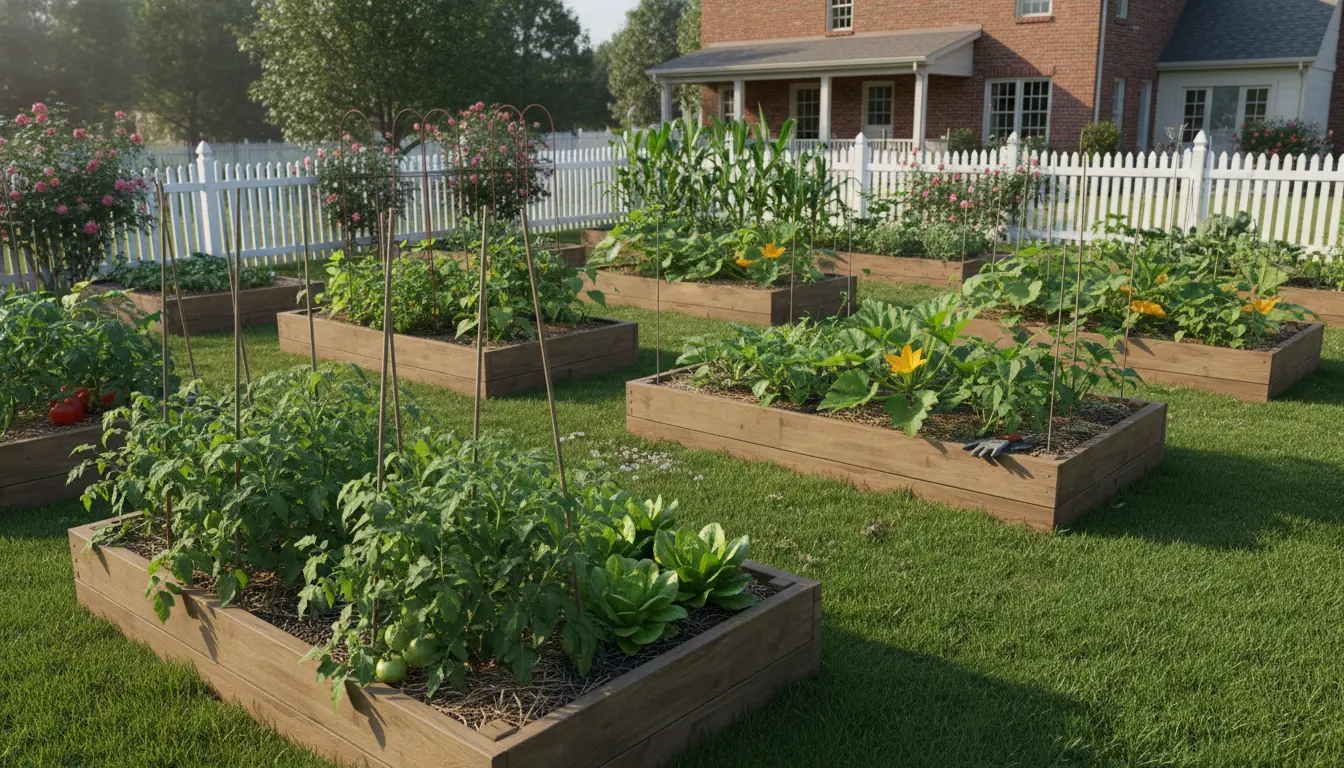
Why choose a raised bed vegetable garden
Raised bed vegetable gardens improve drainage, warm faster in spring, and let you control soil quality. They are easier on the back and reduce soil compaction from walking.
Use raised beds to grow vegetables in small yards, on slopes, or where native soil is poor. You can build them from wood, recycled materials, or concrete blocks.
Planning your raised bed vegetable garden
Start by choosing a sunny location with at least six hours of direct sun. Most vegetables need full sun to produce well.
Decide bed size based on reach: 3–4 feet wide lets you access the middle from either side. Length can vary, but keep paths between beds at least 18–24 inches.
Raised bed vegetable garden layout and orientation
Orient beds north–south where possible to get even sun along the rows. Leave room for watering and harvesting paths.
- Common bed dimensions: 4 ft × 8 ft, 3 ft × 6 ft
- Depth: 10–18 inches is good for most vegetables
- Paths: 18–24 inches wide for wheelbarrows or walking
Materials and construction for raised beds
Select rot-resistant wood like cedar or recycled plastic lumber to avoid chemical leaching. Avoid pressure-treated wood with old preservatives.
Simple construction steps:
- Mark the bed outline and level the ground.
- Assemble the frame and secure corners with screws or brackets.
- Place the frame directly on soil or use a weed barrier under the bed.
Soil mix for a raised bed vegetable garden
Good soil is the most important factor. Use a mix of topsoil, compost, and a light mineral component to improve drainage and fertility.
Typical mix ratio:
- 40% topsoil or screened garden soil
- 40% high-quality compost
- 20% coarse sand, perlite, or coconut coir for structure
Test pH and add lime or sulfur if needed to get a neutral pH for most vegetables (6.0–7.0).
Plant selection and spacing
Choose vegetables suited to your climate and season. Group plants by water needs and harvest time to simplify care.
Examples of easy starter vegetables: lettuce, radishes, tomatoes, bush beans, and carrots.
- Use spacing recommendations on seed packets.
- Consider succession planting to extend harvests (planting new rows every few weeks).
- Companion planting can help with pest control and space use.
Crop rotation and bed maintenance
Rotate plant families each season to reduce disease and nutrient depletion. For small gardens, rotate between root crops, leafy greens, and fruiting crops.
Top up compost yearly and refresh the top 2–3 inches of soil to maintain fertility.
Watering and irrigation tips for raised bed vegetable garden
Raised beds dry faster than in-ground beds, so consistent watering is important. Aim for even moisture but avoid waterlogging.
Irrigation options:
- Soaker hoses laid beneath mulch
- Drip irrigation with timers for consistent delivery
- Hand-watering with a hose and wand for small beds
Mulch with straw or shredded leaves to reduce evaporation and suppress weeds.
Pest control and common problems
Monitor regularly for pests and diseases. Early detection allows simple controls like hand-picking or using row covers.
Integrated pest management steps:
- Encourage beneficial insects with flowering plants
- Use physical barriers for slugs and small mammals
- Choose disease-resistant varieties when possible
Raised beds can extend your growing season by warming earlier in spring and draining better in wet weather, often allowing planting 2–4 weeks sooner than in-ground beds.
Small case study: A backyard raised bed success
Emily, a homeowner in Portland, built two 4×8 cedar beds on compacted clay soil. She used a mix of screened topsoil, compost, and coir and planted tomatoes, lettuce, and bush beans.
In the first season she reported higher yields, fewer weeds, and easier harvesting. Seasonal mulch and drip irrigation cut her watering time in half.
Seasonal checklist for a raised bed vegetable garden
- Spring: Prepare soil, plant cool-season crops, start warm-season seedlings indoors
- Summer: Mulch, monitor irrigation, practice succession planting
- Fall: Harvest remaining crops, add compost, plant cover crops if desired
- Winter: Repair beds, plan next year’s crops
Quick tips to get started today
- Start small: one or two beds lets you learn without too much work
- Buy local compost or make your own to reduce costs
- Use trellises for vining crops to save space
- Keep a simple garden journal to track planting dates and yields
With a clear plan and good soil, a raised bed vegetable garden provides productive, manageable space for fresh produce. Start with one bed, refine your mix and plant choices, and expand as you gain confidence.