
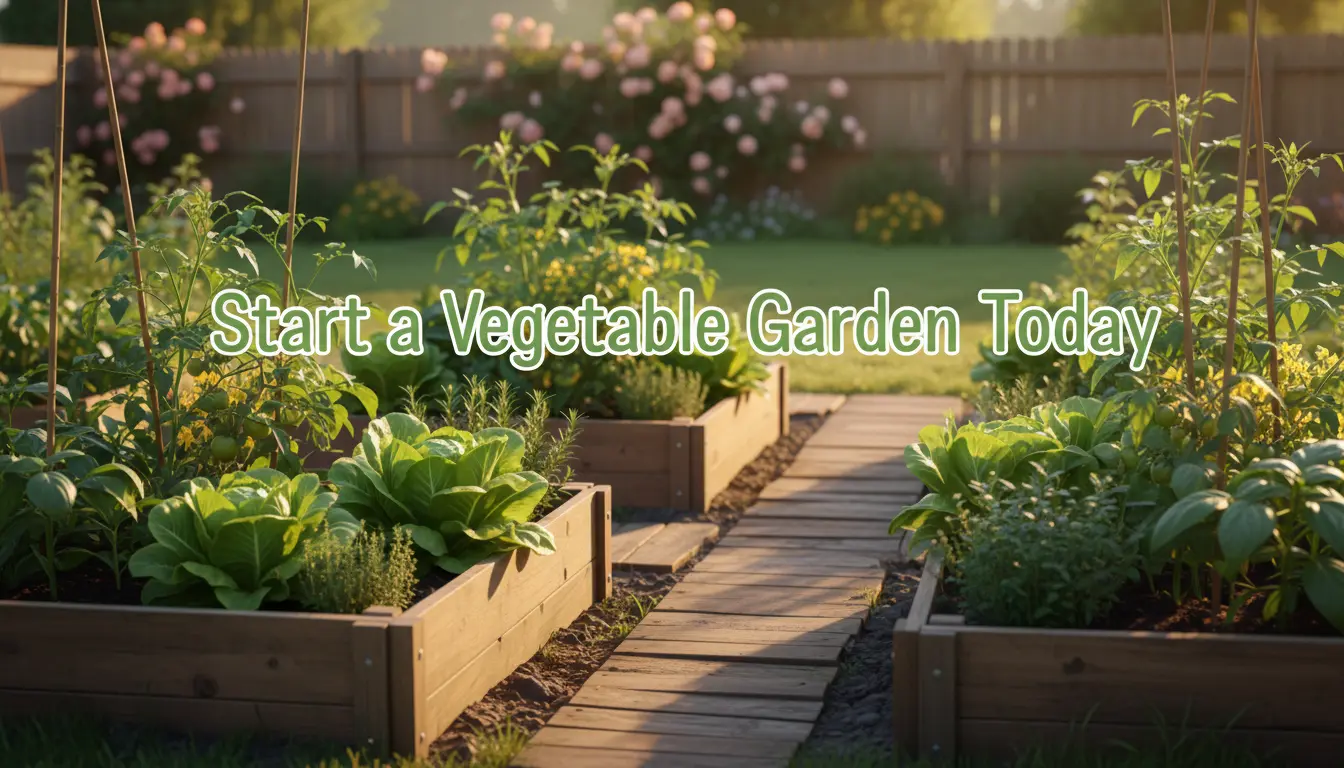
Why start a vegetable garden
Growing vegetables saves money, improves food quality, and gives you control over chemicals and freshness. A small, well-planned garden can produce a surprising amount of food for a family.
This guide explains how to start a vegetable garden with clear, practical steps you can use in almost any climate or yard size.
Choose the best site to start a vegetable garden
Location matters. Most vegetables need 6–8 hours of direct sun. Aim for the sunniest spot available and avoid low areas where water pools.
Consider access to water, soil drainage, and convenience. The closer the garden to your kitchen, the more likely you are to tend it.
Checklist for site selection
- 6–8 hours of sun daily for most crops
- Level or slightly sloped ground for drainage
- Easy access to a water source
- Good air circulation to reduce disease
Prepare soil when starting a vegetable garden
Healthy soil is the foundation of a productive vegetable garden. Test soil pH and basic nutrients with a home kit or local extension service.
Build soil fertility by adding compost, well-rotted manure, or organic matter. For heavy clay, add coarse sand and compost. For very sandy soil, increase organic matter to improve water retention.
Simple soil preparation steps
- Remove weeds and grass from the planting area.
- Work in 2–4 inches of compost across the bed.
- Loosen top 8–12 inches of soil with a spade or fork.
- Rake level and water lightly before planting.
Plan what to plant in your vegetable garden
Choose crops that match your climate, taste, and time. Beginners should start with easy, high-yield vegetables like lettuce, radishes, bush beans, tomatoes, and zucchini.
Use succession planting to extend harvests: plant fast crops early, then follow with warm-season plants.
Example planting plan
- Spring: peas, spinach, radishes
- Late spring: tomatoes, peppers, basil
- Summer: beans, summer squash, cucumbers
- Fall: kale, carrots, beets
Planting and spacing tips
Follow seed packet or plant tag spacing. Crowding leads to disease and reduced yields. When in doubt, give plants more space rather than less.
Start seeds indoors for long-season crops or buy young transplants from a trusted source to get a faster start.
Watering and fertilizing your vegetable garden
Consistent watering is more important than frequent shallow watering. Aim for deep, infrequent watering that moistens the root zone.
Mulch around plants to conserve moisture, reduce weeds, and regulate soil temperature.
Watering guide
- Water deeply 1–3 times per week depending on weather and soil type
- Use drip irrigation or soaker hoses to reduce disease
- Avoid wetting leaves to decrease fungal problems
Pest and disease management in a vegetable garden
Prevent problems with good cultural practices: crop rotation, clean tools, resistant varieties, and proper spacing. Check plants regularly for early signs of pests or disease.
Use integrated pest management (IPM): start with handpicking or barriers, then use targeted organic controls (insecticidal soap, Bacillus thuringiensis) only if needed.
Small case study: The 10×4 Raised Bed
Sarah from Portland started a 10×4 raised bed in spring on a sunny patio. She improved soil with three cubic feet of compost and planted tomatoes, lettuce, and bush beans.
With weekly deep watering and a 2-inch mulch layer, Sarah harvested salad greens within 6 weeks and tomatoes by mid-summer. Her garden produced enough greens for the household and reduced grocery trips.
Seasonal tasks for a vegetable garden
Maintain your garden with simple seasonal tasks. Early spring is for soil prep, spring for planting, summer for watering and pest control, and fall for clean-up and cover cropping.
Seasonal checklist
- Spring: clean beds, add compost, plant cool-season crops
- Summer: mulch, water deeply, stake tomatoes, harvest regularly
- Fall: remove spent plants, add compost, plant cover crop
Most kitchen herbs like basil, parsley, and chives can be grown in containers and trimmed regularly to extend their productivity. Harvesting herbs often encourages fuller plants.
Tips to keep your vegetable garden productive
- Keep a garden journal to track planting dates, varieties, and yields.
- Rotate crops yearly to reduce soil-borne pests and nutrient depletion.
- Start small and expand as you gain confidence and time.
Final steps to start your vegetable garden
Pick a sunny site, improve the soil, choose easy crops, and water wisely. Small, consistent actions yield the best results.
Begin with one or two beds, observe, and adapt. Over the first season you’ll learn what works in your space and climate.
If you follow these steps, you can start a vegetable garden that feeds your family and gives you a satisfying outdoor hobby.