
Why Choose Container Gardening
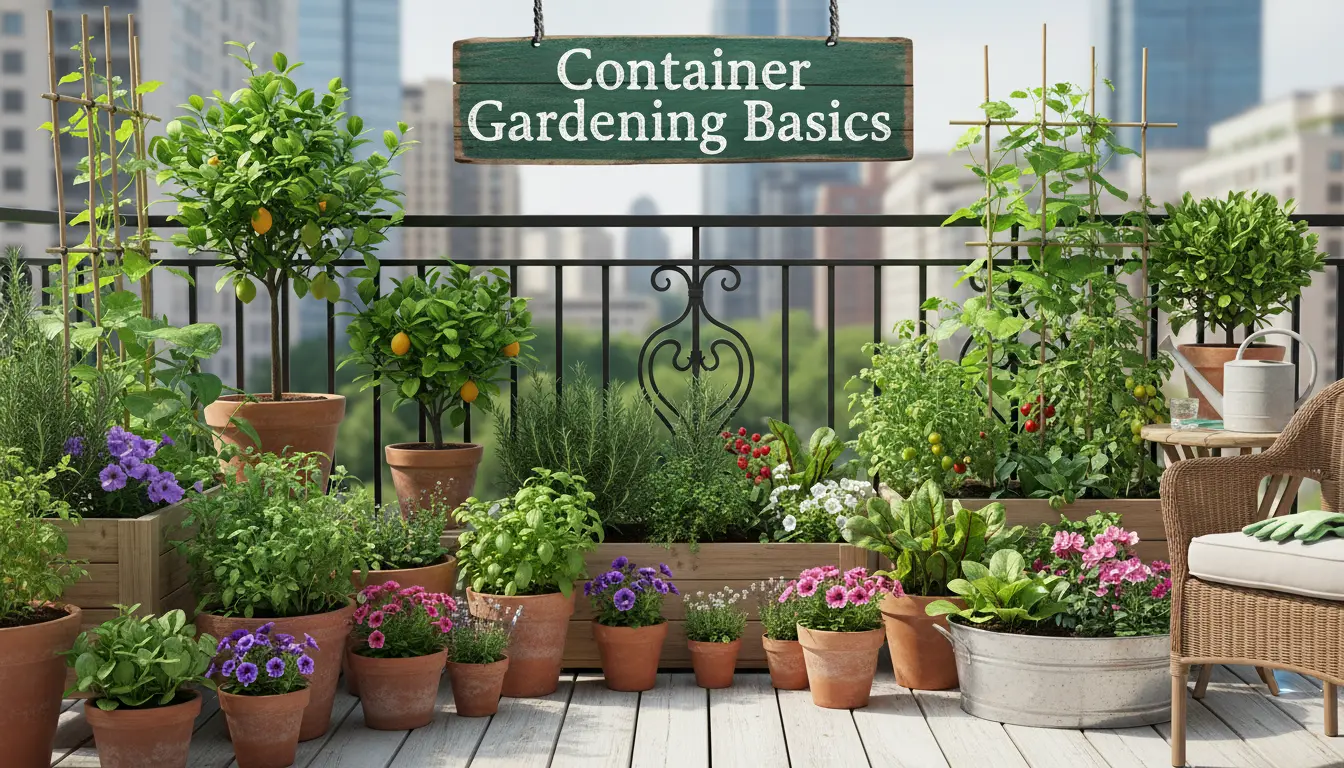
Container gardening is a flexible way to grow vegetables, herbs, and flowers in small spaces. It works on balconies, patios, or even windowsills and fits busy schedules.
For beginners, container gardening reduces weeds, limits soil pests, and lets you control soil quality. That makes it easier to get visible results fast.
Basic Tools and Materials for Container Gardening
Start with a few inexpensive items. Good basics reduce early mistakes and give plants a better chance to thrive.
- Pots or containers with drainage holes (plastic, terracotta, or fabric).
- High-quality potting mix, not garden soil.
- Hand trowel, watering can, and basic pruning shears.
- Slow-release fertilizer or liquid feed for regular use.
Choosing Containers for Your Container Garden
Select containers based on the plants you want and the space available. Deeper containers suit root vegetables and larger plants.
Consider weight and material. Terracotta breathes but can dry out faster. Plastic and fabric pots hold moisture longer.
Container Size Guide
- Herbs: 6–8 inch pots
- Leafy greens: 8–12 inch pots
- Tomatoes and peppers: 12–20 inch pots
- Root crops: 12–18 inch pots, depending on variety
Soil and Drainage: The Foundation of Container Gardening
Use a light potting mix designed for containers. These mixes contain components that retain moisture and provide air to roots.
Ensure containers have drainage holes. If a container lacks holes, add a layer of stones alone will not replace proper drainage.
Plant Selection and Placement
Choose plants that match your light conditions. Full sun requires at least six hours of direct light, while partial sun suits many herbs and greens.
Group pots with similar watering and light needs. This makes care simpler and reduces risk of over- or under-watering.
Easy Starter Plants for Container Gardening
- Basil, parsley, and chives (herbs)
- Lettuce, spinach, and arugula (leafy greens)
- Cherry tomatoes and bush peppers (compact fruiting plants)
- Marigolds and nasturtiums (companion flowers)
Watering and Feeding Your Container Garden
Containers dry out faster than ground soil. Check soil moisture daily for small pots and every two days for larger pots during warm weather.
Water until excess flows from drainage holes, then allow the top inch to dry before watering again. Adjust frequency by weather and plant type.
Use a balanced fertilizer or liquid feed every 2–4 weeks during the growing season. Follow package directions to avoid overfeeding.
Light, Temperature, and Placement Tips
Place sun-loving containers where they get morning and midday sun. Move shade-tolerant pots to protected spots with indirect light.
In hot climates, afternoon shade can protect plants from heat stress. In cooler regions, place containers near walls that absorb heat during the day.
Common Problems and Simple Fixes
- Yellow leaves: Check watering and nutrient levels.
- Wilting: Water deeply and inspect roots for rot or compaction.
- Pests: Handpick insects or use insecticidal soap for soft-bodied pests like aphids.
- Slow growth: Ensure adequate light and refresh potting mix yearly.
Seasonal Care and Maintenance
Refresh the top two inches of soil each season and replace potting mix every 1–2 years. Clean containers between seasons to reduce disease carryover.
Prune spent flowers and remove yellowing leaves to keep plants productive and reduce pest hiding places.
Container plants can produce more per square foot than the same plants in the ground because you control soil, water, and nutrients precisely.
Small Case Study: Balcony Tomato Success
Maria, who lives in an apartment, grew two cherry tomato plants on her small balcony. She used 20-inch plastic pots, a quality potting mix, and a balanced liquid feed every three weeks.
She placed the pots in full morning sun and watered deeply every two days in summer. By following a simple schedule, she harvested tomatoes within 10 weeks and continued production through early fall.
Quick Start Checklist for a New Container Garden
- Pick plants suitable for your light and space.
- Choose containers with good drainage and the right size.
- Fill with a quality potting mix and plant your chosen seeds or seedlings.
- Water thoroughly, then follow a regular watering and feeding plan.
- Watch for pests and prune dead growth to maintain plant health.
Final Tips for Successful Container Gardening
Start small and expand once you learn what grows well in your conditions. Keep a simple journal of watering, feeding, and harvest dates to improve results each season.
Container gardening makes growing food and flowers accessible. With basic tools and regular attention, beginners can build a productive, low-stress garden in limited space.