
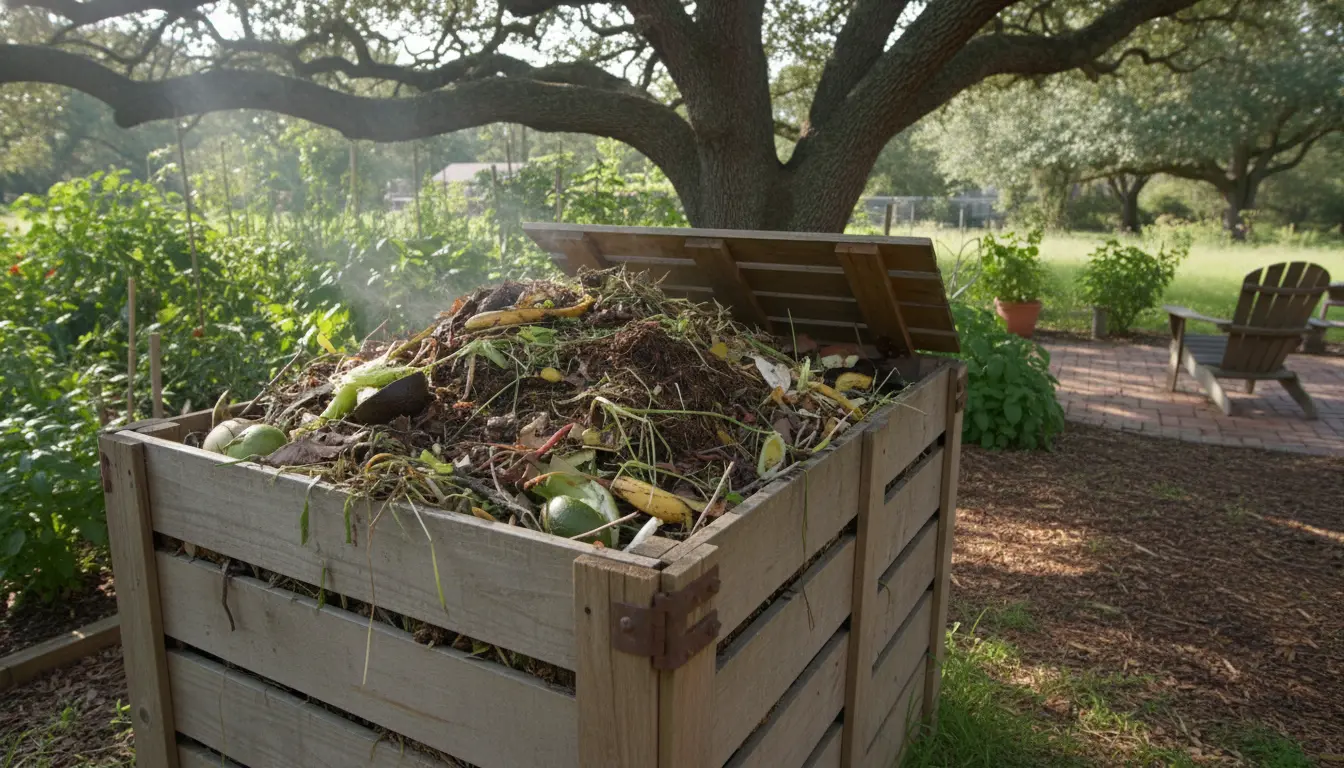
Home composting turns kitchen and yard waste into valuable soil material. This guide covers the practical steps to start home composting, common problems, and quick wins for beginners.
Why Home Composting Matters
Home composting reduces household waste and supplies nutrient-rich material for gardens and pots. It lowers landfill contributions and cuts the greenhouse gases associated with organic waste disposal.
Compost improves soil structure, increases water retention, and feeds plants naturally. These benefits make home composting a straightforward action with measurable environmental returns.
How to Start Home Composting
Starting a compost system is a few simple steps. You can scale from a small kitchen bin to a backyard tumbler depending on space and needs.
Choose a Compost System
Pick a system that fits your space and routine. Common options include:
- Open pile: Low cost, needs space and occasional turning.
- Compost bin: Contained and neater for yards.
- Tumbler: Easy turning, faster decomposition.
- Worm (vermicompost): Great for apartments and kitchen scraps.
Collect the Right Materials
Home composting works best with a mix of carbon and nitrogen materials. Aim for a balanced mix to speed decomposition and avoid odors.
- Greens (nitrogen): Vegetable scraps, coffee grounds, fresh grass clippings.
- Browns (carbon): Dry leaves, shredded paper, cardboard, straw.
- Avoid: Meat, dairy, oils, diseased plants, and pet waste to prevent pests and odors.
Layering and Maintenance
Build a compost pile with alternating layers of browns and greens. Start with coarse material to help airflow, then alternate thin layers.
Turn the pile every 1–2 weeks to add oxygen. Keep the pile moist like a wrung-out sponge. Too dry slows the process; too wet creates odors.
Troubleshooting Common Problems in Home Composting
Beginners often face a few predictable issues. Use these quick checks to diagnose and fix problems.
Bad Smells
Cause: Excess moisture or too many greens. Fix: Add browns, turn the pile, and improve drainage.
Pests or Rodents
Cause: Food scraps like meat, or an open bin. Fix: Use a closed bin or tumbler, bury new scraps, and avoid inviting materials.
Slow Decomposition
Cause: Not enough nitrogen, poor aeration, or low temperature. Fix: Add fresh green material, chop materials smaller, and turn more often.
Small Case Study: Balcony Composting for an Apartment Gardener
Background: Sarah, a city renter, wanted to reduce waste and feed her balcony herbs. She chose a 20-liter worm bin and collected kitchen scraps for six months.
Process: She added small amounts of shredded cardboard and coffee grounds, kept the bin shaded, and harvested vermicompost every two months.
Results: Sarah produced about 10 liters of finished compost in six months, reduced her weekly trash by one bag, and saw healthier herbs with less watering.
Using Finished Compost
Finished compost is dark, crumbly, and earthy-smelling. Use it in potting mixes, topdress garden soil, or mix into planting holes.
- Seed starting: Mix 10–30% compost with sterile seed mix.
- Garden beds: Spread 2–4 inches and work into the topsoil.
- Container plants: Replace 10–20% of potting soil with compost.
Tips for Consistent Home Composting Success
- Keep a small countertop pail for scraps to reduce trips outside.
- Chop larger items to speed decomposition.
- Balance browns and greens; measure by volume, not weight.
- Monitor moisture and aerate with a garden fork or tumbler handle.
- Label your compost stages so you always know what’s ready to use.
Home composting is a low-cost habit with high returns. Small changes in how you collect and manage organic waste can produce usable compost in a few months.
Start small, observe your pile, and adjust materials and turning frequency until the system works for your home and schedule.