
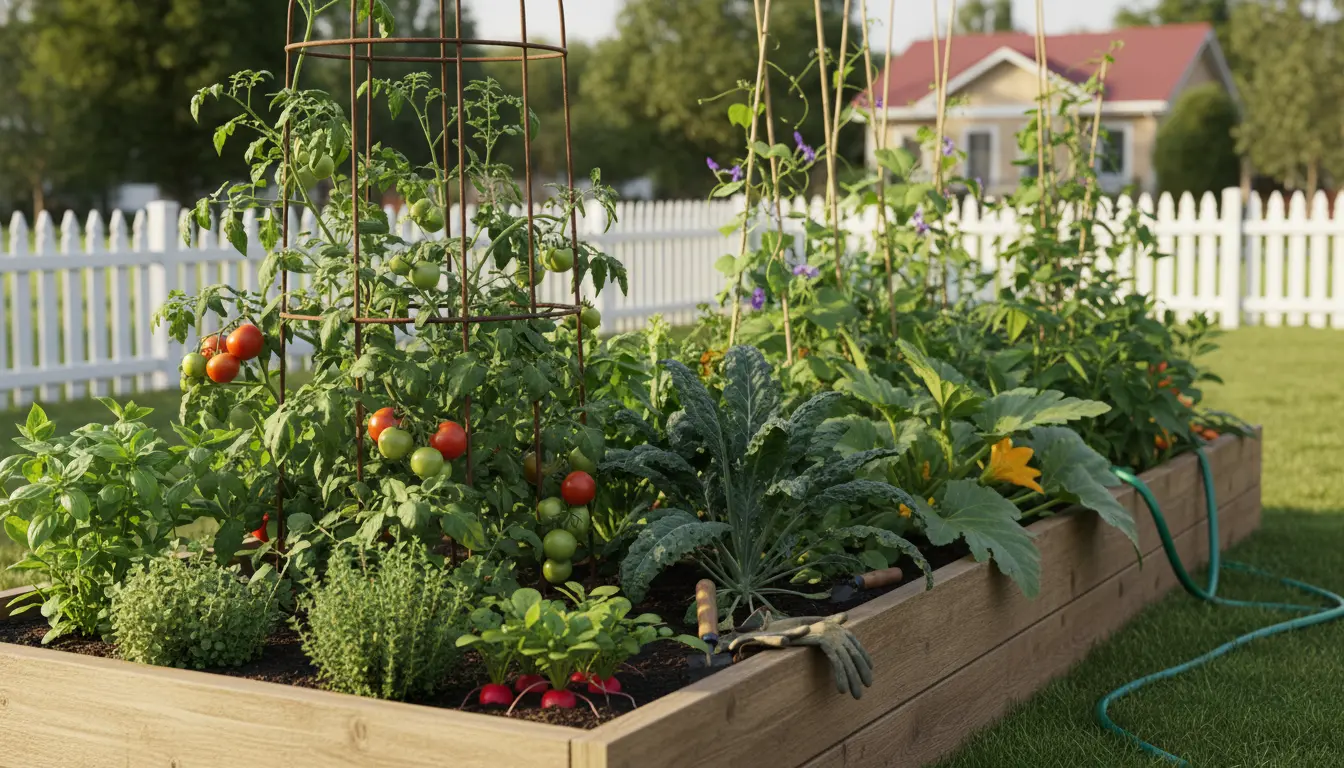
Start a Vegetable Garden: Simple First Steps
Starting a vegetable garden is a practical way to grow fresh food and learn new skills. This guide explains clear steps you can follow, whether you have a yard, balcony, or community plot.
Keep tasks small at first: plan, prepare soil, choose easy crops, and maintain consistently. The guidance below focuses on low-cost, high-success techniques for beginners.
Plan Before You Plant
Good planning reduces wasted time and effort. Begin by assessing space, sunlight, water access, and your time availability.
Decide on garden type: in-ground beds, raised beds, or containers. Each has pros and cons for drainage, soil control, and accessibility.
Start a Vegetable Garden: Choosing Location
Pick a spot that gets at least 6 hours of sunlight per day for most vegetables. Morning sun is especially valuable for leaf-drying and disease prevention.
Check for nearby water sources and avoid low areas where water pools. Consider wind exposure and provide simple windbreaks if needed.
Prepare Soil and Planting Beds
Healthy soil is the foundation of a productive garden. Test or observe your soil to estimate texture and fertility.
Improve soil by adding compost and organic matter. For raised beds and containers, use a quality mix with compost, peat or coco coir, and vermiculite or perlite for drainage.
Start a Vegetable Garden: Soil Preparation Steps
- Remove weeds and grass from the planting area.
- Work in 2–4 inches of compost across the bed surface.
- For compacted soil, loosen the top 6–8 inches with a fork or tiller.
- Adjust pH if needed; many vegetables prefer pH 6.0–7.0.
Choose Easy Vegetables for Beginners
Select crops that match your climate and season. Choose quick-maturing or forgiving varieties to build confidence.
Good beginner vegetables include tomatoes, lettuce, radishes, bush beans, zucchini, and herbs like basil and parsley.
- Tomatoes: stake or cage indeterminate types for higher yield.
- Lettuce and salad greens: successive sowing every 2–3 weeks for steady harvest.
- Radishes: fast growing, useful as a first crop to learn timing.
- Beans and peas: provide structure for climbing types or choose bush varieties.
Planting and Spacing
Follow seed packet or plant tag spacing guidelines to reduce disease and improve air flow. Overcrowding lowers yield and invites pests.
Plant in blocks rather than single rows to maximize pollination for crops like squash and cucumbers.
Watering and Routine Care
Consistent watering is critical. Most vegetable crops prefer deep, infrequent watering rather than light daily sprinkles.
Apply water at the soil level to keep foliage dry and reduce fungal problems. Mulch with straw or wood chips to conserve moisture and suppress weeds.
Simple Pest and Disease Management
Monitor plants weekly for pests and signs of disease. Early detection makes management easier and less chemical-dependent.
Use these practical options: hand-pick pests, use row covers, rotate crops annually, and encourage beneficial insects by planting flowering herbs.
Start a Vegetable Garden: Organic Pest Tips
- Introduce companion plants such as marigolds and nasturtiums to deter pests.
- Apply insecticidal soap or neem oil for soft-bodied pests like aphids.
- Remove heavily infested leaves and dispose of them away from the garden.
Harvesting and Ongoing Improvement
Harvest vegetables at peak ripeness to encourage continued production. Pick lettuce leaves often and harvest tomatoes when fully colored.
At season end, add crop residues to a compost pile and note what worked and what did not. Good record-keeping improves yields year to year.
Companion planting can increase yields: for example, planting basil near tomatoes may improve flavor and help reduce pests.
Small Case Study: A Beginner Backyard Bed
Sarah, a new gardener with a 4×8 raised bed, followed these steps: she tested sunlight, added homemade compost, and planted tomatoes, lettuce, and beans.
She used a simple drip-line to water twice weekly, mulched heavily, and harvested salad greens within four weeks. That first season she harvested enough tomatoes and greens to reduce grocery trips by one per week.
Quick Checklist to Start a Vegetable Garden
- Choose a sunny spot with water access.
- Decide on bed type: in-ground, raised, or container.
- Improve soil with compost and check pH.
- Select easy crops for your climate and season.
- Water deeply, mulch, and monitor pests weekly.
Final Tips for Success
Start small and expand after your first successful season. Consistency beats intensity: short weekly checks prevent most problems.
Join a local gardening group or online forum to share experiences and get local advice. Growing vegetables is a skill refined over seasons, not a single project.