
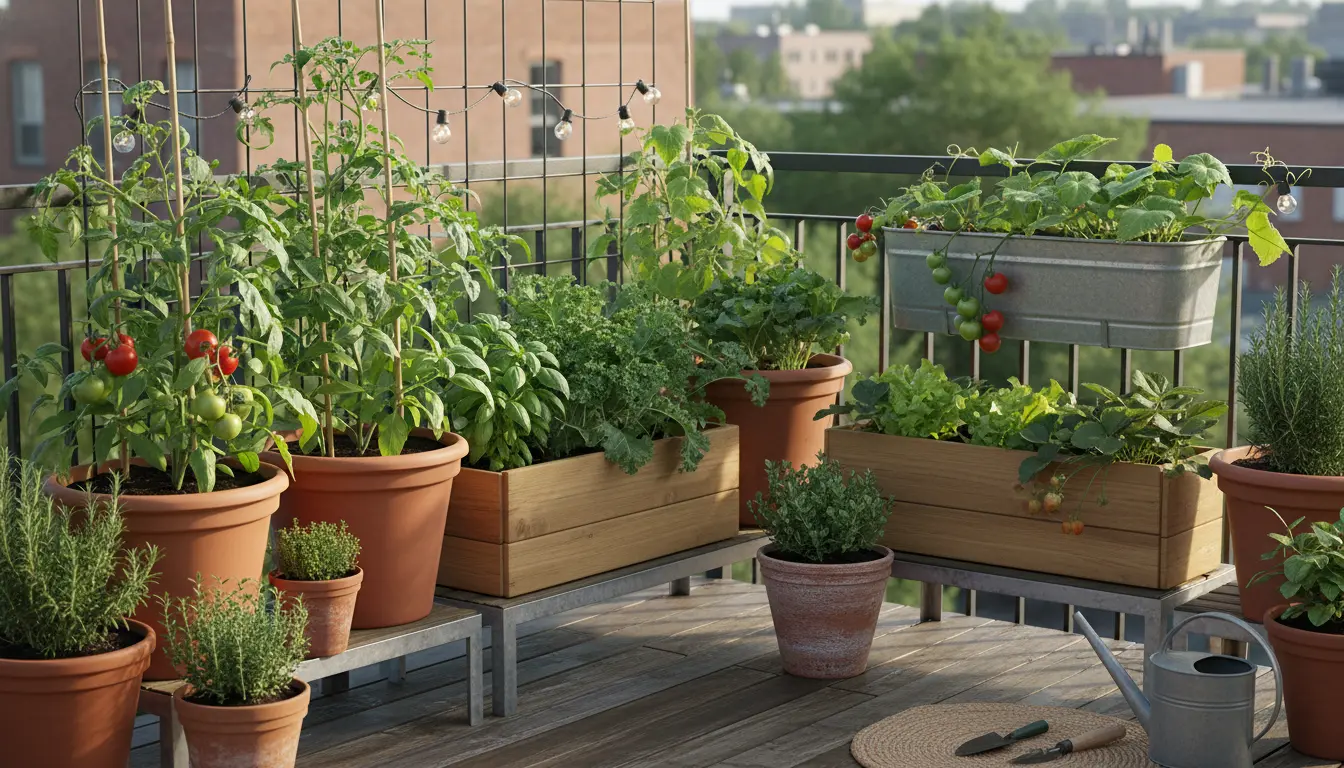
Container vegetable gardens let you grow fresh produce in small spaces like balconies, patios, or tiny backyards. This guide covers planning, container and soil choices, plant selection, and care routines to get reliable yields.
Plan Your Container Vegetable Garden
Start by assessing sunlight, space, and your goal crops. Most vegetables need 6–8 hours of direct sun; note the sunniest spots and measure how many containers will fit.
Decide whether you want continuous harvests or a few large plants. Planning helps you choose the right container sizes and planting schedule.
Choose the Right Containers for a Container Vegetable Garden
Select containers with drainage holes to prevent root rot. Size matters: shallow containers work for herbs, while deep pots suit tomatoes and peppers.
Common container options include plastic pots, fabric grow bags, wooden planters, and repurposed buckets. Ensure sturdiness and UV resistance if the container sits in direct sun.
Container Size Guidelines
- Herbs and lettuce: 6–8 inch pots
- Leafy greens: 8–12 inch containers
- Peppers and bush beans: 12–16 inch pots
- Tomatoes and larger veggies: 18–24 inch deep containers
Use the Best Soil Mix for Container Vegetable Garden
Use a high-quality potting mix designed for containers, not garden soil. Potting mixes are lightweight, drain well, and hold nutrients needed in confined spaces.
Consider mixing in compost and slow-release organic fertilizer. For better water retention, add coconut coir or peat alternatives and avoid compact materials that block drainage.
Pick Plants Suited to Containers
Choose compact or bush varieties labeled container-friendly. Many vegetables have dwarf cultivars bred for pots, which save space and produce well.
- Best choices: cherry tomatoes, compact peppers, bush beans, lettuce, spinach, radishes, and herbs.
- Avoid: long-vine squash or giant melons unless you have large planters and trellises.
Planting and Spacing in a Container Vegetable Garden
Follow seed packet or plant tag spacing but reduce it modestly for containers to maximize yield. Overcrowding reduces airflow and increases disease risk.
Use vertical supports like cages or trellises for vining crops. Interplant fast growers (radishes) with slower ones (tomatoes) to make efficient use of space.
Watering and Fertilizing Your Container Vegetable Garden
Containers dry out faster than garden beds, so check moisture daily during warm weather. Water deeply until water drains from the bottom; shallow daily sprinkles encourage weak roots.
Feed regularly: use balanced liquid fertilizer every 2–3 weeks or a controlled-release formula at planting. Monitor leaf color and growth to adjust feeding rates.
Pest and Disease Management in Container Vegetable Garden
Inspect plants weekly for pests, yellowing, or wilting. Small-scale problems are easier to control in containers using manual removal, insecticidal soap, or biological controls like beneficial insects.
Prevent disease by ensuring good airflow and avoiding overhead watering. Replace soil every 2–3 years or sanitize containers to limit pathogen build-up.
Harvesting and Extending the Season
Harvest vegetables at peak ripeness to encourage more production. Frequent harvesting of greens and beans stimulates new growth and prolongs the season.
To extend the season, move containers near walls for added warmth, use cloches, or bring small pots indoors during light frosts. Choose cold-tolerant crops for late fall planting.
Small Case Study: Maria’s Balcony Container Vegetable Garden
Maria converted a 6-foot balcony into a productive kitchen garden using five large fabric pots and several 10-inch containers. She planted cherry tomatoes, basil, two pepper plants, and a mix of salad greens.
By watering deeply in the morning, using a balanced weekly liquid feed, and harvesting every few days, Maria collected enough greens for salads and several pints of cherry tomatoes weekly. Her small effort saved grocery trips and increased her confidence to try cucumbers next season.
Common Mistakes and Quick Tips
- Too small pots: roots become root-bound and reduce yields. Upgrade if growth slows prematurely.
- Poor drainage: always ensure holes or add a layer of gravel at the bottom to help flow.
- Underfeeding: container plants need consistent nutrients; plan a feeding schedule.
- Sun check: rotate containers so all sides get light and prevent uneven growth.
Final Checklist Before You Start Your Container Vegetable Garden
- Survey sunlight and available space.
- Select appropriately sized containers and high-quality potting mix.
- Choose container-friendly plant varieties for your climate.
- Set up a watering and fertilizing routine.
- Plan for pest monitoring and seasonal adjustments.
Starting a container vegetable garden is a practical way to grow fresh food in limited space. With the right containers, soil, plants, and routine care, you can enjoy steady harvests and scale your setup as your skills grow.