
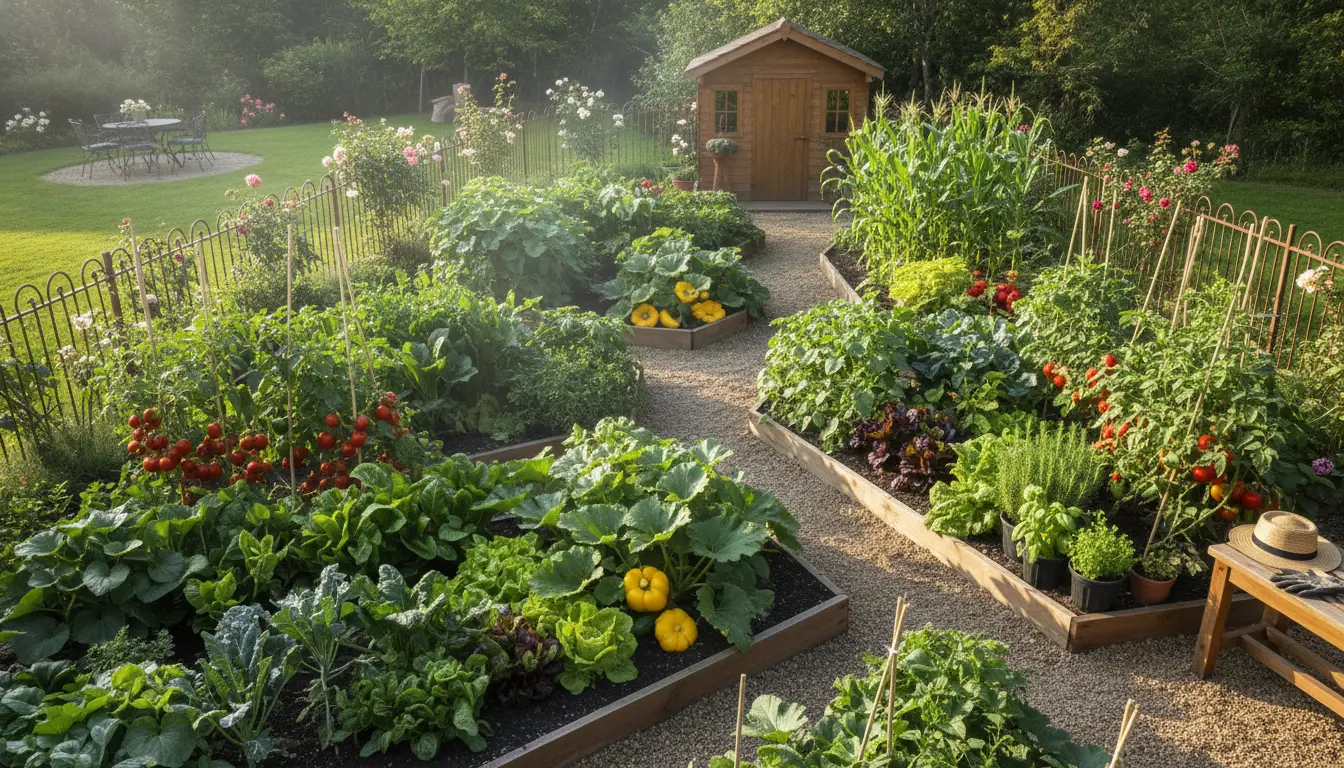
Vegetable Garden Basics for Beginners
Starting a vegetable garden is a practical way to grow fresh food, save money, and learn new skills. This guide focuses on straightforward steps you can follow even if you have no prior experience.
Choose a Location for Your Vegetable Garden
Good placement is the foundation of a successful vegetable garden. Most vegetables need at least 6 hours of direct sun each day, so pick the sunniest spot you have.
Also consider water access and drainage. Avoid low spots that stay wet after rain and choose a location close to a hose or water source for easier maintenance.
Vegetable Garden Size and Layout
Start small to keep tasks manageable. A 4×8 foot raised bed or a few containers are ideal first projects. Planning a compact layout reduces weeding and makes harvesting easier.
- Begin with one or two beds (4×6 or 4×8 feet).
- Use containers if you have a balcony or small yard.
- Leave paths for access and airflow between beds.
Prepare the Soil for Your Vegetable Garden
Healthy soil leads to healthy plants. Test your soil if possible, or assume it needs improvement and add organic matter.
Mix compost into the top 6–8 inches of soil to improve fertility and structure. If using raised beds, fill with a mix of topsoil, compost, and a light amendment like coconut coir or peat for moisture retention.
Vegetable Garden Soil Testing and Amendments
Soil pH affects nutrient availability. Most vegetables prefer a pH of 6.0–7.0. A simple pH test kit can tell you if lime or sulfur is needed.
Common amendments:
- Compost: boosts nutrients and beneficial microbes.
- Well-rotted manure: adds nitrogen and organic matter.
- Perlite or coarse sand: improves drainage in heavy soils.
Select Vegetables for Beginner Gardeners
Choose easy, reliable crops that tolerate beginner mistakes. Fast-growing plants give quicker rewards and motivate you to continue.
Good starter vegetables include:
- Leafy greens: lettuce, spinach, Swiss chard
- Root vegetables: radishes, carrots (in loose soil)
- Warm-season staples: bush beans, cherry tomatoes, zucchini
- Herbs: basil, cilantro, parsley
Vegetable Garden Seed vs. Starter Plants
Seeds are cheaper and offer more variety, but starters (transplants) speed up the first season. Use starters for tomatoes and peppers if your growing season is short.
Follow seed packet instructions for depth and spacing, and thin seedlings to avoid overcrowding.
Planting and Care Tips for Vegetable Gardening
Consistent watering and proper spacing are two of the most important care tasks. Water deeply once or twice a week rather than frequent shallow watering.
Mulch around plants to retain moisture, suppress weeds, and regulate soil temperature. Organic mulch like straw or shredded leaves works well.
Vegetable Garden Routine
Set a simple schedule: check plants 2–3 times per week. Look for pests, signs of disease, and moisture levels. Early detection prevents bigger problems.
- Water in the morning to reduce disease risk.
- Pull weeds when small to prevent seed spread.
- Stake or cage tall plants like tomatoes at planting time.
Pest and Disease Basics for Vegetable Gardens
Expect some pests; the goal is management, not total elimination. Use physical controls and cultural practices first:
- Row covers to protect seedlings from insects.
- Hand-pick large pests like slugs or caterpillars.
- Rotate crops yearly to reduce disease buildup.
If needed, choose targeted organic treatments like insecticidal soap or Bacillus thuringiensis (Bt) for caterpillars.
Common Problems and Quick Fixes
Yellow leaves may indicate overwatering or nutrient deficiency. Wilting with dry soil means more water is needed. Scattered holes often point to beetles or caterpillars—inspect plants closely.
Planting marigolds near vegetable beds can help deter some nematodes and insect pests. Companion planting can improve garden health without chemicals.
Small Case Study: Backyard Raised Bed Success
Maria, a first-time gardener with a small backyard, built a 4×8 raised bed in May. She filled it with 50% local topsoil and 50% compost and planted lettuce, cherry tomatoes, bush beans, and basil.
By late July she harvested weekly salad greens and a 10-pound yield of cherry tomatoes. Her keys to success were proper sunlight, regular deep watering, and mulching to reduce weeds and conserve moisture.
Final Checklist to Start a Vegetable Garden
- Choose a sunny location near water.
- Test and amend soil or fill raised beds with quality mix.
- Select easy crops suited to your season.
- Plant with correct spacing and water deeply.
- Monitor for pests and use cultural controls first.
Starting a vegetable garden is a series of small, manageable steps. Begin small, learn each season, and expand as you gain confidence. With steady care and simple practices, most beginners can enjoy regular harvests the first year.